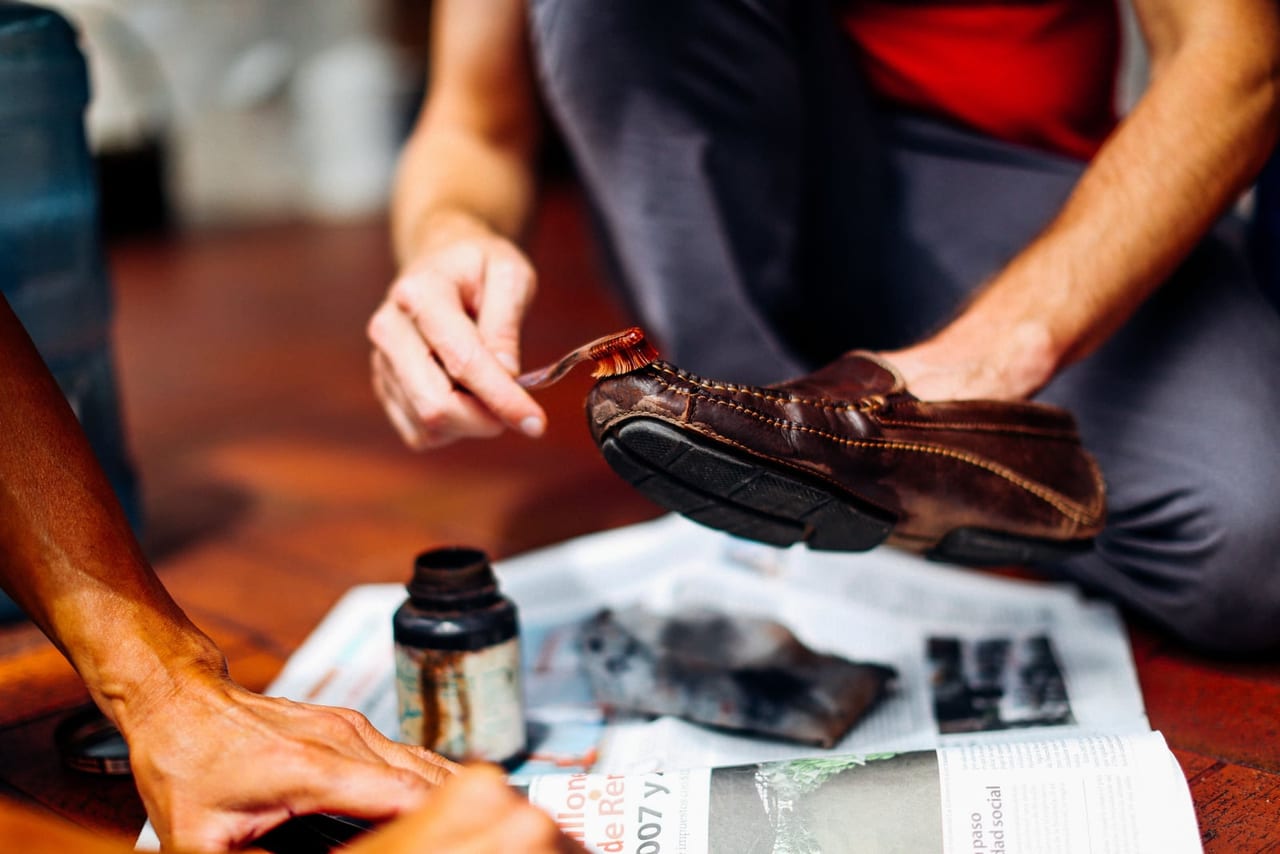
How to Clean and Care for Sandals
Sandals take a summer of sweat, sunscreen, sand and pool water right on the footbed, with no sock in between. Most pairs clean up well at home, as long as the method suits the material and the drying happens slowly, in the shade.
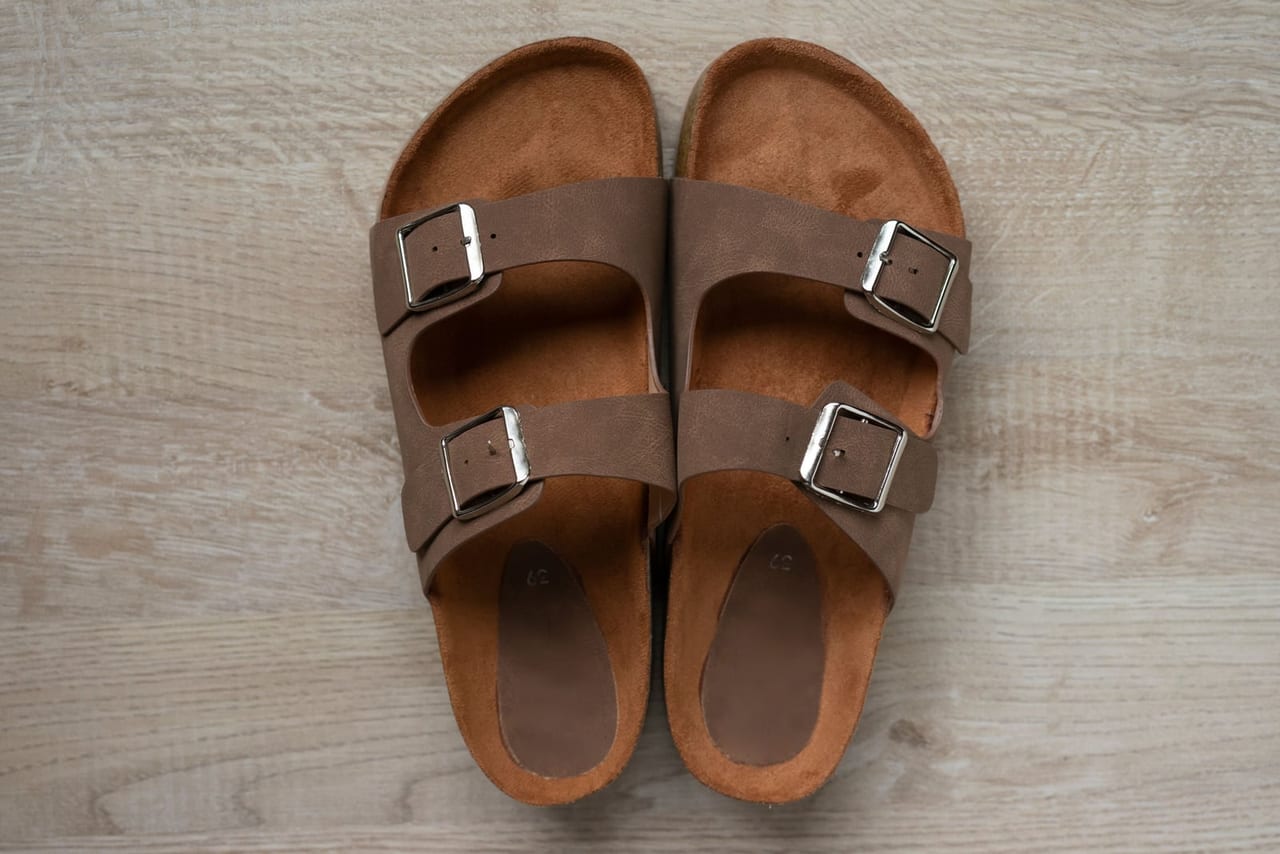
Pick up a favorite pair of sandals a few weeks into summer and the season is already there to read. The footbed carries a dark print where the heel and the ball of the foot pressed down, sand hides in the buckles, and the leather has a faint sheen of sunscreen. A shoe keeps that kind of wear out of sight, but a sandal shows all of it, and it isn't obvious how much can safely come off.
The short answer
Clean sandals by material. Scrub rubber and foam with a soft brush, lukewarm water and a little mild soap, then rinse. Wipe leather with a damp cloth and a little saddle soap and condition it once it's dry; brush suede footbeds with a suede brush, and wipe cork rather than soaking it. Dry every pair at room temperature, out of direct sun, for about a day. Avoid hot water, bleach, the dryer and a hot car, which can warp foam, crack cork and loosen the glue that holds a sole on.
Why sandals get grimy faster than shoes
The soles of your feet have some of the most tightly packed sweat glands on your body. In a sandal nothing stands between them and the footbed, so sweat, skin oils, tiny flakes of skin and dust are pressed straight into it with every step. That's why the darkest marks gather where you push down hardest, under the heel, the ball of the foot and the toes.
The smell has the same source. Sweat on its own has little odor, but microbes that live on your skin break it down, and a footbed that soaks up sweat all summer gives them plenty to work with. Leather, suede, cork and fabric absorb some of that moisture, while rubber and molded foam tend to hold it on the surface, which is partly why they're the easiest to clean.
Summer adds its own wear from outside. Sand works into strap slots and buckles, where grit can rub at straps and stitching, and seawater leaves salt behind that can stiffen leather as it dries. Sandals also spend more time in strong sun than most footwear, and heat can warp foam, dry out cork and leather, and soften the glue that holds the layers together.
How to clean sandals, step by step
A full clean takes about 20 minutes, and each step names the materials it suits, so skip what your pair doesn't need. You'll want a soft brush, two soft cloths, mild dish soap, lukewarm water and baking soda, plus saddle soap and conditioner for leather and a suede brush for suede. Read any care label before you start, and test each cleaner or conditioner on a hidden spot first.
Shake out the sand and grit
Knock the sandals together outside and brush dry sand and dirt off the footbed, straps and tread. Let wet mud dry first.
Scrub rubber and foam pairs
Scrub the footbed, straps and sole with a soft brush and lukewarm, soapy water, then rinse. For a stubborn footprint, scrub in a paste of baking soda and water and rinse again.
Wipe leather with a damp cloth
Test a little saddle soap or leather cleaner on a hidden spot, then work it over leather straps and footbeds with a damp cloth. Wipe off every trace of lather with a clean, damp cloth, and never hold leather under running water.
Brush suede and spare the cork
Brush a suede or nubuck footbed with a suede brush to lift dirt and raise the nap. Wipe exposed cork with a barely damp cloth only.
Wash fabric straps by hand
Work soapy water into fabric or webbing straps with a soft brush, following the weave, then rinse. Slide adjustable straps back and forth through their slots to free trapped grit.
Dry slowly, then condition leather
Let the pair dry at room temperature, out of direct sun and away from heaters, for about a day. Then rub a thin layer of conditioner into the dry leather.
Water is the main difference between materials. Rubber and foam can take a rinse, but leather, suede and cork should only ever be damp, never dripping, since soaking can stiffen leather, flatten suede and loosen cork and the glue beneath it. Whatever the pair, wipe until no soap remains, since leftover soap can dry into a patchy film.
Match the method to the material
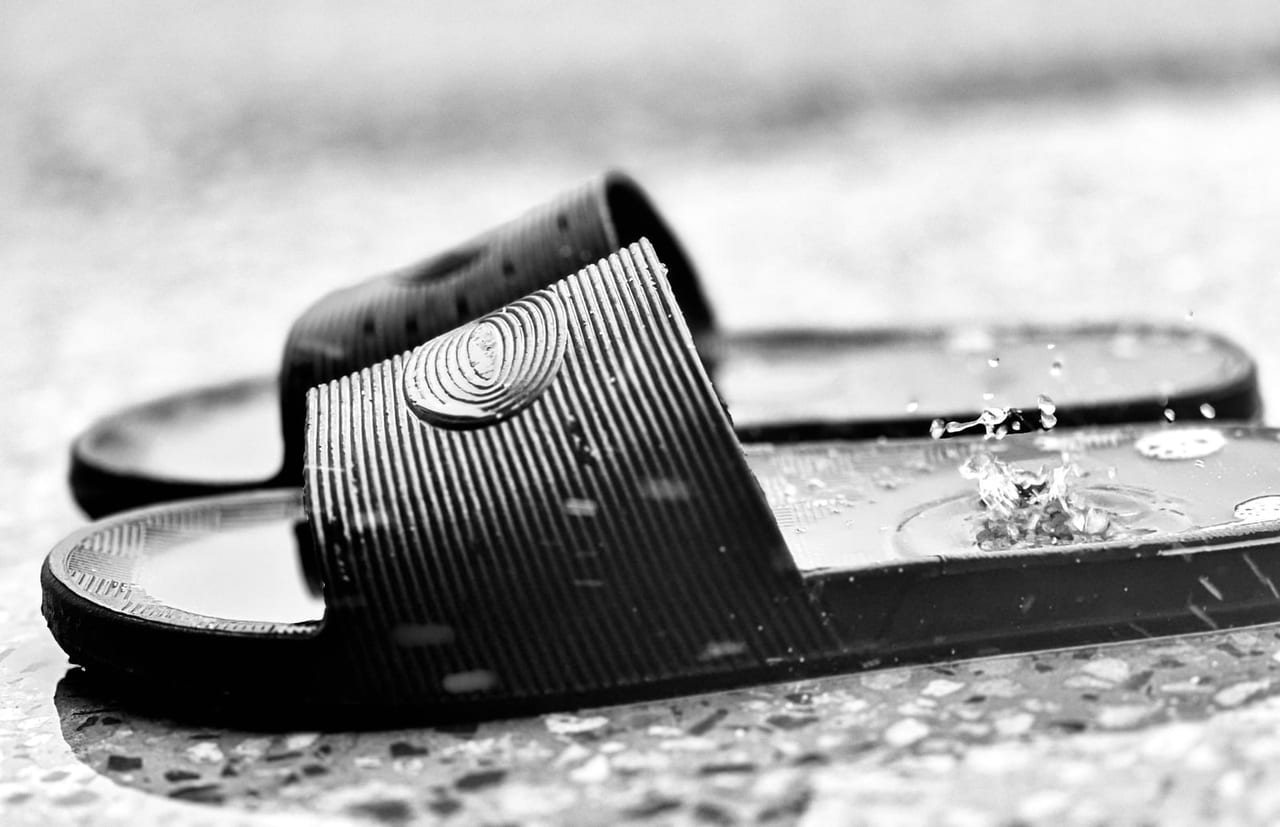
Rubber and molded foam are the forgiving ones: flip-flops, slides and water sandals can be scrubbed and rinsed. Foam doesn't tolerate heat, though, so keep the water lukewarm and foam pairs out of the dishwasher. Fabric and webbing straps take soap and water well too, as long as you scrub with the weave so the fibers don't fray. Skip bleach, which can weaken and discolor straps.
Leather straps and footbeds need less water and more patience, and a thin layer of conditioner once they're dry helps them stay supple instead of cracking where they bend. A leather footbed darkens with wear, so a clean may lighten the print rather than remove it. For oily marks from sunscreen or lotion, blot them, cover them with cornstarch for a few hours to draw the oil out, then brush it away.
Suede and nubuck footbeds owe their softness to a raised nap, which water and hard rubbing flatten. Brush them, use a suede eraser on small marks and keep liquid to a minimum, as in how to clean suede and nubuck shoes. Cork usually leaves the factory with a thin coat of sealer on its exposed edge. When that edge looks dry or dull, a thin layer of cork sealer brushed onto the cork only, kept off the footbed and the leather, helps keep it from cracking.
The footprint, the smell and the sand
The dark print builds up slowly, so it's easier to keep small than to scrub away. A quick wipe with a damp cloth after a hot day lifts sweat, oils and sunscreen before they settle in, and letting sunscreen soak in before you buckle leather straps can spare them some oily marks. Odor usually fades once the footbed is clean and fully dry, which a day off between wears makes easier. If the smell returns soon after a thorough clean, the source may be your feet as much as the footbed, and what causes foot odor explains why.
Sand comes off more easily dry, so brush the buckles and strap slots out before any water touches them. Rubber and fabric pairs can then take a rinse in fresh water after the beach or the pool, while leather pairs are better brushed once dry and wiped with a damp cloth.
Drying, sun and the end of the season
Drying is where a careful clean can still go wrong. Prop the pair on its side somewhere airy, at room temperature and out of direct sun, and give it about a day, since leather and cork can feel dry on top while still damp inside. Skip the hair dryer, the radiator and the sunny windowsill, and don't leave foam pairs in a hot parked car, where they can shrink or warp for good.
Before a pair goes away for the winter, give it a full clean and a full dry, condition the leather and seal cork that looks dry. Then store it somewhere cool, dry and dark, in a cotton bag or a box rather than sealed plastic, and not squashed under heavier shoes, where straps and footbeds can lose their shape.
When worn sandals may need more than a clean
A darker footbed, scuffed straps, some fading and a smell that leaves after a clean are ordinary signs of a pair being worn, not worn out. Some changes don't clean away, though: a footbed packed into a deep hollow under the heel, a tread worn smooth enough to slip on a wet pool deck, or foam that has shrunk and no longer fits.
Pay closer attention to anything structural. A strap pulling away, cork crumbling at the edge, a buckle that won't hold or a sole starting to lift is often worth showing to a repair shop early, and what a cobbler can fix covers the options. A strap that has stiffened or shifted can also rub a blister. If you have diabetes or reduced feeling in your feet, wear closed shoes that protect your toes rather than sandals, since you may not feel a strap rubbing. Check your feet every day, and ask your healthcare team which footwear suits you.
When to take your shoes to a repair shop
A shoe repair shop can help if you notice:
- A strap tearing or pulling away where it meets the sole or the footbed
- Stitching along a strap that has come loose or broken
- A buckle, rivet or hook-and-loop closure that no longer holds
- Cork that is cracking or crumbling along the edge of the footbed
- A sole that's starting to peel away, often at the toe or the heel
- A heel or tread worn down unevenly or almost smooth
Questions people ask
Can you put sandals in the washing machine?
Only rubber, foam or fabric pairs whose maker or care label allows it, and never leather, suede or cork. Use cold water, a gentle cycle and mild detergent, then let the sandals air-dry, since a dryer's heat can shrink foam and loosen the glue that holds the sole on.
Can leather sandals get wet?
A splash or a short walk in the rain usually won't ruin them, but a soak or a swim can leave leather stiff, stained or misshapen and loosen a cork footbed. If they get wet, blot them with a towel, let them dry slowly away from heat and condition the leather afterward. For the beach or the pool, sandals made for getting wet are the easier choice.
The bottom line
Sandals ask more of their materials than most footwear, since bare skin, water and sun reach every part of them. What keeps a pair going is less one big scrub at the end of summer than small habits suited to what it's made of: a wipe after a hot day, a slow dry in the shade, a little attention before it's put away. Looked after that way, a favorite pair can come back next summer still feeling like your own.