How to Dry Wet Shoes Without Ruining Them
The puddle rarely ruins a pair of shoes. The damage tends to come afterward, from the radiator, the clothes dryer or the sunny windowsill that looked like a quick fix. Slow drying asks for patience and very little else.
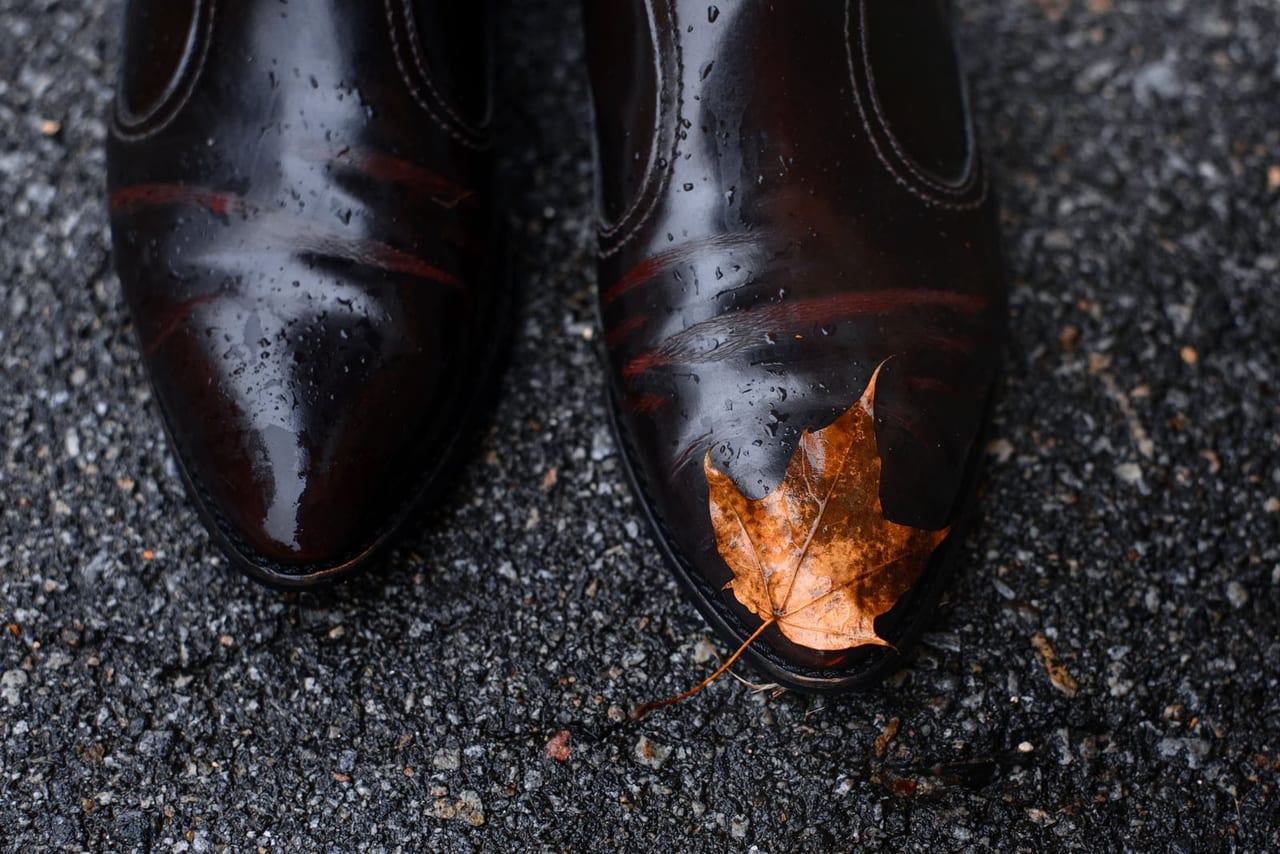
You slide a foot into last night's shoes and meet something cold and faintly soggy at the toe. The pair looked fine when you set it by the door: the leather seemed dry and the canvas had lost its dark patches. The lining and the padding underneath had barely started. A shoe holds more water than its surface shows, and it lets go of that water more slowly.
That gap between how a shoe looks and how wet it is leads to most of the bad decisions. A radiator is right there, and so are the hair dryer, the dryer downstairs and the window that catches the afternoon sun. Each of them dries the surface quickly, and each can leave a shoe stiff, shrunken or coming unglued. The slower way is mostly a matter of setting the pair up and leaving it alone.
The short answer
Take out the insoles, loosen the laces and blot off the water, then pack each shoe loosely with plain paper towels and swap them as they get damp. Set the pair somewhere at room temperature, off the floor, with air moving past it, such as a rack with a fan nearby. Drying often takes a day or more, longer for thick or padded shoes and boots, so check the lining and the toe by hand before you wear them.
Avoid heat. Radiators, heaters, a hot clothes dryer, a hair dryer and strong sun can warp, shrink or crack leather and loosen the glue that holds most soles on. Don't put the shoes on while they're still damp, either, since damp skin tends to rub more. A sole that lifts, leather that cracks or a shape that stays warped after drying is a job for a repair shop.
Why wet shoes take so long to dry
A shoe is built in layers, and water reaches more of them than you'd think. It gets in over the collar, through the tongue and eyelets and along the seams, then soaks the lining, the heel padding and the insole. The upper dries from the outside in, so the part you can touch gives up its water first, while the lining and padding hold theirs longest. With the laces tight and the insole in place, there's little room for air to reach those layers. That's how a pair can feel dry to the touch and still be damp inside.
The materials explain why speed costs so much. Leather can shrink, stiffen and later crack where it bends if it dries too fast. Most soles are glued rather than stitched, and heat can soften that glue or weaken its bond. Foam can warp, and the waterproof lining in some boots can be damaged by it. Slow drying at room temperature takes the same water out of the same shoe, only without those risks.
How to dry wet shoes, step by step
The routine takes about ten minutes of hands-on work, and then the time does the rest. You'll need a dry towel, plain paper towels, a rack or any spot where the shoes can stand off the floor and, if you have one, a small fan. Start as soon as you're in, since a pair dropped in a heap or a bag stays wet.
Take out insoles and laces
Pull out the insoles, loosen the laces all the way down and fold the tongue forward so air can reach the lining. Stand the insoles on edge to dry separately; they dry faster out of the shoe.
Blot off the water
Press a dry towel against the outside of each shoe and into the inside, rather than rubbing. Wipe off loose mud with a damp cloth so it doesn't set as the shoe dries.
Pack the shoes with paper
Stuff each shoe loosely with plain paper towels, pushing some into the toe, so the paper draws in water and holds the shape. Plain paper towels are the safer choice for light-colored shoes, since newsprint can leave ink on a pale lining.
Find a spot with moving air
Stand the pair upright and off the floor, in a room at ordinary temperature, away from radiators, heaters and direct sun. A fan nearby helps the water evaporate without adding heat.
Swap the paper as it gets damp
Replace the paper every few hours at first, then less often, until it comes out dry. Leaving damp paper in only keeps moisture next to the lining.
Check before you wear them
Slide a hand into the toe and press the lining, the tongue and the heel. If anything feels cool or damp, give the pair more time.
How long it takes depends on the shoe and the room. Thin canvas that was only damp may be ready in several hours, while a padded sneaker, a leather boot or anything with a thick lining can take a day or two, and a cold or humid room slows it further.
When you need them by morning
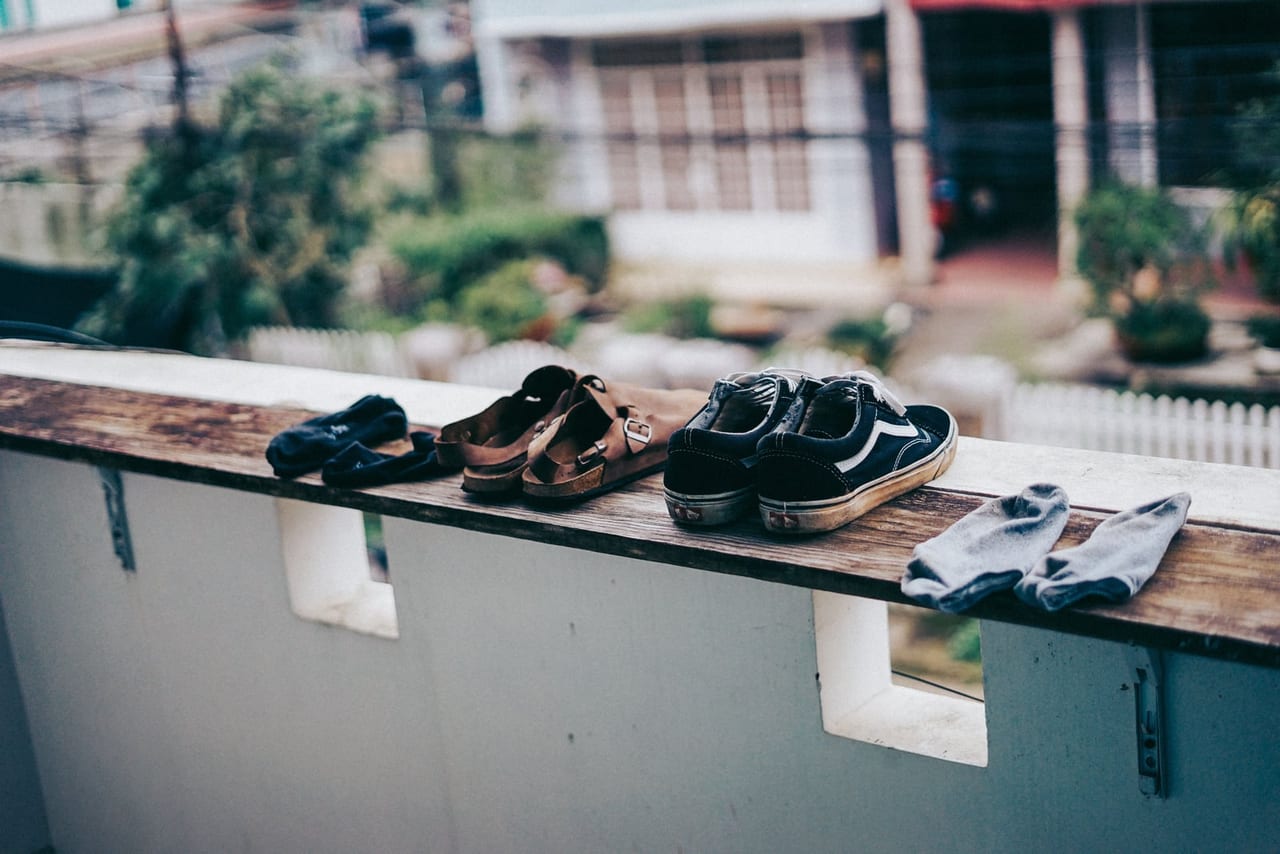
With one pair and a morning ahead, the pull toward heat is strongest. The gentler options move air instead of adding warmth: a fan blowing across the open shoes, the insoles drying beside them and fresh paper every hour or two. A boot or shoe dryer is another option, and the usual advice is to choose a type with gentle or no heat and to check the shoe's care label.
Heat is the shortcut to leave alone. A radiator or heater can dry one side of a shoe faster than the other and leave it stiff or out of shape. A clothes dryer tumbles the pair in hot air, a hair dryer held close can warp or even melt some shoe materials, and strong sun can dry leather too fast, crack rubber and yellow white fabric.
If the shoes won't be dry by morning, wear another pair. A damp shoe is cold against the foot, and damp skin and socks tend to rub more. A wet lining can also hold on to odor, which is part of why a pair needs a rest between wears, as how to keep shoes and insoles fresh explains.
Match the drying to the material
Leather asks for the slowest drying. Keep it away from heat, with paper or shoe trees inside to hold its shape. Once the pair is completely dry, many people work in a little leather conditioner, tested on a hidden spot and used as the label directs, and how to polish leather shoes covers the care that follows. Suede and nubuck dry the same way, but a stiff or darkened surface needs brushing once it's dry, and how to clean suede and nubuck shoes shows how.
Canvas, mesh and knit uppers soak up water and let it go slowly, so they need airflow for a long time, and shade rather than strong sun. Rubber boots only have to be dry inside: lift out any liners, stuff the boots with paper and keep them out of direct sun. Boots with a waterproof lining should follow the maker's care instructions, since heat can damage that lining. Salt from winter streets leaves marks that drying won't lift, and that has a routine of its own.
When wet shoes may mean something more
Some changes after a soaking are ordinary. A faint line where the water dried, a leather upper that feels a little firmer and a musty smell that fades as the pair dries through are all common, and a day or two of airing often settles them.
Pay closer attention to the structure of the shoe. A sole that has started to lift, seams that are opening, cracked or hard leather, or a shoe that has twisted or shrunk out of shape can mean the glue, stitching or material has been damaged, and more drying can't undo that. Your feet matter too. Feet that stay wet and cold for many hours or days, as on a long wet hike, can be harmed by the wetness itself. Numbness, tingling, skin that turns red, blue or gray, or blisters are reasons to get checked, and if you have diabetes or reduced feeling in your feet, have any new change looked at.
When to take your shoes to a repair shop
A shoe repair shop can help if you notice:
- A sole that has started to peel away from the upper, often at the toe or the heel
- Seams or stitching that are opening or coming loose after the shoes dried
- Leather that has cracked, or that stays hard and stiff after it has dried and been conditioned
- A shoe that has twisted, shrunk or collapsed around the heel
- A lining that is tearing, bubbling or coming away from the shoe
A shop can also say whether a warped pair is worth repairing or has reached the end of its life.
Questions people ask
Can you put wet shoes in the dryer?
It's better not to. The heat and the tumbling can shrink or warp materials, loosen the glue under the sole and leave leather stiff, and many makers advise air-drying instead. If a care label says a pair can go in the dryer, follow what it says about the setting.
Does baking soda or silica gel help dry shoes?
Some people add pouches of silica gel made for shoes, and others use baking soda, which is mainly for odor. Neither replaces air movement and time, so they're extras, not a method. Fresh paper, open laces and a fan are the usual starting point.
Why do leather shoes go stiff after they get wet?
Water can wash some of the natural oils out of leather, and a soaking followed by quick drying can leave it firm. Many people find that slow drying, wear and a light coat of leather conditioner once the pair is dry soften it again. Leather that stays hard or starts to crack is worth showing to a repair shop.
The bottom line
Wet shoes are mostly a question of time, not effort. Water leaves a shoe at its own pace, and the shortcuts that hurry it leave marks that outlast the dampness. Set the pair up in moving air, let the clock do its part, and the shoe that comes out the other side is the one that went in.