How to Store Shoes So They Keep Their Shape
How you put shoes away decides how they look when you take them out again. A clean, dry pair with something inside to hold its shape, kept somewhere cool and airy, comes back ready to wear.
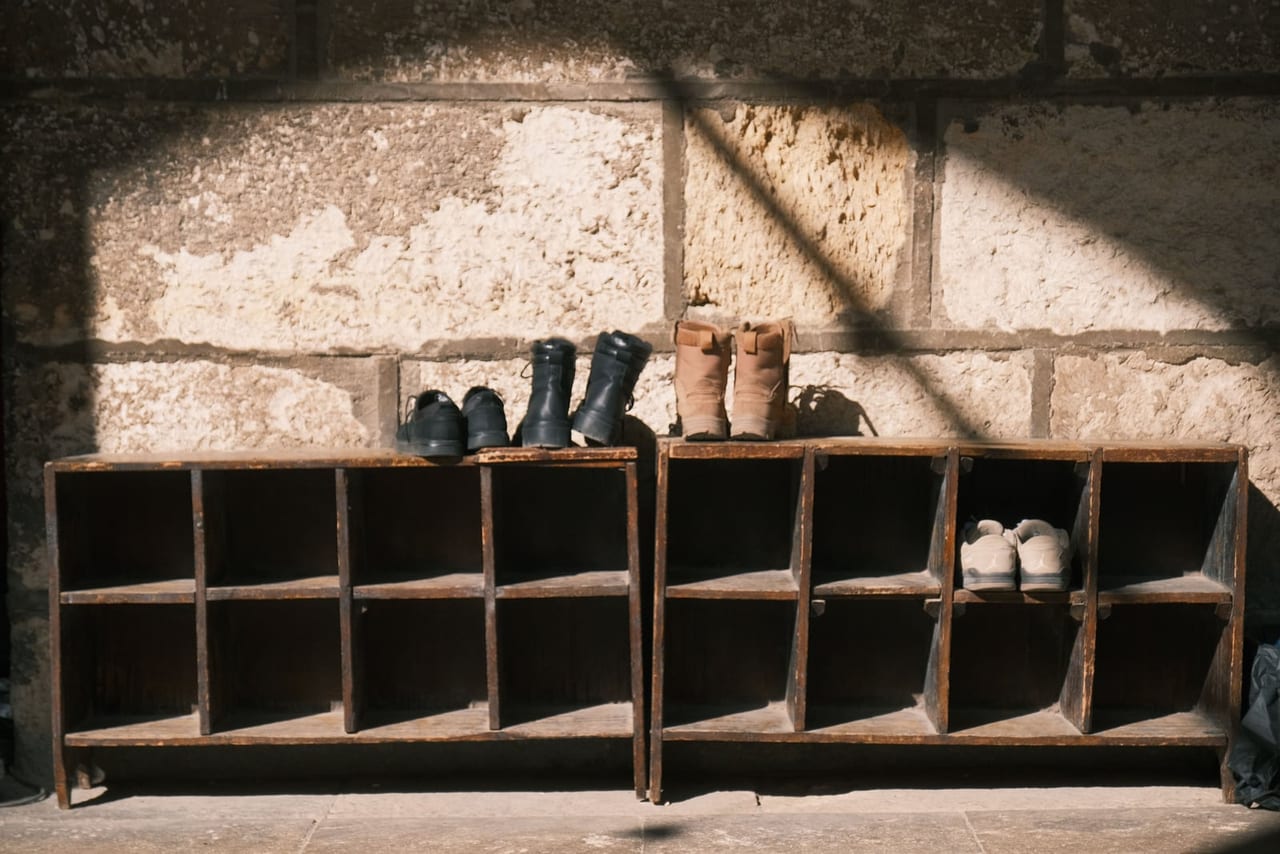
When the season turns, a pair of boots or shoes goes to the back of the closet, and months later it comes out again creased at the ankle, a little musty or exactly as it was left. Nothing seems to happen in between, and any damage may not show until the day you put the pair on again, so there's no telling from the closet which way it will go.
The short answer
Store shoes clean and completely dry, with shoe trees or loosely packed paper inside to hold their shape. Keep them somewhere cool, dry and dark, in cotton bags, boxes or on an open rack, and give each pair its own space. Avoid heat, damp and pressure: attics, car trunks and spots near a radiator can get too hot, basements can be damp, and shoes squashed in a pile lose their shape. Sealed plastic can trap moisture, so let air reach stored pairs.
Why shoes suffer in storage
Shoes don't wear out on the shelf the way they do on your feet, but moisture works against them first. A pair put away even slightly damp stays damp in a closed box or closet, and warm, dark and damp is where odor-causing microbes do well and mold can take hold. Sweat counts too, since shoes worn on the last warm day of the season need drying just like a pair caught in the rain.
The trouble is that the outside of a shoe dries first. The lining, the insole and the padding around the heel and tongue hold moisture longer, so a pair can feel dry to the touch and still be damp inside. Before you store anything, pull out the insole and feel inside, all the way to the toe, and if you're not sure, give the pair another day in the open air.
Heat, light and pressure do their own damage. Attics, car trunks and spots near a heater can get hot enough to soften glue, warp foam and dry out leather, and the damage may not show until you wear the pair again. Strong, direct sunlight can yellow white materials and fade some colors, while shoes squashed at the bottom of a pile or a bag can crease and lose their shape, and tall boots left to slump can crease at the ankle.
How to store shoes, step by step
Storing a pair takes a few minutes of work and a day or so of drying. It's worth doing when you swap seasonal shoes and whenever a pair will sit unworn for a while. Have shoe trees or boot shapers, a soft brush and a soft cloth on hand, along with acid-free tissue or plain paper and cotton shoe bags or boxes.
Clean them first
Brush off dirt and wipe the shoes clean before they go away, especially after winter, since road salt left on leather can dry it out. Condition leather pairs while you are at it.
Let them dry completely
Take out the insoles and leave the shoes somewhere airy at room temperature until they are dry inside and out. That often takes a day or more.
Hold the shape
Put shoe trees in leather shoes, or fill shoes loosely with acid-free tissue or plain paper. Use boot shapers or rolled cardboard to keep tall boots standing upright.
Choose a cool, dry, dark spot
A closet shelf or a rack away from radiators and sunny windows works well. Skip the attic, the car trunk and a damp basement.
Use breathable bags or boxes
Cotton shoe bags or cardboard boxes keep dust and light off while letting air move. Avoid sealing shoes in plastic, which can trap moisture.
Check on them now and then
A couple of times a season, take stored pairs out, let them air and look them over for dust, spots of mold or soles that have started to lift.
Cleaning and conditioning are covered in more detail in how to clean sneakers and how to care for leather work boots. Take your time with the drying step, because a little patience now is easier than a musty smell or spots of mold later.
The pairs you wear every week need a lighter version of the same routine rather than none at all. A rack or shelf where each pair has its own space and air can reach it does more for them than a heap by the door, where shoes get stepped on and squashed out of shape. After a wet or sweaty day, lift the insoles out so both they and the shoes get a chance to dry before the next wear.
Where to keep them and what goes inside
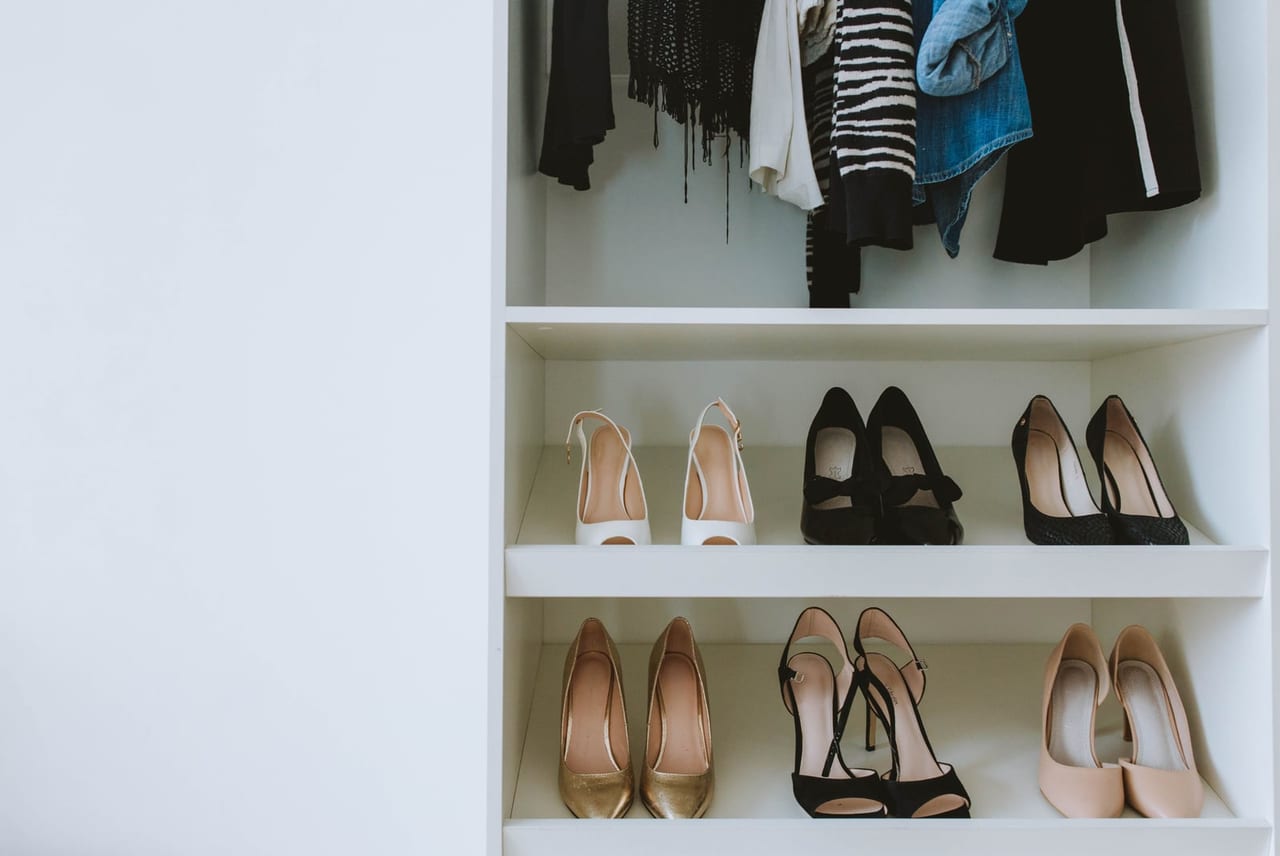
The ideal spot is boring: indoors, at room temperature, out of the sun and away from damp, so a bedroom closet usually beats a garage or a basement. Closet shelves and open racks let air move around each pair as long as the shoes sit side by side rather than stacked. Under the bed works too, if the room stays dry and the pair is in a shallow box or a bag with a breathable cover. Skip the attic and the car, which can get hot enough to soften glue and warp foam, and any damp basement or laundry room, where humid air can leave leather musty and spotted.
For the inside, wooden shoe trees help leather shoes hold their shape and smooth out creases, and many people like cedar for its fresh smell. Acid-free tissue or plain paper, packed loosely, does the same for sneakers and softer shoes, though newspaper can rub ink onto light ones, and boot shapers or rolled cardboard keep tall boots upright so the shafts don't fold.
Cotton bags and cardboard boxes breathe, and the original box works if the shoes are clean and dry; a photo of the pair taped to the box saves digging later. Insoles need a little attention too: take them out to air before the shoes go away, then put them back or store them flat beside the pair.
When stored shoes may need more than care
A little dust, a faint stale smell that airs out and light creasing are all ordinary after a season in storage. A wipe, a day of fresh air and, for leather, a little conditioner usually bring a pair back to wearing condition. Before its first long day back, give the pair a quick once-over anyway: flex the sole, press around the heel, look along the edge where the sole meets the upper, and wear it around the house for a while. Any damage storage has done is far better found at home than halfway through a long day.
Pay closer attention if a sole feels loose, crumbly or sticky, if cracks have opened in the leather, or if mold returns after cleaning. The materials may have aged or been damaged: foam and glue age even when a pair sits unworn, and a shoe that has spent years in a closet may not feel or hold together quite like new. A repair shop can tell you whether the pair is worth fixing, and the list below covers what it can help with.
When to take your shoes to a repair shop
A shoe repair shop can help if you notice:
- A sole that's starting to peel away from the upper, often at the toe or the heel
- A heel that wobbles, or a heel tip worn down to the layer underneath
- Stitching that has come loose or broken
- Cracks in the leather where the shoe bends
- Stains or a musty smell that come back after cleaning
If the cushioning is flat or the upper is worn through, a new pair may make more sense: see how to tell when your shoes are worn out.
Questions people ask
Is it OK to store shoes in plastic bins?
Clear bins keep dust off and make pairs easy to find, but a sealed bin can trap moisture. Store only completely dry shoes in them, and leave the lids slightly open where you can. Cotton bags and cardboard boxes are the easier choice, since they keep dust and light off while letting air move.
Can you store shoes in the garage?
It's better not to if your garage gets hot in summer or damp in winter, since heat can soften glue and damp can leave shoes musty. If it's your only space, use breathable boxes kept off the floor. Check on them often.
How do you get mold off stored shoes?
Take the shoes outside and brush the spots off. Then wipe with a cloth dampened in mild soapy water and let them dry completely. If the marks keep returning, ask a repair shop, since the materials may have been damaged.
The bottom line
A pair of shoes in storage isn't standing still. Moisture, heat and pressure can keep working on it all season, which is why the few minutes you spend on the day it's put away tend to matter more than any fix once it comes out.