How to Care for Rain Boots and Rubber Boots
Rain boots are made to take the weather, so most pairs get little care beyond a stamp on the doormat. A bit of attention to the inside, to heat and to storage tends to keep them supple and watertight from one wet season to the next.
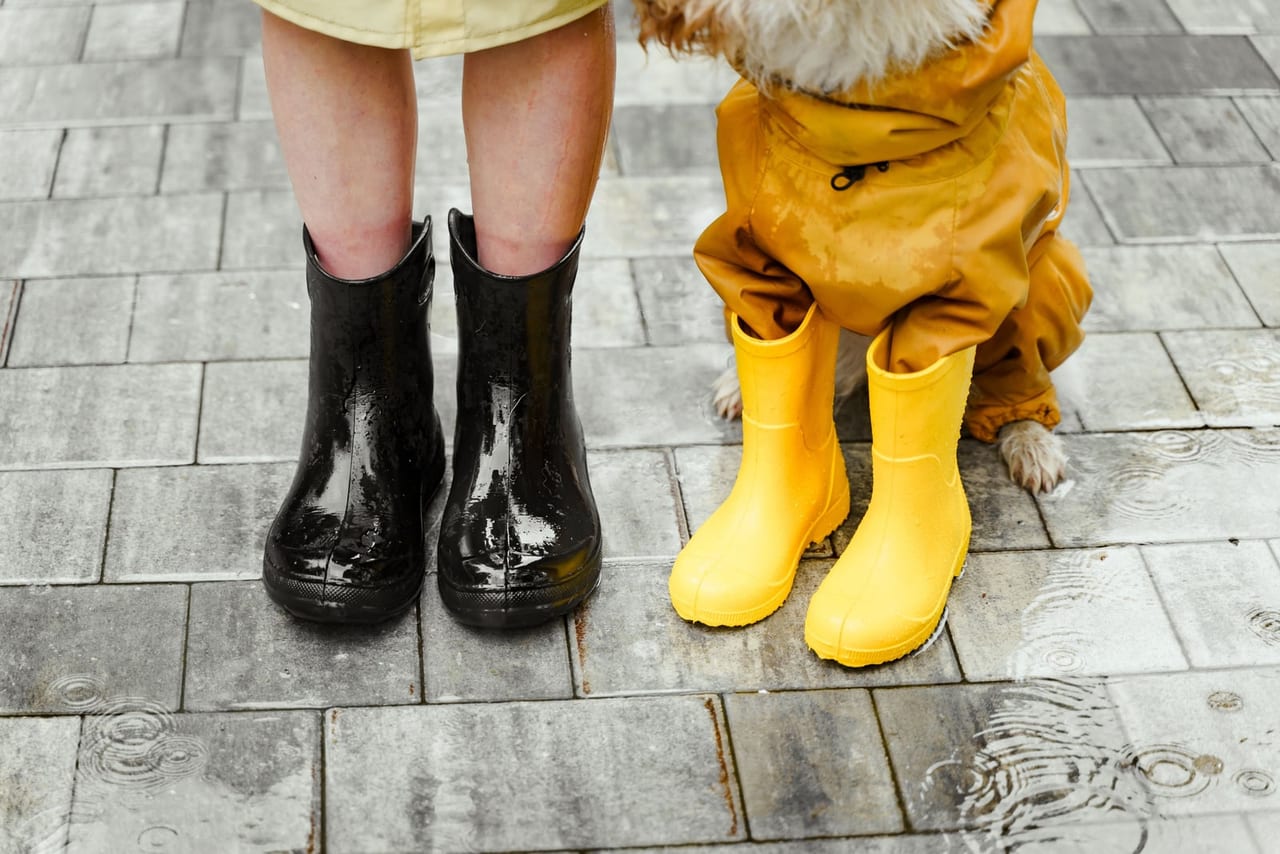
It rained the whole way home, and the boots did their job. The puddles stayed outside and the mud is caked on the soles, yet when you pull them off at the door, your socks are damp at the toes and heel. The boots go back on the mat, slick outside and clammy inside, to wait for the next storm.
That small surprise says a lot about rubber. The material that keeps the rain out also keeps your sweat in. A boot that shrugs off a downpour can still crack in a hot car, split along a crease after a summer folded in a closet, or turn a chalky white for no clear reason.
The short answer
Rinse or brush off the mud, wash rain boots with mild soap, cool or lukewarm water and a soft brush, then rinse. Take out any insoles or liners and dry the boots upright at room temperature with plain paper towels inside, since the inside is usually damper than the outside. Avoid harsh chemical cleaners, abrasive pads, radiators, heaters and strong sun, and store the pair clean, dry and standing rather than folded.
A whitish film on natural rubber, called bloom, is normal and wipes off. Cracks along the creases or a leak you can't trace usually mean a pair is near its end, and sore spots or itchy, peeling skin that don't settle are worth having looked at.
What rain boots are made of, and what ages them
Most rain boots are made from one of two materials. Natural rubber comes from the sap of rubber trees and stays flexible and soft to the touch, while PVC is a molded plastic. The label or the maker's care page usually says which you have, and a few care details depend on it.
Natural rubber has a habit that can look like damage. A whitish or gray film, called bloom, can appear on the surface, often after boots have sat somewhere warm or bright. It's protective wax in the rubber rising to the surface, a natural process that doesn't affect how the boot keeps water out, and a damp cloth with a little soapy water often lifts it. Some makers sell a buffer spray or conditioner made for rubber boots. If you try one, test it on a hidden spot, use it in a well-aired room as the label directs, and keep it off the soles, where a slick coat can make the tread slippery.
What ages rubber is rarely the rain. Heat, strong sunlight and harsh chemicals can leave fine cracks in the surface, and storage beside a heater or somewhere that freezes hard can make it brittle. That's why plain water and mild soap are the usual advice for both materials. Creases count too: rubber left folded in one place, like a boot top bent over in a crowded closet, tends to crack along the fold.
How to clean and dry rain boots, step by step
After a muddy day the routine takes about 15 minutes of hands-on time, plus drying. You'll need a soft brush, two soft cloths, a hose or a bucket of water, mild soap and plain paper towels. If a pair, especially a lined one, came with care instructions, let those decide.
Get the mud off first
Hose or wipe off fresh mud while it's wet, or let thick mud dry, knock the boots together outside and brush off the rest, tread included.
Wash with mild soap
Work over the boots with a soft brush or cloth and a little mild soap in cool or lukewarm water. Skip solvents, abrasive pads and harsh cleaners, which can damage rubber.
Rinse and wipe them down
Rinse off the soap with clean water. Wipe the outside with a soft cloth so no soapy film dries on it.
Take out insoles and liners
Lift out any removable insoles or liners and stand them up to dry separately. Wipe a gritty lining with a damp cloth.
Dry them upright, away from heat
Stuff the boots loosely with plain paper towels, swapping the paper as it turns damp, and stand them somewhere airy at room temperature. Keep them away from radiators, heaters, fires and direct sun.
Feel inside before storing them
Reach down to the toe and press the lining. Put the boots away only when it feels completely dry.
Winter slush gets the same rinse, since road salt and grit dry into a crust in the creases. Drying time depends mostly on the lining: an unlined pair may be ready in a few hours, while a fleece-lined or padded one can take a day or more.
Why the inside of a rubber boot stays damp
Rubber doesn't let sweat out. In a leather or mesh shoe, some of the moisture from your feet escapes through the upper, but in a rubber boot it has nowhere to go except the sock, the lining and the insole. That's why socks can come out damp on a day when no rain got in, and why a pair worn again before it has dried starts each wear a little wetter than the last.
So the inside needs attention every day the boots are worn, not only after a muddy walk: lift the insoles out at night and leave the boots open to the air. Moving air does more good than warmth, so skip the radiator and the sunny windowsill, whose heat lands on the outer surface, the part that cracks. The full routine, morning deadlines included, is in how to dry wet shoes.
Storing rain boots between wet seasons
Rain boots spend more time waiting than walking, and much of their aging happens in storage. Put them away clean and dry all the way to the toe, since a damp pair shut in a closet can turn musty or grow mold. Stand them upright so the shafts don't fold, with boot shapers or rolled cardboard inside tall pairs.
Choose a cool, dry spot out of direct sun, such as a closet or a rack by the door, and skip the sunny porch, the hot car trunk and the floor beside a furnace. Heat and light are what dry rubber out and bring on bloom. Leave the pair some room, too, since heavier shoes stacked on top can press new creases into the shafts.
A quick look at the start of each wet season saves a surprise in the first downpour. Flex each boot gently at the ankle and across the toe and look for fine cracks. Then run a finger along the seam where the sole meets the upper, and check that the tread still has some depth.
Keeping your feet comfortable in rubber boots
Socks do most of the work in a boot that can't breathe. Wool and synthetic socks move moisture away from the skin and keep much of their warmth when damp, while cotton soaks up sweat and holds it. On a long wet day, many people carry a dry pair to change into, and socks that come up past the top of the boot keep the rim off your calf.
Rain boots are often cut roomy so they slip on and off easily, and that has a cost. A heel that lifts with each step rubs, and damp skin rubs more than dry skin, which is how a short walk can end in a heel blister. Try boots on with the socks you'll wear in them, leaving room to wiggle your toes, since a boot that squeezes a thick winter sock can leave feet colder.
Many rain boots also have a fairly flat footbed with little cushioning, so plenty of people save them for wet errands, gardening and short walks. When the boots come off, let your feet dry completely, between the toes as well, before fresh socks go on.
When boots or feet may need more than care
Some changes are part of ordinary wear: bloom, scuffs, a tread softening at the edges and a faint smell that fades once they dry through. A small puncture from a thorn or a nail can sometimes be patched with a repair kit or adhesive made for rubber, used in a well-aired spot as its label directs. Cracks that keep spreading across the creases, a sole pulling away from the upper, or one sock that keeps coming out wet in the same spot are another matter, and a pair like that is usually past saving.
Your feet deserve the same attention. A blister from a new or loose pair usually settles once the rubbing stops, but one that doesn't, or that turns red, warm or swollen, is worth having looked at. Itchy, peeling or cracked skin between the toes can be athlete's foot, a rash caused by fungi that like warm, damp places. Feet that stay wet for many hours can hurt, swell or feel heavy, and numbness or color changes that don't pass once they're warm and dry are reasons to see a healthcare professional. If you have diabetes or reduced feeling in your feet, have any new sore or change looked at.
Questions people ask
Do rain boots need waterproofing?
Not the rubber itself. Rubber and PVC are waterproof as they are, so a spray adds little, and water that gets in usually comes through a crack, a split seam or over the top. Boots with leather or fabric panels are a different matter, covered in how to waterproof shoes and boots.
Why do my rain boots smell?
Usually because the inside never fully dries. Sweat collects in the lining and insole, and microbes that live on your skin break it down, which is where the odor comes from. Taking the insoles out after each wear, drying the boots with paper inside and wiping a musty lining with mild soapy water are where most people start.
The bottom line
A rubber boot is a wall, and it works in both directions. It keeps the rain out and the sweat from your feet in, so the outside asks for little more than a rinse while the inside asks mostly for time. Look after both sides of that wall, and a plain pair of boots can see you through a great many wet mornings.