How to Protect Your Shoes From Salt, Slush and Snow
Road salt, slush and wet snow are hard on shoes, leaving white lines on leather, dark marks on suede and linings that stay damp for a day or more. With a little protection before the season and some patience after each wet walk, most pairs can come through winter looking like themselves.
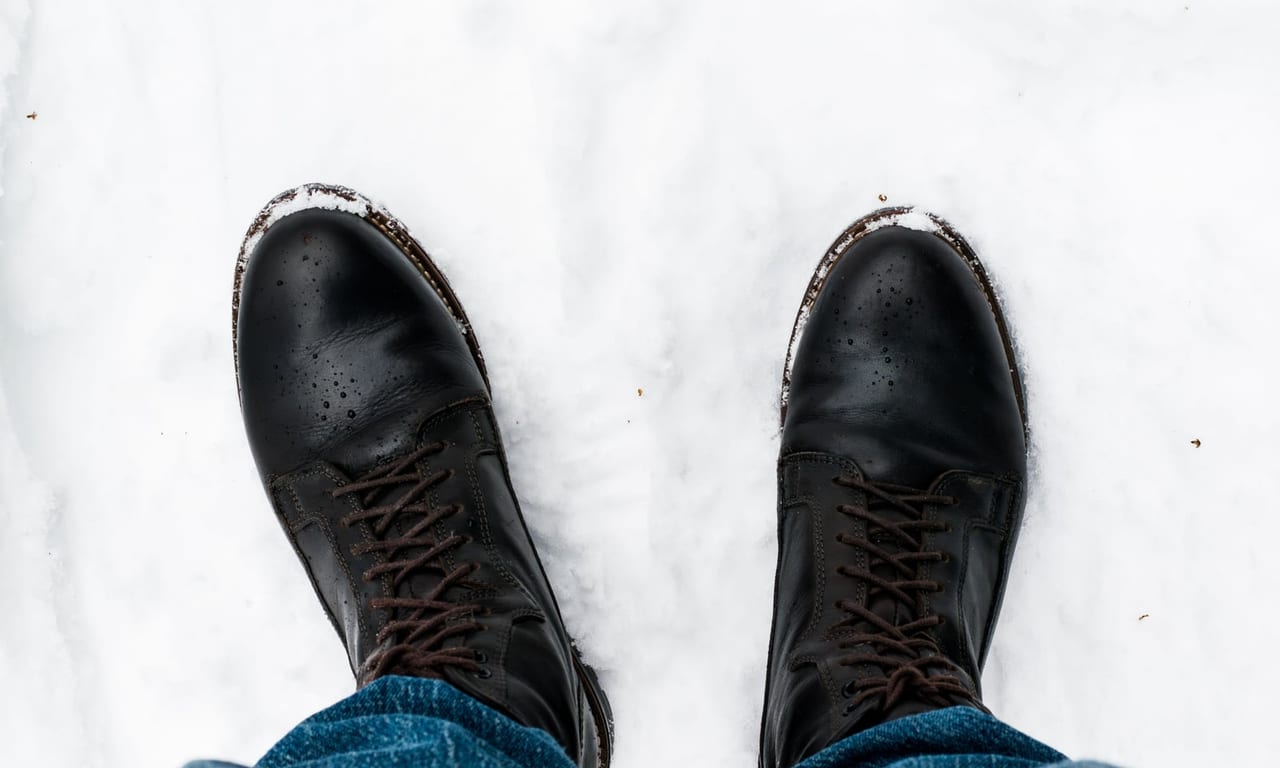
Winter's first slushy commute leaves its mark on your shoes before anything else. Somewhere between the bus stop and the office, a wavy white line creeps across the toes of a leather pair. A suede pair picks up a dark tide mark, and the socks inside start to feel damp. Back home, the easy move is to kick the shoes off by the radiator until morning. By then the white line has dried in, and the leather nearest the heat feels stiff. None of that ruins a pair, but it's how a season of winter wear adds up, one evening at a time.
The short answer
Protect shoes before the season, then look after them as soon as you come in. Smooth leather takes a conditioner and then a wax or cream; suede, nubuck and fabric take a protector spray made for the material. Test either on a hidden spot first. After a wet walk, wipe or blot off salt and slush before they dry, and lift white lines on smooth leather with water and white vinegar.
Then fill the shoes with paper, take out the insoles and let them dry at room temperature. Keep them away from radiators, heaters and the clothes dryer, which can crack leather and loosen glue. A sole that lifts, a leaking seam or cracked leather is a job for a repair shop.
What salt and slush do to shoes
Road salt does its damage through water. Slush soaks into the leather as salty water, and as that water dries, the salt stays behind as fine crystals, which is the white line across the toes. Drying salt can also pull moisture and natural oils out of the leather. A pair that goes through that cycle daily can turn stiff and dull and start to crack where it bends. Conditioner can keep leather supple, but it can't undo a crack once one has opened.
Slush also means a lot of water. It tends to work its way in at a shoe's weak points: the seams, the gap around the tongue and the edge where the upper meets the sole. In many shoes that edge is held by glue, and damp, salt and constant flexing can weaken the bond over time. That's why a sole often starts to lift at the toe or the heel.
The rest of the damage often comes from good intentions. A soaked pair left by a radiator, a heater or a fireplace, or tumbled in the clothes dryer, dries too fast. That heat can leave leather stiff and cracked, shrink some fabrics, warp foam and loosen the glue that holds the sole. Slow drying at room temperature takes longer, but it lets the shoes give up their water without being baked.
Get shoes ready before the first storm
The easiest time to protect a pair is an evening before the snow arrives, when the shoes are clean and dry. On smooth leather, work in a thin layer of conditioner and let it soak in overnight. Then add a wax or cream made for leather, which helps water bead up and roll off. The conditioner goes on before the wax because it keeps the leather supple, while the wax's job is to keep water out.
Suede, nubuck and fabric sneakers take a protector spray made for the material. Spray it evenly on clean, dry shoes, outdoors or in a well-ventilated room, and let it dry as the label directs. Whatever you use, try it on a hidden spot such as the tongue under the laces, since some products darken leather or shift its color. None of these turns a shoe into a waterproof boot, but they slow how fast water soaks in. A few drops of water on the toe tell you when to reapply: if they soak in instead of beading, it's time.
What to do when you come in from the slush
Most of this routine happens in your first few minutes indoors, before the salt has time to dry, and it takes about 15 minutes, plus drying. Keep the kit by the door: two soft cloths, a soft brush, a jar of equal parts white vinegar and water, plain paper, leather conditioner and a boot tray or mat. Suede and nubuck skip the wet wiping and follow a drier method, described below.
Wipe off the salt and slush
As soon as you come in, knock off loose snow and wipe the uppers with a cloth dampened in plain water before the salt dries. Brush grit out of the seams and along the edge of the sole.
Lift any white salt lines
On smooth leather, test a mix of equal parts white vinegar and water on a hidden spot. Wipe it over the whole panel with a damp cloth, a little past the line, then wipe again with plain water.
Take out the insoles, loosen the laces
Lift out the insoles and loosen the laces so air can reach the inside. Rinse salt-stiffened laces in plain water and hang them to dry.
Fill them with plain paper
Stuff each shoe loosely with plain paper or paper towels to soak up water and hold the shape. Change it every few hours at first, while it still comes out wet.
Dry them away from heat
Set the pair on a boot tray or mat at room temperature, away from radiators, heaters, heating vents and fireplaces. A soaked pair can take a day or two.
Condition the leather once dry
When smooth leather is completely dry, rub in a thin layer of leather conditioner and wipe off whatever doesn't soak in. Then give the pair a day off.
Drying is the step that asks for patience. A shoe dries from the outside in, and the lining and the padding around the heel can stay damp long after the leather looks dry. Feel inside, all the way to the toe, before you wear it again. That's where a spare pair earns its place. With two in turn, each gets a full day to dry, while a single pair worn daily may never dry out fully and can end up damp and smelly.
Adjust the routine to the material
Suede and nubuck need a drier hand. Blot off the slush with a dry cloth and let them dry completely with paper inside, since brushing wet suede can mat its soft surface. Then brush the dried salt out with a suede brush. If a line remains, a cloth barely dampened with diluted white vinegar, tested on a hidden spot, can lift it. The full method is in how to clean suede and nubuck shoes.
Mesh, knit and canvas sneakers soak through faster than leather and hold water deep in the fabric. On the sloppiest days, rubber boots or waterproof boots with a rubber lower are the kinder choice. When salt does reach a fabric pair, wipe it with a cloth dipped in lukewarm water and a drop of mild soap, tested on a hidden spot. Follow with a clean, damp cloth and dry the pair with paper inside, like any other.
Rubber boots need little more than a rinse or a wipe with plain water. Waterproof leather boots keep slush away from your socks, but their outer leather still takes salt lines and needs the same wipe and conditioner. Feet still sweat inside them, so the insoles come out at night. On any boot with a zipper, wiping the salt and grit off its teeth tends to keep it running smoothly.
When winter wear may need more than care
Plenty of winter wear is ordinary. Leather looks darker while it's wet and lighter once it dries, a faint salt line may need another wipe, and a little stiffness often softens with conditioner. At the season's end, a thorough clean, a full drying and a coat of conditioner usually set a pair right, and how to store shoes covers the rest.
Look closer if a salt line keeps coming back once the leather has dried, if cracks open where the shoe bends, or if a sole starts to lift at the toe or the heel. A sock that comes home damp from a waterproof boot can point to a leak, though sweat can dampen socks too. Check the tread before the next icy morning, too, since a sole worn smooth grips less. There's more on when a repair is worth it in what a cobbler can fix.
When to take your shoes to a repair shop
A shoe repair shop can help if you notice:
- A sole starting to come away from the upper, often at the toe or heel
- Water getting in at a seam or along the edge of the sole
- Cracks in the leather where the shoe bends
- A tread worn smooth, which grips less on ice and wet pavement
- A zipper that sticks, splits open or has lost teeth
- Leather soles that soak through in slush or have worn thin
Questions people ask
Will vinegar damage leather shoes?
Diluted with an equal amount of water and used lightly, white vinegar is a common way to lift salt lines from smooth leather. Finishes vary, though, so try it on a hidden spot first. Wipe it on with a damp cloth instead of soaking the leather, follow with plain water and condition the leather once it's dry.
How often should you waterproof shoes in winter?
There's no fixed schedule. Reapply the wax, cream or protector spray when water stops beading and starts to soak in, and again after a full cleaning, which can wear protection away. A pair worn through slush every day will likely need it more often than one kept for dry days.

The bottom line
Much of what winter does to shoes happens indoors, in the hours after a walk, as salt dries into the leather and a warm radiator hurries the rest along. Those hours are the part of the season you control. A damp cloth, a few sheets of paper and a spot away from the heat can carry a good pair through months of slush and into spring.