How to Polish Leather Shoes by Hand
Leather shoes that look dull, scuffed at the toes and pale along the creases are often less worn than they seem. What they usually need is an unhurried evening at a table and a few thin layers of polish, and the leather is better for it.
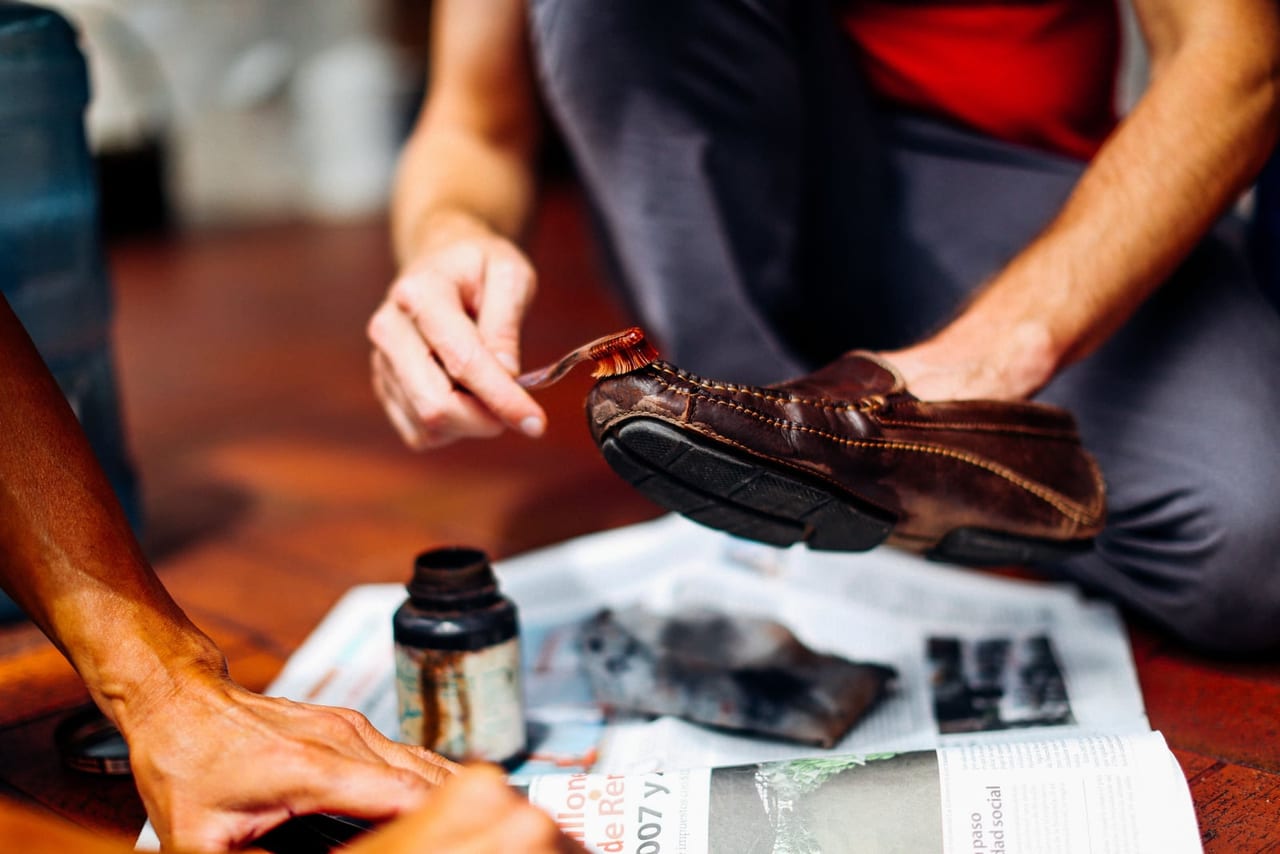
The good leather shoes tend to come out of the closet the night before something matters: a wedding, an interview, a first day at a new job. Under the hallway light they look older than you remember, gray with dust, scuffed across the toes, pale where the shoe bends. Somewhere in a drawer there's a tin of polish and a stiff old cloth, and it's tempting to rub on a thick coat and hope it works.
Then the questions start. Is the tin cream or wax, and does it matter? Will a polish that's a shade off change the color, and what about those dry-looking creases? A heavy coat rubbed on in a hurry often leaves the shoe streaky by morning, which is how polishing gets its reputation for being fussy.
The short answer
Polish leather shoes in thin layers, in order. Take out the laces, put shoe trees in, brush off the dust and wipe away grime, then let the leather dry and condition it if it looks pale or stiff. Work a little cream polish in to restore color and keep the leather supple, then add a thin coat of wax for more shine and some protection from water. Buff with a horsehair brush and a soft cloth.
Avoid thick coats, which tend to look cloudy, and keep heavy wax off the parts that bend, where it can crack. Try any product on a hidden spot before using it, keep shoes away from heaters, and never polish suede or nubuck. Cracked leather, loose stitching or a worn heel is a job for a repair shop rather than a tin.
What polish does for leather
Smooth leather is skin that has been tanned, dyed and finished, and it still behaves a little like skin. It holds oils and moisture that keep it flexible, and wear, water and heat can slowly draw them out. Drying leather tends to fade and stiffen, usually first in the creases across the top of the foot, where the shoe bends with every step. Left dry long enough, those creases can crack, and polish can hide a crack but can't close it.
Cream polish and wax polish answer different parts of that problem. Cream is soft and carries oils and pigment, so it soaks in, brings color back to faded spots and helps keep the leather supple, though on its own it brushes up only to a low sheen. Wax polish is mostly hard waxes that stay near the surface. Buffed, they give a brighter shine and leave a thin layer that helps water bead and takes some of the light scuffs.
That's why cream goes on underneath, to feed and color the leather, and wax on top, to seal and shine it. It's also why thin layers work better than thick ones. A thin coat dries evenly and buffs clear, while a heavy one stays smeary, picks up dust and can look cloudy however long you brush it.
How to polish leather shoes, step by step
Allow about half an hour for a pair, longer for one that's been neglected. You'll need shoe trees, a few soft cotton cloths and two horsehair brushes, one for dust and one kept clean for buffing. Add a leather cleaner or saddle soap, a conditioner, and cream and wax polish in a matching or neutral color. Polishes can smell strong, so work somewhere airy and follow the labels.
Unlace the shoes and add shoe trees
Take out the laces so polish can't stain them. Slide in shoe trees to hold the leather taut, and cover the table with an old towel or newspaper.
Brush and clean the leather
Brush off the dust, working into the seam where the upper meets the sole. Wipe away grime with a barely damp cloth or a little leather cleaner tried on a hidden spot, then let the leather dry.
Condition leather that looks dry
If the creases look pale or the leather feels stiff, rub in a thin layer of conditioner with a soft cloth. Let it soak in, then wipe off the excess.
Work in the cream polish
Rub a little cream polish into the leather with a cloth, in small circles, covering the whole upper evenly. Let it dry for about 10 minutes, then brush it to a soft sheen.
Add a thin coat of wax
For more shine and some protection from water, rub a thin layer of wax polish over the shoe in small circles, keeping it lightest where the shoe bends. Leave it until it dries to a haze.
Buff with a brush, then a cloth
Brush the whole shoe with the clean horsehair brush in quick, light strokes; the friction warms the wax and brings up the shine. Finish with a soft, clean cloth, then lace the shoes back up.
Patience between layers does more than pressure. Cream needs about 10 minutes to sink in, and wax buffs up far more easily once it has dried to a haze than while it's still wet. Leather that has gone dry may drink in the first coat of cream, so a second thin coat often evens out the color.
A higher shine on the toe and heel
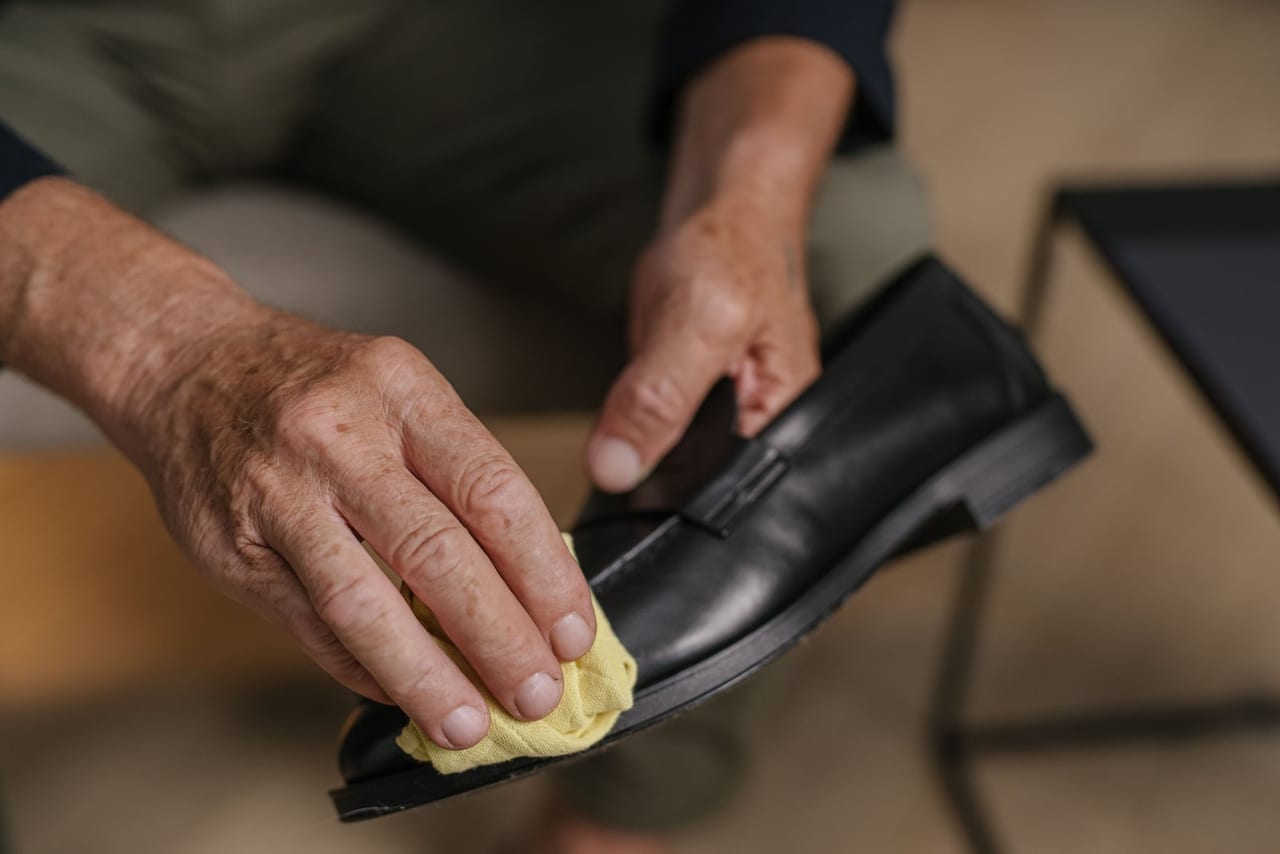
The glassy toes seen on formal shoes come from wax alone, built up in many very thin layers. Wrap a soft cotton cloth around two fingers, pick up a little wax and work it over the toe in small circles with almost no pressure, adding a single drop of water to the cloth before each pass. The water helps the cloth glide over the wax instead of dragging it, and after several rounds, each left to dry, the surface starts to reflect.
Keep that high shine to the toe and the back of the heel, which hold their shape as you walk. Across the top of the foot, where the leather bends, a build-up of hard wax is too brittle to move with it, so it cracks and flakes into a patchy finish that looks worse than the dullness you started with. For everyday shoes, the softer shine from the steps is plenty.
Choosing a color, and leathers to leave alone
A polish that matches the shoe is the simplest choice, since its pigment fills small scuffs and evens out faded patches. Neutral polish has no pigment, so it adds shine without changing the color, though it won't hide scuffs. A darker shade can deepen the color over time, so try any new polish on a hidden spot, such as the inside of the heel, before it goes on the whole shoe.
Suede and nubuck are leather too, but their surface is a soft, raised nap that polish would clog and flatten, so they need a brush and cleaner of their own, as described in how to clean suede and nubuck shoes. Patent leather has a glossy coating that polish can't soak into, and a soft, damp cloth followed by a dry one is usually all it needs. For metallic, painted or synthetic uppers, follow the maker's care advice.
When dull leather may mean something more
Most of what makes leather shoes look tired sits on the surface: dust, light scuffs, faded color and creases gone pale and dry. Those are ordinary signs of wear, and cleaning, conditioning and a couple of thin coats of polish usually bring them back. Creases are normal too, since leather that bends every day shows where it bends, and shoe trees and regular care can help keep those lines soft rather than sharp.
Look more closely when a crease has opened into a crack, or when a scrape has gone through the color to the raw leather beneath. Loose stitching, a heel worn down at one corner and a sole beginning to lift at the toe are wear that polish can only hide, and they tend to get worse with use. A repair shop can often fix them, and what a cobbler can fix explains when that's worth it.
When to take your shoes to a repair shop
A shoe repair shop can help if you notice:
- Cracks in the leather where the shoe bends
- A scrape or gouge that goes through the color to the leather underneath
- Stitching that's loose, broken or pulling away from the upper
- A heel worn down at the back or one corner, or one that wobbles
- A sole worn thin, or one starting to come away from the upper
Questions people ask
How often should you polish leather shoes?
There's no fixed schedule; the leather is a better guide than the calendar. A quick brush after each wear keeps dust out of the creases, and a full polish makes sense when the shine has worn off or the creases look dry. For a pair worn several times a week, that might mean every few weeks, and for shoes saved for occasions, a few times a year.
Why does my shoe polish look streaky or cloudy?
Usually there's too much polish, or it was buffed before it dried. Let the shoe sit a while, then brush it again and finish with a soft cloth, which often clears the haze. Over many polishings old wax can build up as well, and a leather cleaner, tried on a hidden spot beforehand, can lift it so you can start fresh.
Can you polish shoes without a horsehair brush?
Yes, though it takes more rubbing. A soft cotton cloth, such as a piece of an old T-shirt, can apply polish and buff it to a shine. A brush reaches the creases and the seam around the sole more easily and brings up the shine faster.
The bottom line
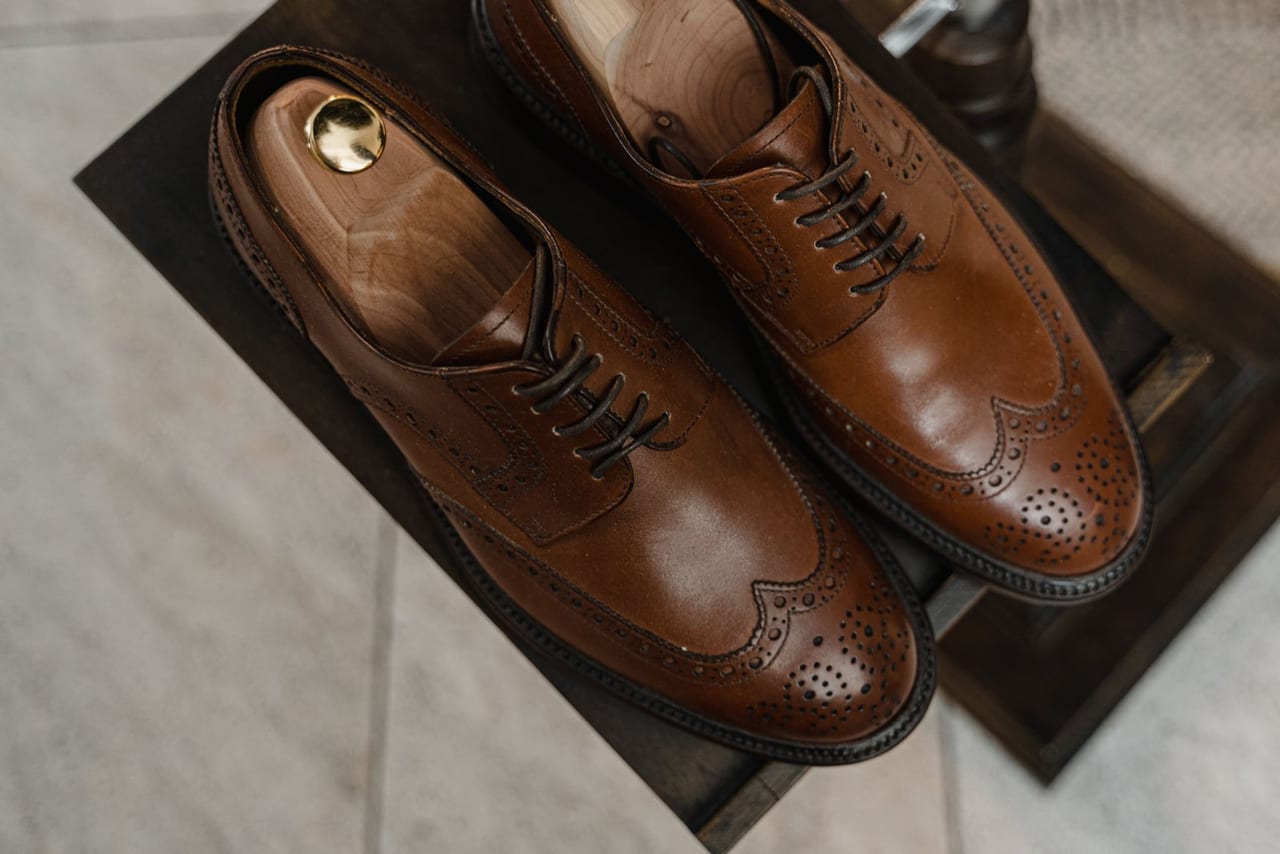
The shine is the part everyone sees, but it's only a small part of what polish does. Thin layers of cream and wax, worked in by hand and given time to dry, keep the leather supple and its color even, so a good pair creases gently instead of cracking. Leather is one of the few things you wear that can look better after years of use, and a little time with a brush now and then is most of what that takes.