Walking Stairs, Hills and Uneven Ground: What Your Feet Do
A flight of stairs after a long day, a hill on the way home or a gravel path in the park asks something different of your feet than a sidewalk does. Small habits in how you place your feet and set your pace can make those stretches feel steadier.
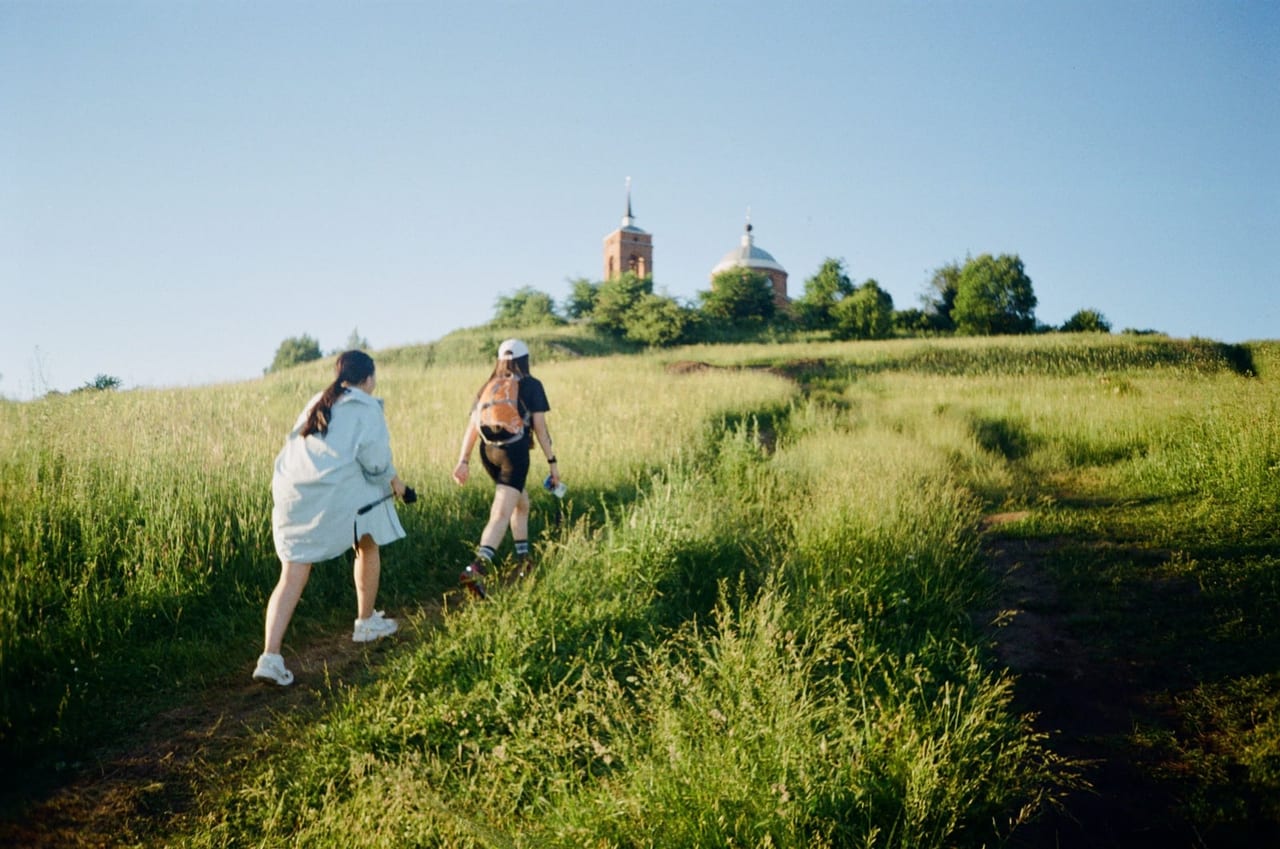
Halfway up a long hill, the body makes a few decisions without being asked. The steps get shorter, the pace drops, and your eyes leave the horizon for the ground a few yards ahead. Turn around and walk back down, and your thighs start working like brakes while your toes press toward the front of your shoes.
Stairs and rough ground have habits of their own. A hand reaches for the rail before you've decided to use it, and on a rocky path you catch yourself watching every footfall. None of it feels like technique, yet the body is solving a problem the flat sidewalk never poses.
The short answer
On a slope, take shorter steps and put the whole foot down; going downhill, keep the steps controlled, the knees slightly bent and the laces snug. On stairs, set the whole foot on each step, hold the handrail and take one step at a time when you're tired or carrying something. On rough ground, look a few steps ahead and shorten your stride. Falls are the real risk on all three, so give yourself time, good light and shoes with a grippy sole.
Move slowly and gently, and stop anything that doesn't feel right. People with balance problems or dizziness, and anyone recovering from an injury or surgery, check with a healthcare professional first. Sharp pain, a joint that gives way or trouble bearing weight is a reason to get checked.
What a slope asks of your feet and legs
On a climb, your foot lands on a tilted surface, so the ankle usually has to bend a little further to keep the sole on the ground. The calf muscles, the hamstrings and the glutes do most of the pushing. Many hikers shorten their step and let the slope decide its length. They lean slightly from the ankles rather than the waist and put the whole foot down instead of climbing on tiptoe, which many find keeps the calves from tiring as fast.
Going down uses mostly the same muscles plus the thighs, which work as brakes, lengthening while they hold you back. Many walkers keep the knee slightly bent rather than locked, which lets the thigh muscles share the work of each landing. Each step down also pushes the foot forward in the shoe, and when the laces are loose the toes meet the front again and again, which can bruise a toenail over a long descent. Snug laces help, and how to lace shoes for long shifts shows how to hold the heel and the top of the foot in place.
Stairs: the whole foot, a handrail and no rush
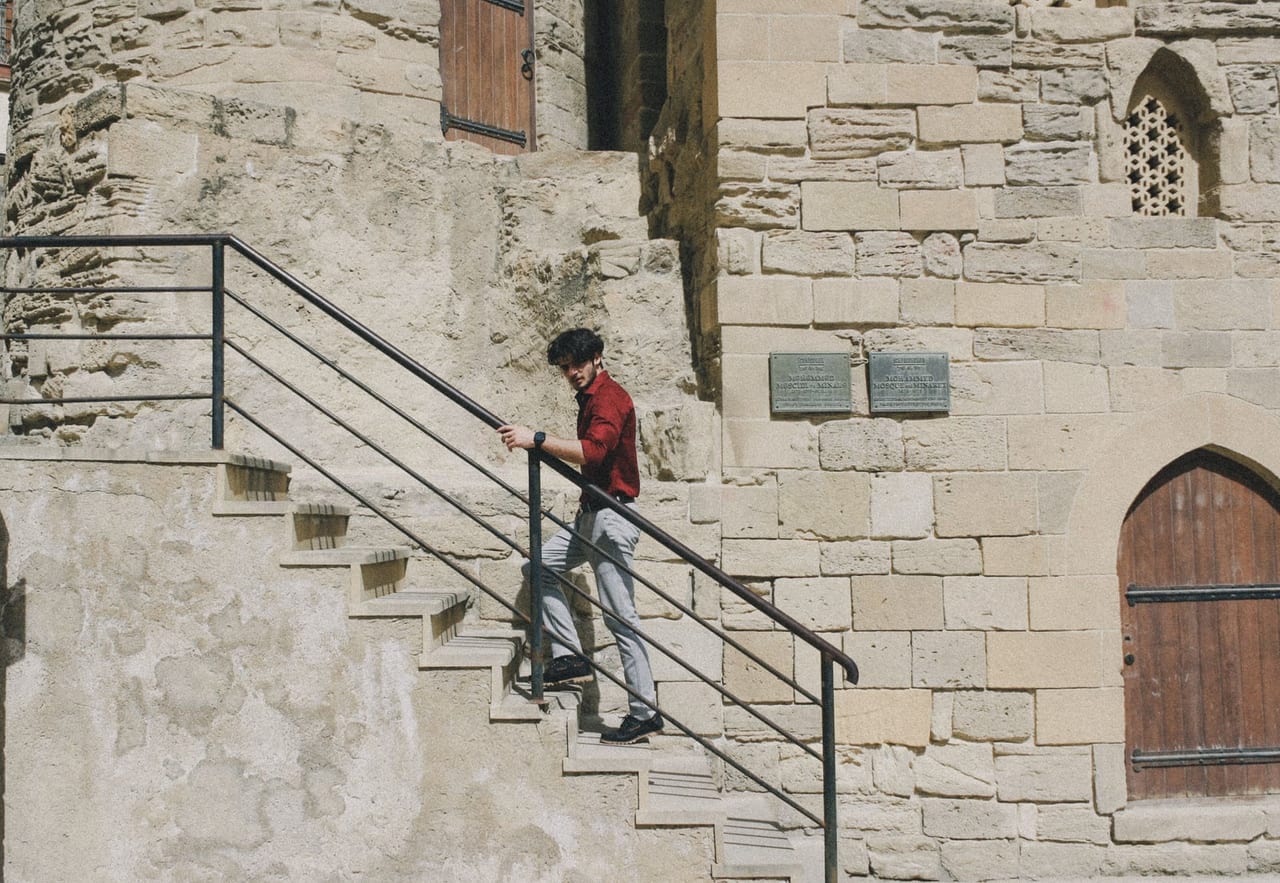
A staircase is a hill cut into steps, and it asks much the same of your muscles, with one difference: every tread has an edge. A foot that hangs partly over it has less to stand on, so a common habit is to set the whole foot on the step, with neither toes nor heel past the edge. Narrow treads and spiral stairs make that harder, so slow down on them.
The handrail is the other half of the habit. Rails on both sides are ideal, and the usual advice is to hold one going up and going down, even when your hands are full, so a bag with straps or a backpack beats a loose armload. Good light matters too, with switches at the top and bottom and nothing left on the steps to trip over. Shoes with a rubber sole and a low heel tend to hold better than socks or slippers.
Rough, loose and slippery ground
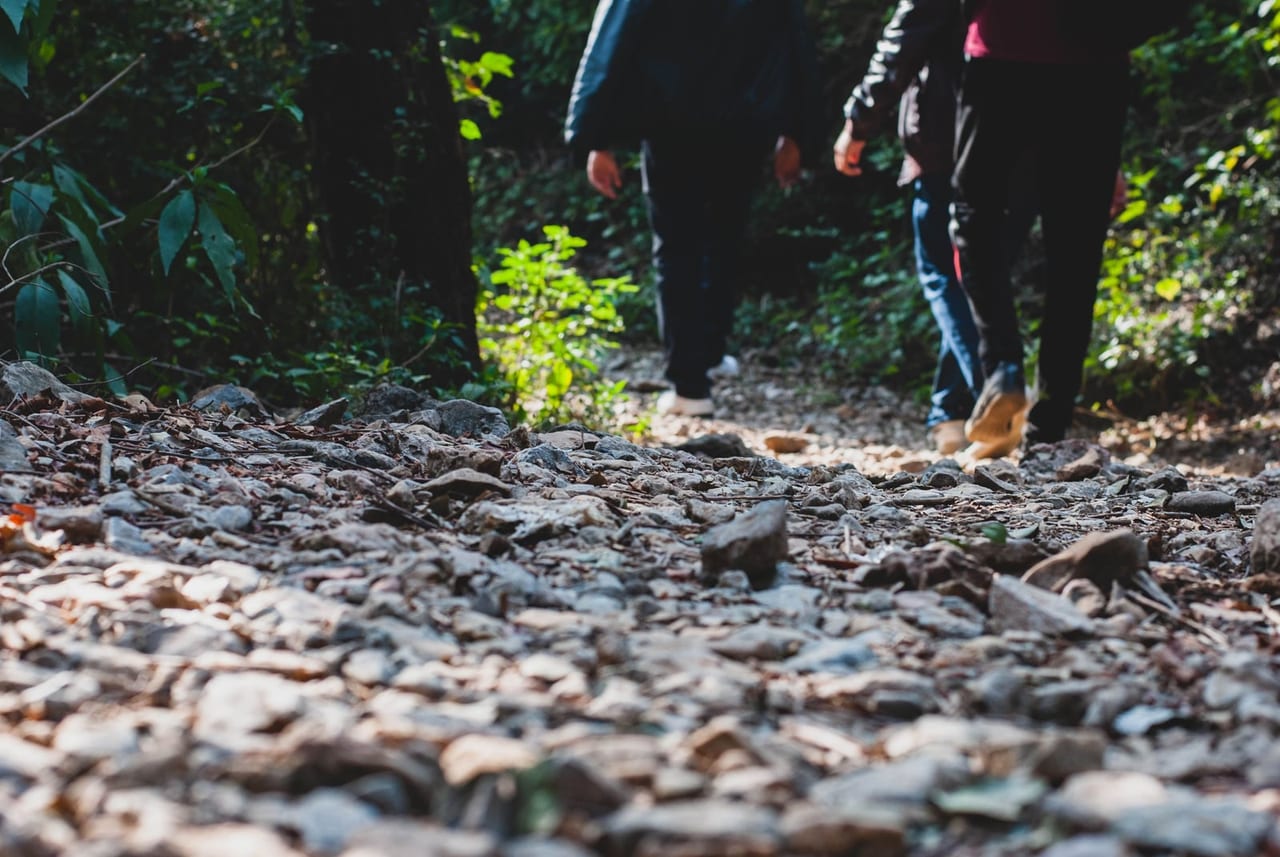
On uneven ground, every step lands on a surface of a different height and angle, so the foot and ankle keep making small adjustments. People tend to lift the foot a little higher, land it flatter, bend the knees and hips slightly to lower the body's center of mass, and take shorter steps. Looking a few steps ahead gives your eyes time to choose a route, and a quick glance down is fine whenever your footing feels uncertain.
Uneven ground takes more effort than a smooth path, so a shorter route is a sensible start. Wet leaves, mud, loose gravel and damp rock call for slower, shorter steps with the foot landing flat, and for shoes with a grippy sole. Rough ground gives the muscles around your ankles regular practice, and balance exercises for your feet and ankles rehearse the same small adjustments at home.
Habits for stairs, hills and rough ground
These six habits fit into an ordinary walk or a trip up the stairs at home. You need a handrail or other sturdy support, a gentle hill or a flight of stairs, and shoes with a grippy sole. Move slowly and gently, hold a rail or a wall for balance whenever you stand and practice, and stop anything that doesn't feel right. If you're recovering from an injury or surgery, or have balance problems, dizziness or reduced feeling in your feet, check with a healthcare professional first.
Shorten your step on a climb
Take smaller steps than you would on the flat and let the slope decide their length. Put the whole foot down and lean slightly from the ankles rather than bending at the waist.
Soften your knees going down
On a descent, keep your steps short and controlled, with your knees slightly bent instead of locked so your thighs can do the braking.
Lace snug before a long descent
Stop and tighten your laces so your heel and the top of your foot stay in place and your toes don't keep sliding into the front of the shoe. Leave enough room that nothing pinches.
Put the whole foot on each stair
Set the full foot on every step, with neither toes nor heel hanging over the edge. Take one stair at a time when you're tired or carrying something.
Keep a hand on the rail
Hold the handrail going up and going down, even when your hands are full, and carry loads in a bag with straps or a backpack. Keep the stairs clear and well lit.
Look ahead on rough ground
Look a few steps ahead rather than at your feet, take smaller steps and keep your knees and ankles relaxed. Glance down when your footing feels uncertain.
The six share one idea: each gives the legs, the eyes or both a little more time. A shorter step means less distance before the next one, and a glance ahead means the next few steps are chosen rather than found.
Why your legs feel different after a hill
After a day of climbing, tiredness tends to sit in the calves, the backs of the thighs and the buttocks, the muscles that did the pushing. After a long descent it shifts to the front of the thighs and often arrives a day later. Those muscles spent the descent lengthening while they worked, and muscles used that way tend to be sorer the next day.
Feet notice slopes too: on a descent the toes can feel the slide forward in the shoe, and on a climb the heel can rub if the shoe lifts with each step. Adding hills a little at a time gives muscles and skin the chance to adjust, as in how to build up your walking without sore feet.
When tired legs or a wobbly step may mean something more
Some tiredness is ordinary after hills. Heavy calves after a climb, sore thighs a day after a long descent and a stumble now and then on a path you don't know are all familiar. Both legs feel it, and it settles over a few days of easier walking.
Pay closer attention to what doesn't fit that pattern: pain, swelling or warmth in one calf, sharp pain during a climb, a knee or ankle that gives way, new dizziness on stairs, or stumbling more often than you used to. These are reasons to get checked, not to push on.
Questions people ask
How can you walk downhill without sore toes?
Toes get sore on a descent because each step slides the foot forward in the shoe. Short, controlled steps, a slightly bent knee, snug laces and about half an inch of room in front of the longest toe are the usual habits. A toenail that turns dark, or a toe that stays sore for days, is worth having looked at.
Do trekking poles help on hills?
Some walkers find they do. Poles can take some load off the legs on a descent and add stability on rough ground, but they take practice, and a hand holding a pole isn't free for a rail. If you try them, begin on an easy trail.
The bottom line
Flat ground lets the body run on autopilot, and stairs, slopes and rough paths take that away. What replaces it isn't strength so much as attention: a shorter step, a hand on the rail, an eye on the ground ahead. The ground sets the terms, and feet usually cope well once they're given a little more time to do it.