Balance Exercises for Your Feet and Ankles
Balance is part of every step you take, from a curb to a wet kitchen floor. A sturdy counter and a few minutes are all it takes to practice it.
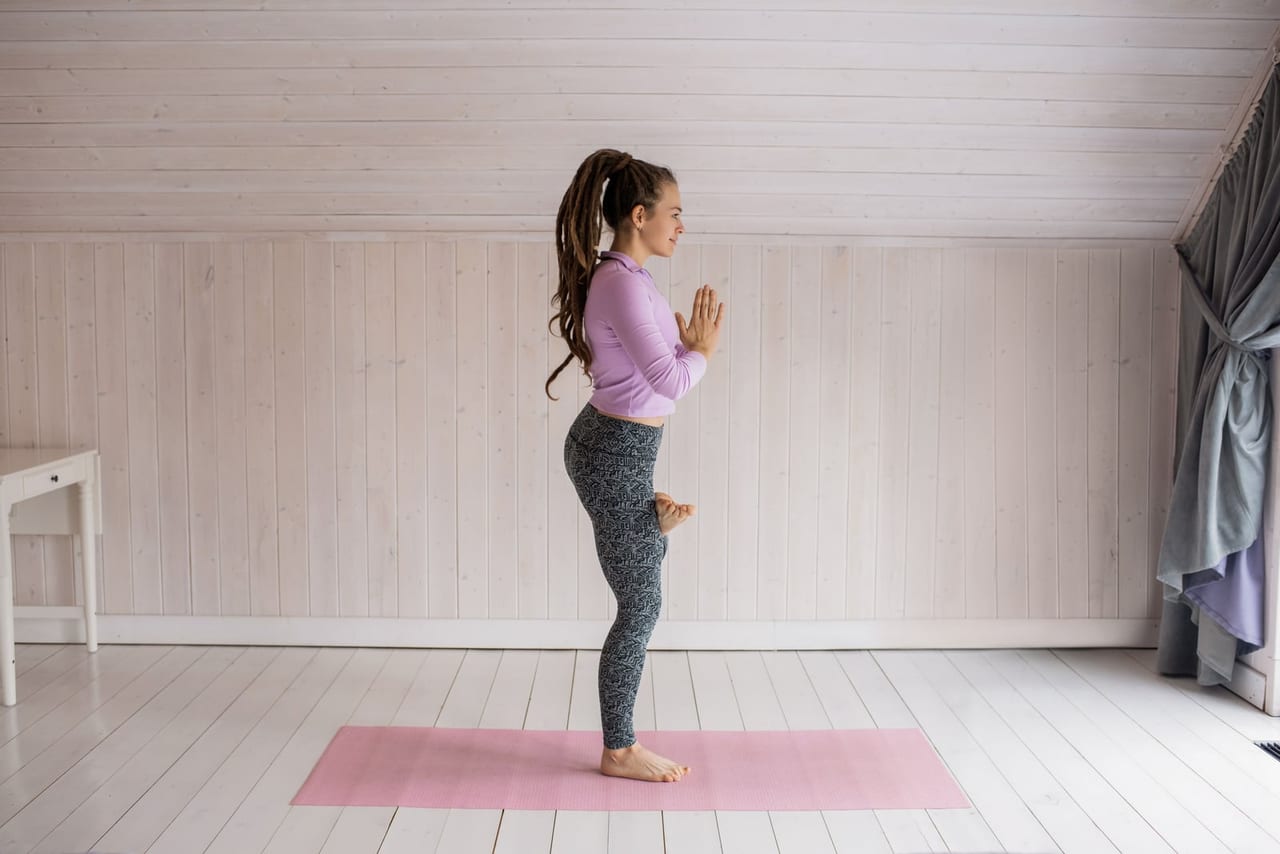
Stand on one foot for a few seconds, beside a counter with a fingertip resting on it, and watch what happens. Your foot and ankle keep moving, tightening, easing and shifting under you. That isn't a sign you're doing it wrong: it's the balance system working in plain view, and most of the time its work goes unnoticed until you start to feel a little less sure on your feet.
The change, when it comes, is usually small. It might be a hand that reaches for the wall while you pull on a sock, a little extra care on a wet floor, or a step down that you no longer take without thinking. Small as these moments are, they set you wondering what keeps you upright in the first place, and whether a few minutes of practice could make a difference.
The short answer
Balance depends partly on your feet and ankles: sensors there tell your brain where you are, and small muscles make constant corrections to keep you upright. Simple practice, such as standing on one foot beside a counter, heel-to-toe stands and gentle reaches, gives that system regular work. Move slowly and gently, hold on to something sturdy, and stop any exercise that doesn't feel right. If you're recovering from an injury or surgery, check with a healthcare professional before you start, and talk with one, too, if an ankle keeps giving way or your feet feel numb.
Why balance can feel harder
Balance is teamwork. Sensors in your feet and ankles report how your weight is spread and where each foot is, and your brain answers with small corrections from the muscles of your feet, ankles and calves. That teamwork can get harder for ordinary reasons, and the simplest is less practice. Like strength, balance can fade when it isn't used, and long hours of sitting with little time on your feet give those small corrections less work to do.
Your brain also uses your eyes to stay upright, which is why the same stand usually feels much harder with your eyes closed and why practicing in good light makes sense. Your toes press into the ground to help steady you, and toe muscles can lose strength with age. Simple toe exercises work the same small muscles that balance relies on.
An old sprain can matter too. One that didn't fully recover can leave an ankle feeling wobbly and more likely to turn again, and it may dull the ankle's sense of position for a while. That's one reason ankle exercises pair well with balance work.
Five balance exercises to do at home
Stand at a kitchen counter or behind a sturdy chair that won't slide, with a clear floor around you. A counter is steadier than a chair, and if you use a chair, choose one without wheels and set it against a wall. Move loose rugs, cords and clutter out of the way, and practice in good light. Keep one hand on the support or just above it, start with the first exercise, and add the others as each one feels steady.
Stand on one foot
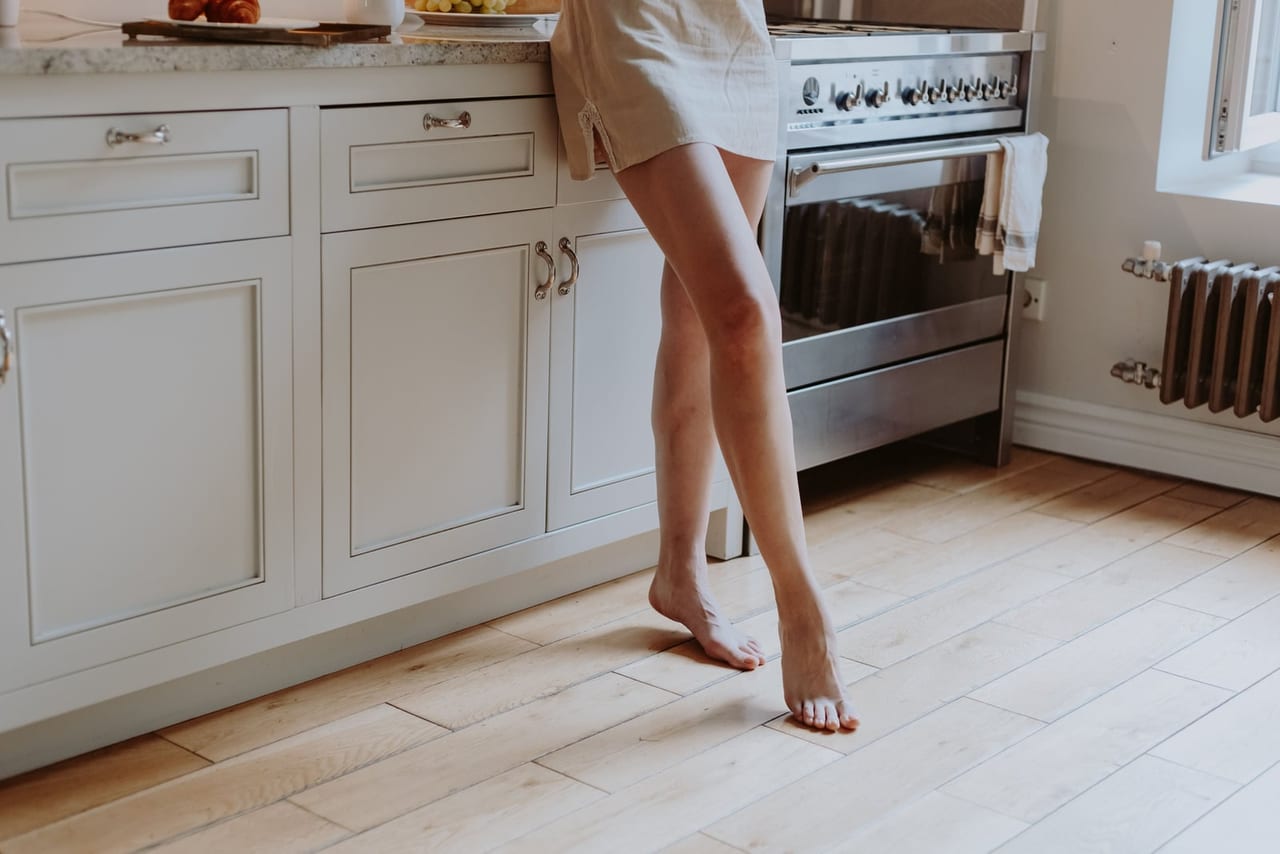
Stand at a counter with one hand resting on it. Lift one foot a little off the floor and hold for up to ten seconds, then switch. As it gets easier, hold on more lightly, with just a few fingertips.
Try a heel-to-toe stand
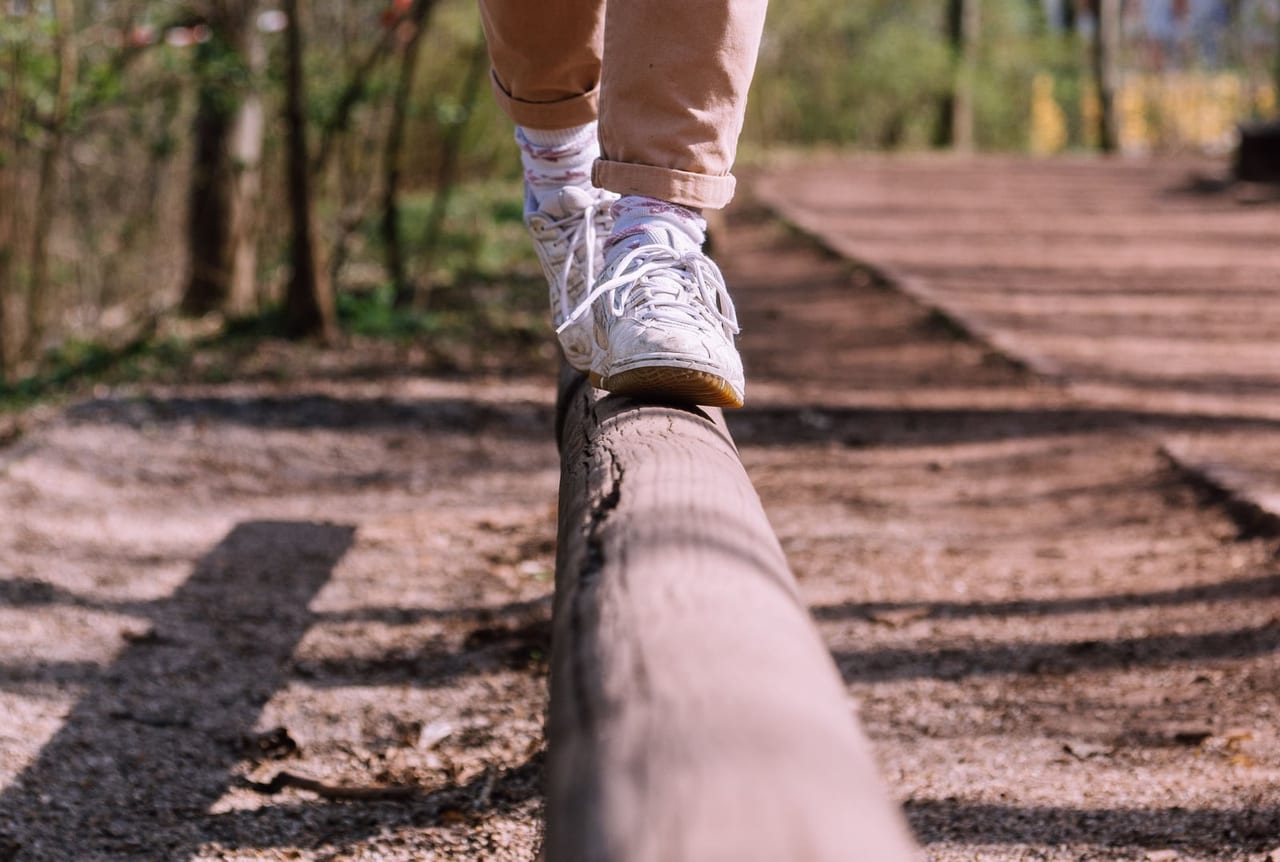
Holding the counter, place one foot directly in front of the other, heel touching toes, as if on a tightrope. Hold for a few slow breaths, then switch which foot is in front.
Walk heel to toe
Along the counter or a wall, walk slowly in a straight line, setting each heel just in front of the other foot's toes. About ten steps is plenty, or fewer to start.
Reach like a clock
Stand on one foot, holding the counter. Tap the other foot lightly forward, out to the side and behind you, like the hands of a clock, then switch feet.
Close your eyes, holding on
Stand on both feet with a hand on the counter and close your eyes for a few slow breaths. Open them whenever you need to. When that feels easy, try it with your feet closer together.
Balance exercises give those small corrections more to do, a little at a time. That's why a hold that feels shaky at first often feels calmer with regular practice, and why holding on is no failure: it keeps the practice safe while your feet do the work.
Each exercise does that by taking away a little of the help balance usually gets. A one-foot stand removes the second foot, the heel-to-toe stand and walk narrow your base to a single line, and the clock reach keeps shifting your weight while the standing foot adjusts. Closing your eyes takes away what your eyes contribute. Knowing which help you've removed makes it easy to give some back when a move feels too wobbly: a firmer grip on the counter, or open eyes.
What you wear on your feet matters
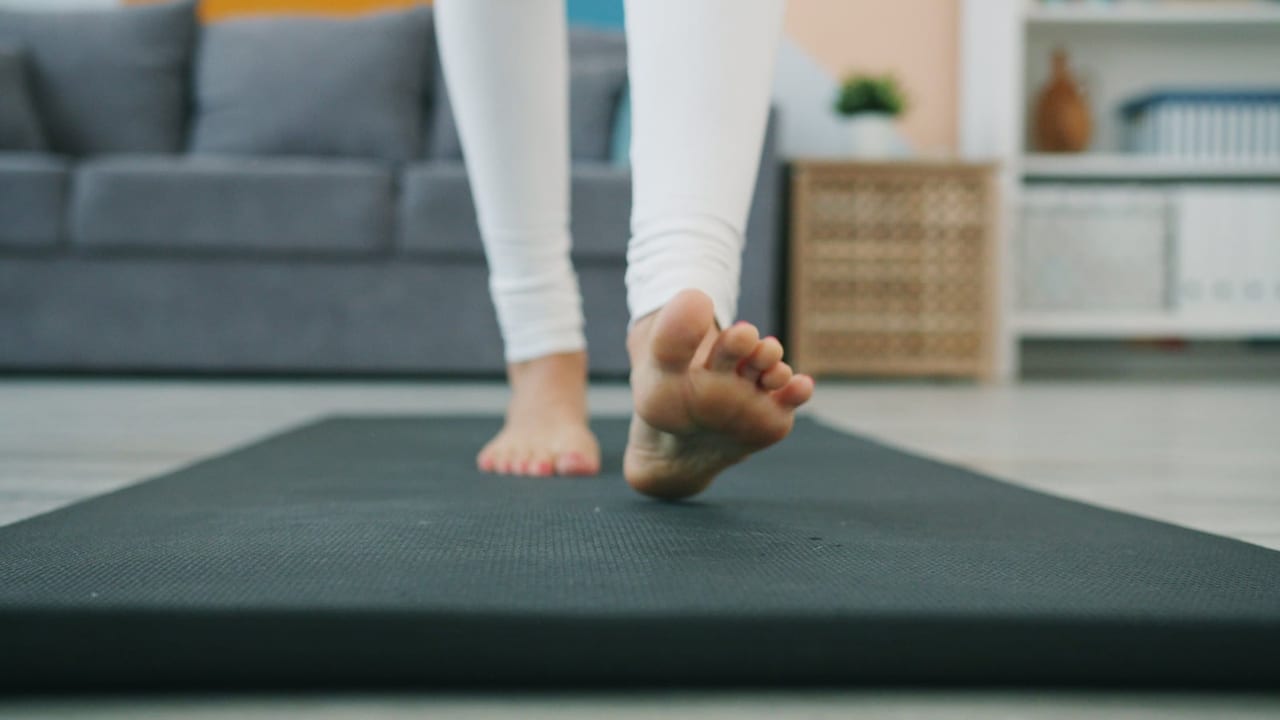
Socks on a smooth floor, high heels and loose shoes that let your heel slip all give your feet a less secure base to work from. Low heels, nonskid soles and a firm heel counter help give them a steadier one for everyday wear. The heel counter is the stiff back of the shoe that wraps around your heel.
Balance practice happens beside a counter, but everyday balance happens in your shoes, so their fit and what's inside them matter too. Every step is a brief stand on one foot, repeated all day, and a shoe that holds your heel in place gives each of those steps a steadier start than one that lets your foot slide.
When balance trouble may mean something more
Some wobble is normal, especially on one foot, with your eyes closed or at the end of a tiring day, and it's the same shifting you may have noticed when you first stood on one foot. Many people also find one side steadier than the other. If the shakier side belongs to an ankle you once sprained, that old sprain may be part of the reason. Giving the harder side a little extra practice is reasonable.
The line worth drawing is between practice and the rest of your day. A wobble beside the counter is the exercise doing its job, but unsteadiness that follows you into ordinary walking, or a fall, is a different matter. Pay closer attention, too, if an ankle keeps rolling or giving way, your feet feel numb or tingly, or standing and walking are getting harder. It may not be serious, but it's a reason to get checked.
Questions people ask
How long should I stand on one foot?
Start with whatever feels steady, even a few seconds. Work up to about ten seconds on each foot while holding on, switching sides each time. When that feels easy, hold on more lightly, with just a few fingertips, before you try holding longer.
How often should I do balance exercises?
Short, regular sessions are easier to keep up than long ones. Regular practice is what gives those small corrections steady work. A few minutes on several days a week is a gentle place to start, and a one-foot stand at the counter fits easily into daily routines.
Should I do balance exercises barefoot or in shoes?
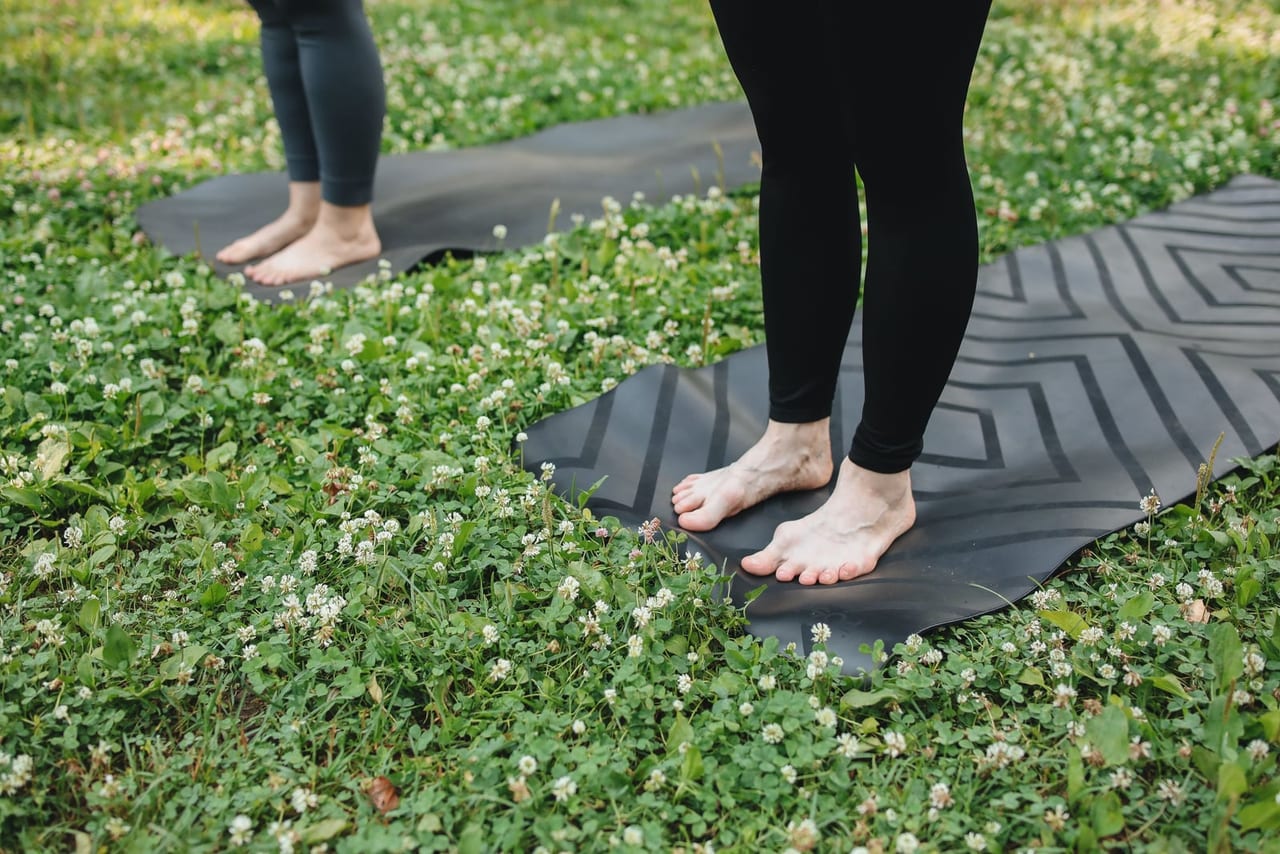
Either works on a non-slip floor: bare feet let you feel the ground, and flat shoes with a sole that grips are fine too. Avoid socks on smooth floors, where they can slip. If you have diabetes or reduced feeling in your feet, keep socks and shoes on.

The bottom line
Balance does its work so quietly that you tend to notice it only when it falters, and for the same reason it's easy to leave unused. A few seconds at a time beside something sturdy, with a hand on the counter for as long as you need it, is a gentle way to put it back to work.