Simple Arch Exercises You Can Do Anywhere
Your arch is held up by bones, a strong band of tissue and small muscles inside the foot. These simple exercises work those muscles in about ten minutes, anywhere.
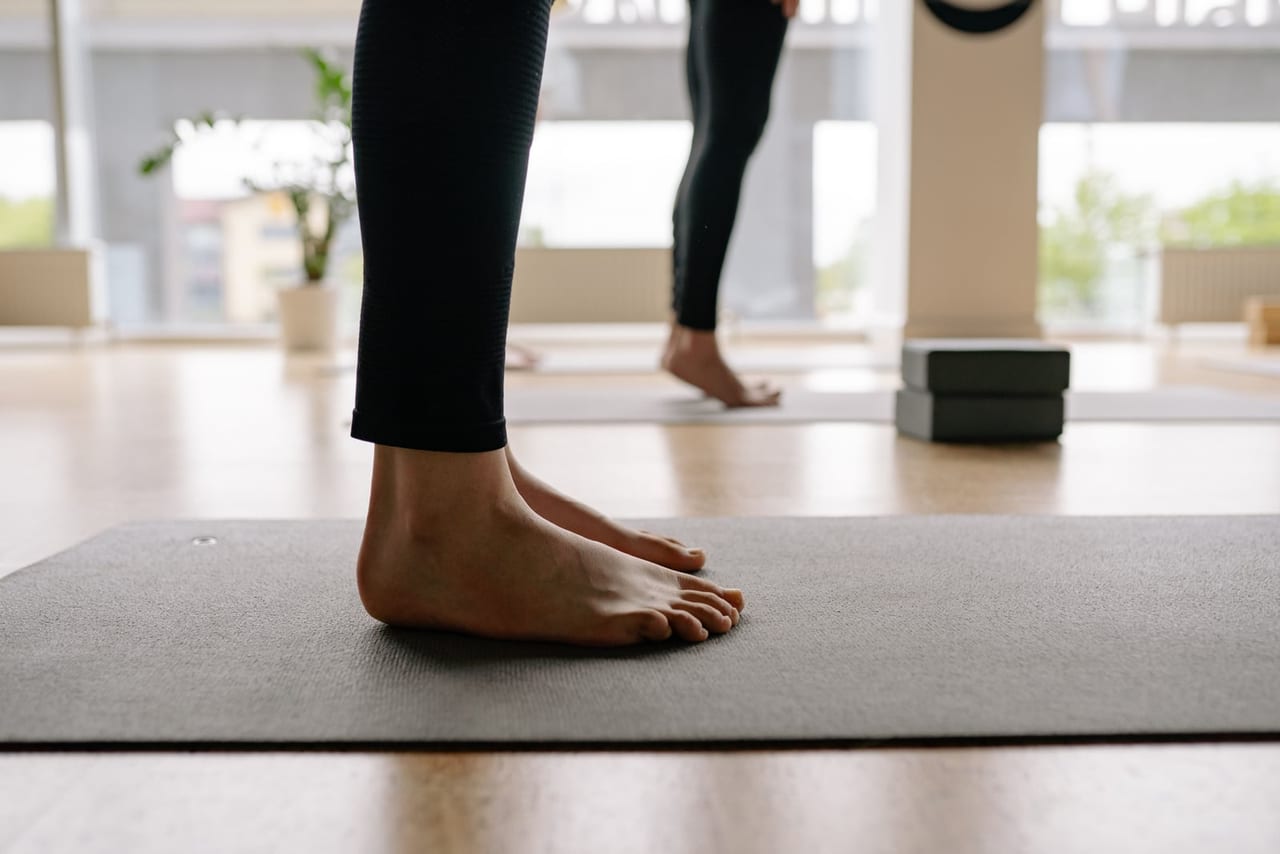
Slip off your shoes and stand barefoot for a moment, with your weight spread over both feet. Under that weight the long inner arch flattens slightly and then springs back, a little like a spring that stores and returns energy. That small give is normal, and it's part of how the foot handles each step.
At the end of a long day that same give can feel like a tired ache under the arch, the kind that fades with rest. How much of it is up to you, and can exercises change an arch that looks low? The hours between sessions raise a question of their own, which is where shoes and insoles fit in.
The short answer
Arch exercises work the small muscles inside your foot that help steady the arch. The short foot, a towel scrunch, toe yoga and slow heel raises take about ten minutes and need only a chair and a small towel. Practiced a few times a week, they can help those muscles get stronger, but they won't change the shape of your bones or turn a low arch into a high one. Move slowly and gently, and stop any exercise that doesn't feel right. If you're recovering from an injury or surgery, check with a healthcare professional first.
What holds up your arch
The arch is not one part but several, working together with every step. The small bones of the midfoot and the long bones that lead to the toes form the arches. Underneath, the plantar fascia, a thick band of tissue running from the heel toward the toes, helps hold the arch up from below.
Alongside that framework, small muscles inside the foot help steady the arch and adjust your foot to the ground as you stand and walk, and they're the muscles this routine works. Some things make the arch work harder: when shoe cushioning flattens or a footbed gives the arch little support, more of the pressure lands on the heel and the ball, and a lower arch can also make the foot work harder to stay steady. Over a long day in tired shoes, that extra work adds up, which may be part of why an arch can ache by evening and feel fine again after rest. There's more on the arches in how your feet work.
What arch exercises can and cannot do
Muscles respond to regular work, and the small ones in your feet are no exception. With regular practice these exercises can help them get stronger, and strong feet tend to feel more stable. They also have limits: exercises will not reshape the bones of your foot or turn a low arch into a high one.
Insoles don't change the shape of your foot either; they add support while you wear them. That makes exercises and support different jobs: the exercises work the muscles for a few minutes, while supportive shoes or insoles spread pressure across your foot through a long day, and many people use both.
The arch routine, step by step
Start seated, then stand with a chair or counter within reach, since the routine moves from sitting to standing and finishes with slow heel raises. The whole thing takes about ten minutes and needs only that chair or counter and a small towel. Barefoot is easiest, because you can see your arch move, and every move should be slow and gentle.
Make a short foot, sitting
Sit with your feet flat and your toes long and relaxed. Gently draw the ball of one foot toward the heel so the arch lifts and the foot looks a little shorter, without curling the toes. Hold for about five seconds, relax, and repeat about ten times, or fewer to start.
Scrunch a towel
Lay a small towel flat under one foot. Curl your toes to bunch the towel up under your foot, then relax and smooth it out. Repeat about five times on each foot.
Practice toe yoga
Lift only your big toes while the other toes stay down, then press the big toes down and lift the other four. Alternate slowly, about ten times, or as many as you can while the movement stays controlled.
Make a short foot, standing
Stand with one hand on a chair or counter and your weight spread over your heels and the balls of your feet. Lift the arches the same way, without curling the toes, and hold for a few seconds. Repeat several times.
Finish with slow heel raises
Holding the chair or counter, rise slowly onto the balls of your feet, then lower your heels slowly back down, ten times. Rest, then do a second set of ten.
The order has a reason. Sitting lets you find each movement without your full weight on the arch, which helps with the short foot in particular, since the change is small and easy to miss at first. Standing asks the same small muscles to lift the arch with your weight on top of it, closer to the way they work when you stand and walk. The heel raises then finish by lifting your whole weight onto the balls of your feet.
Two or three times a week is a good start, and a few minutes most days is fine if it feels good. Regular practice is what counts. Through it all, keep your toes long and relaxed, and if they start to curl, make the movement smaller.
Your arches during the rest of the day
A few minutes of exercise is only part of the picture, because what your feet stand in for hours matters too. A firm heel counter, the stiff back of the shoe, keeps your heel steady, and if your heel slips, the shoe is too loose. Under the arch, shoes or insoles with some arch support spread pressure across more of the foot, not just the heel and the ball.
Cushioning has to keep its spring: press a thumb into the heel of an insole, and if the foam stays flat, it's worn. Position matters too, since standing in one spot keeps the same muscles working for hours, so shift your weight or walk a few steps now and then. If you're comparing insoles, how to choose insoles walks through the options.
When arch pain may mean something more
Some people notice a little muscle tiredness under the arch after new exercises. If that happens, ease off and build up slowly. An ordinary end-of-day ache that fades with rest is common too, and it's a different matter from pain that hangs on.
Pay closer attention if arch or heel pain lingers for weeks, or if one foot bothers you far more than the other. Both feet share the same shoes and the same hours, so an ache that singles out one of them isn't simply the day catching up. A change you can see or feel, such as one arch looking lower than it used to, is worth noticing too. It may not be serious, but it's a reason to get your feet checked.
Questions people ask
What is the short foot exercise?
It's a small squeeze that lifts the arch by drawing the ball of the foot toward the heel while the toes stay long and relaxed. From the outside it looks like very little, because the work happens inside the foot.
Can arch exercises change flat feet?
They can help the small muscles of the foot get stronger, but they don't change the shape of your bones. Many people with low arches have no trouble at all, so pain, not arch height, is the thing to watch.
Can I do arch exercises in shoes?
Some of them, yes. Heel raises and toe yoga work in roomy shoes, but the short foot and the towel scrunch are easier barefoot, where you can see the arch move. For more toe work, try simple toe exercises.
The bottom line
The small give of an arch under your weight is normal, and no amount of exercise will reshape the bones that form it. The muscles that steady it are the part of the story you can work with, and like any muscles, they respond to regular, gentle work.