How to Find Your Arch Type at Home: The Wet Test
A wet footprint is a simple way to see how high your arch sits. The test is easy to do at home, though the print can tell you less than it seems to.
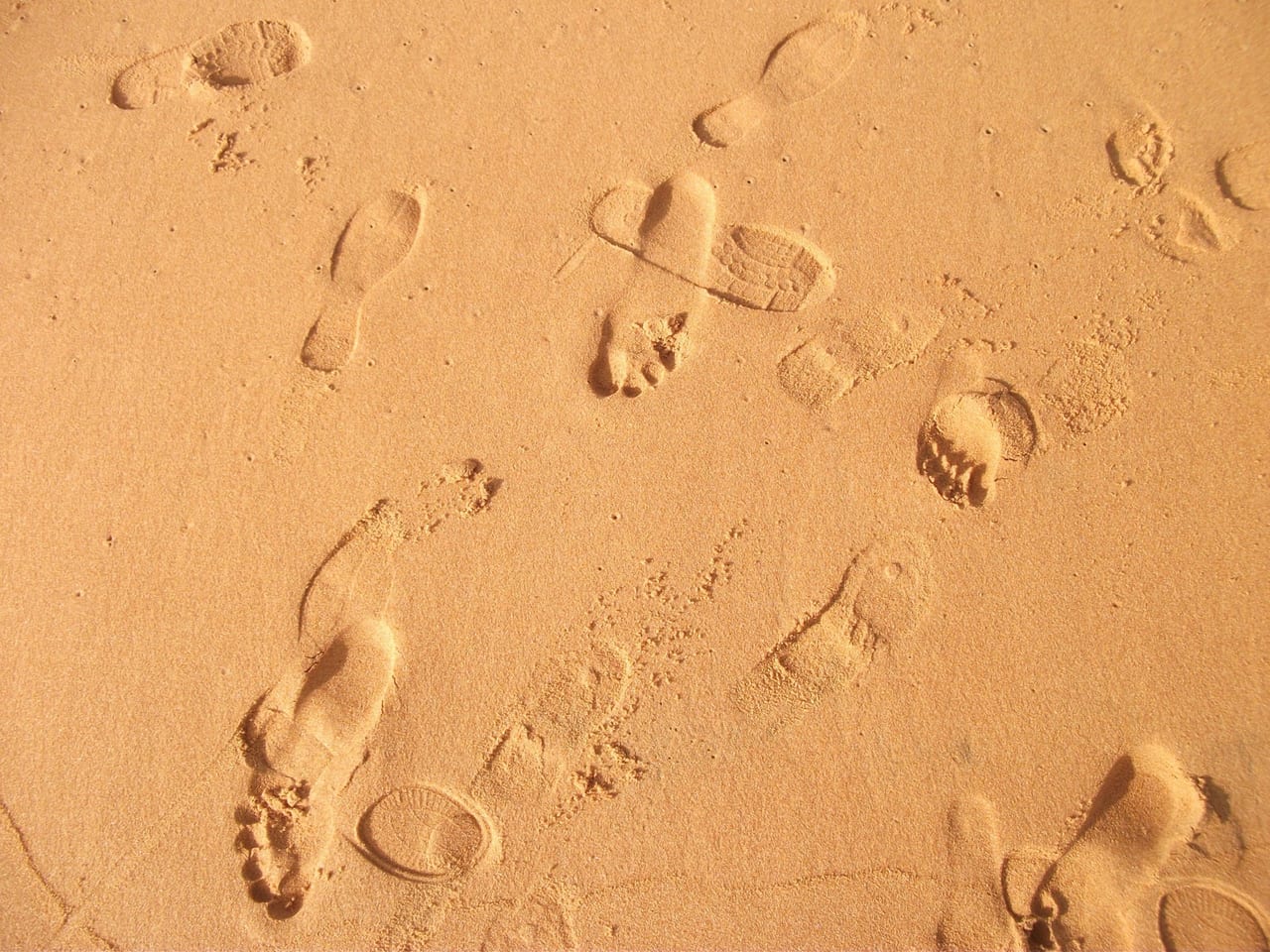
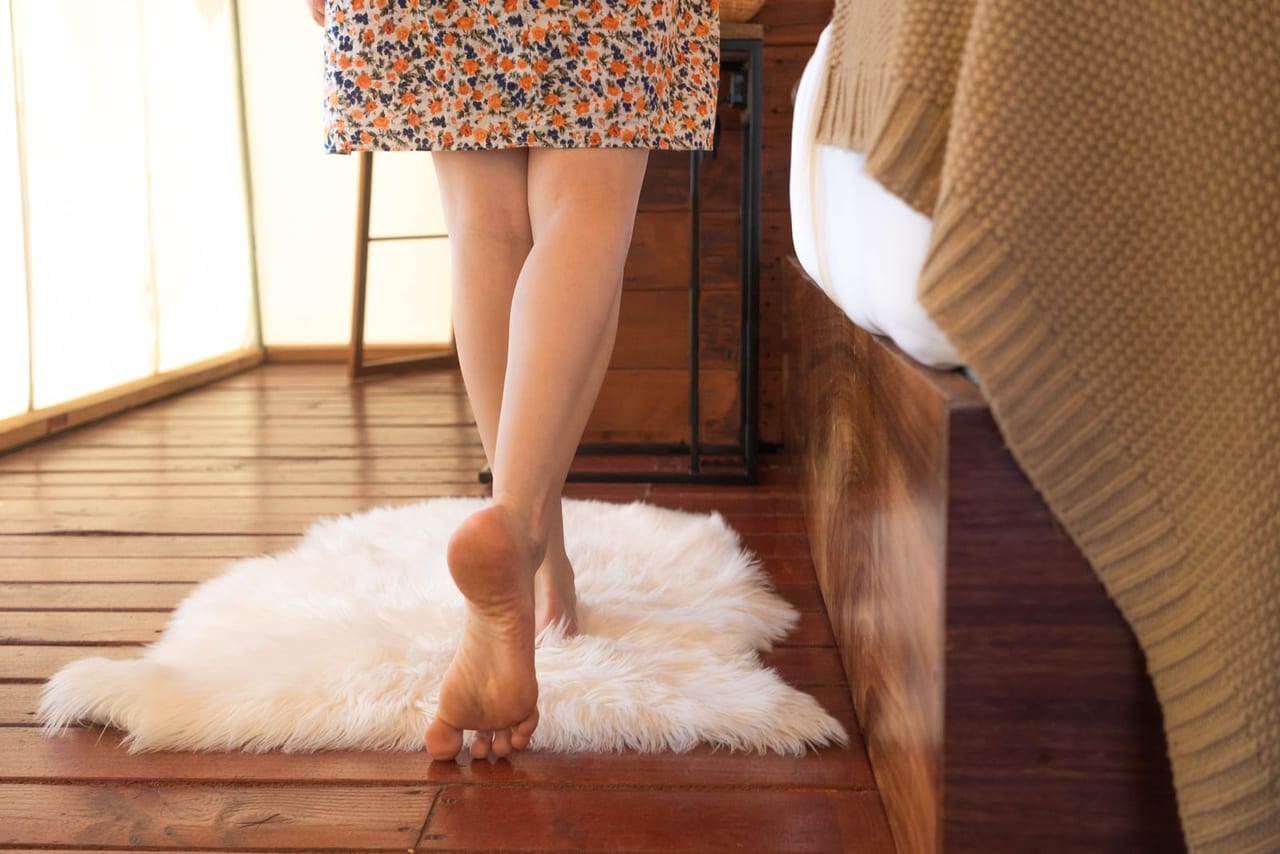
Step out of the shower onto a dry bath mat and you leave a damp footprint behind. Some prints show almost the whole sole, others little more than a heel, a ball and a thin strip between them. It's natural to stand there and wonder what yours says about your feet, and whether it should change the shoes or insoles you pick next.
The question usually comes with a reason attached. Perhaps one pair of shoes leaves your arches tired by evening while another doesn't, or someone has glanced at your bare feet and called them flat. Either way, it would be convenient if a single label could settle the matter.
The short answer
Wet the soles of your feet, stand on a brown paper bag for a few seconds, and look at the prints. A print that shows almost the whole sole suggests a low arch, a clear curve on the inside suggests a medium arch, and a thin strip or a gap between heel and ball suggests a high arch. Use the result as a starting point for choosing comfortable shoes and insoles, not as a verdict on your feet. Pain that doesn't ease with rest, swelling, numbness, or changes you can see in your feet are reasons to talk with a healthcare professional.
What your footprint can tell you
The wet test shows how much of your sole touches the ground when you stand, and the part to watch is the inside edge, under the long arch that runs from the heel to the ball of the foot. A print that shows almost the whole sole, with little or no curve along the inside, suggests a low arch, often called flat feet. A low arch can make the foot work harder to stay steady, yet many people with low arches have no trouble at all.
Between the extremes, a clear inward curve with a band of medium width joining the heel to the ball of the foot suggests a medium arch, one that flattens a little under your weight but keeps its shape. At the other end, a print with only a thin strip, or nothing at all, joining the heel to the ball suggests a high arch. A high arch puts more of your weight on the heel and the ball.
Why one footprint is only a snapshot
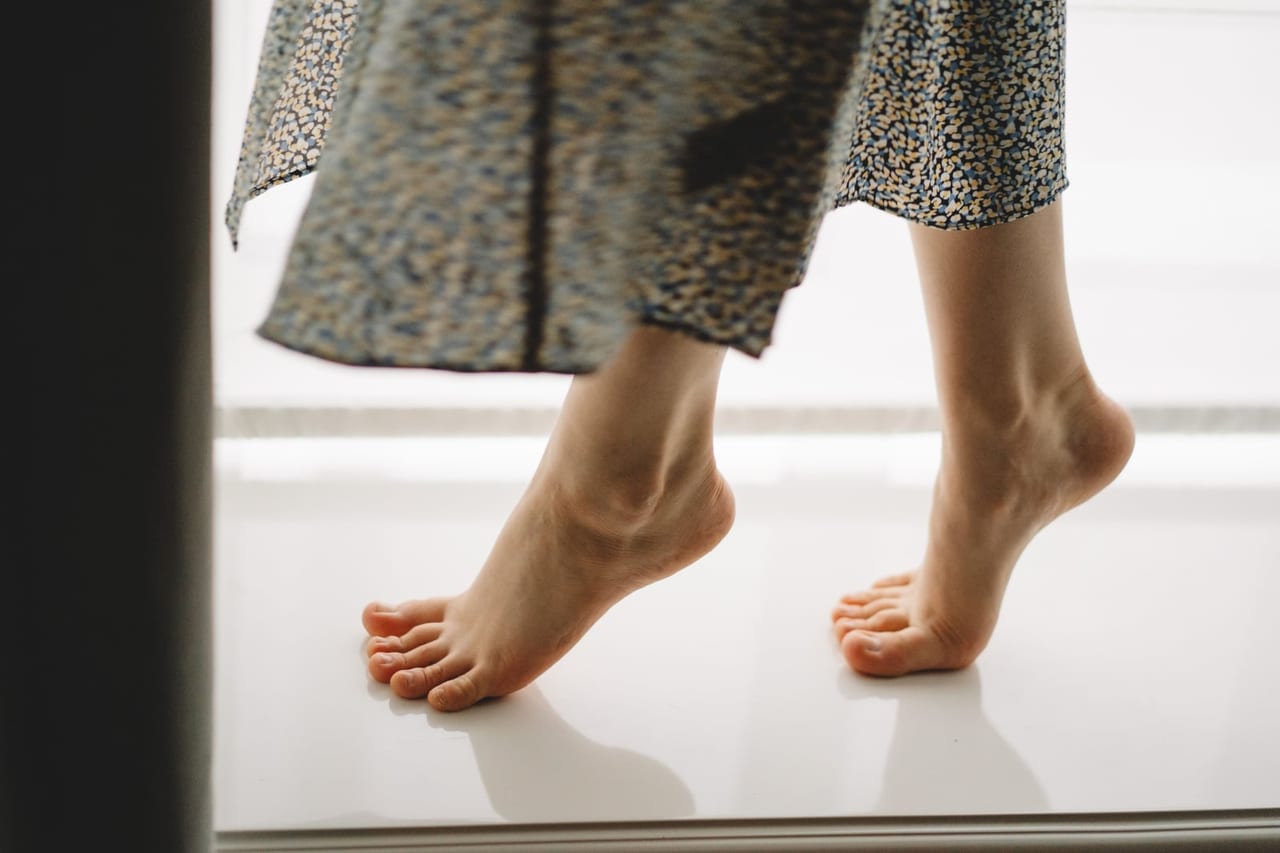
Your arch is not fixed in place. It flattens slightly as it takes your weight and lifts again as the weight moves on, and it rises when you go up on your toes. So a print made standing still shows your arch at one moment, under your full weight.
That's why it's worth looking at your feet sitting and on your toes as well. Sitting takes most of your weight off the arch, and rising onto your toes lifts it, so the difference between those views and your print hints at how much your arch flattens under your weight. A print also can't show how your feet move when you walk, and there's more on the moving parts in how your feet work. The test is meant for adults, because children's arches are still developing.
How to do the wet test
The test takes about five minutes. You'll need a shallow tray or a bath mat, a kitchen counter or a sturdy chair, a brown paper bag or a sheet of dark paper, a little water and a pencil. Use a floor that won't get slippery, move slowly, and hold on to something steady when you rise onto your toes; if you're recovering from an injury or surgery, check with a healthcare professional first.
Wet the soles of your feet
Pour a little water into a shallow tray and step in, or step out of the shower, so your soles are damp but not dripping.
Stand on the paper
Step onto a brown paper bag or a sheet of dark paper on a flat floor that will not get slippery. Stand for a few seconds with your weight spread evenly over both feet.
Step off and trace the prints
Step straight off and look right away, before the water dries. Tracing each outline with a pencil gives you a record to keep.
Read the shape of each print
Look at the inside edge, between the heel and the ball of the foot. A full print, a clear curve or a thin strip tells you whether your arch looks low, medium or high.
Look again sitting and on your toes
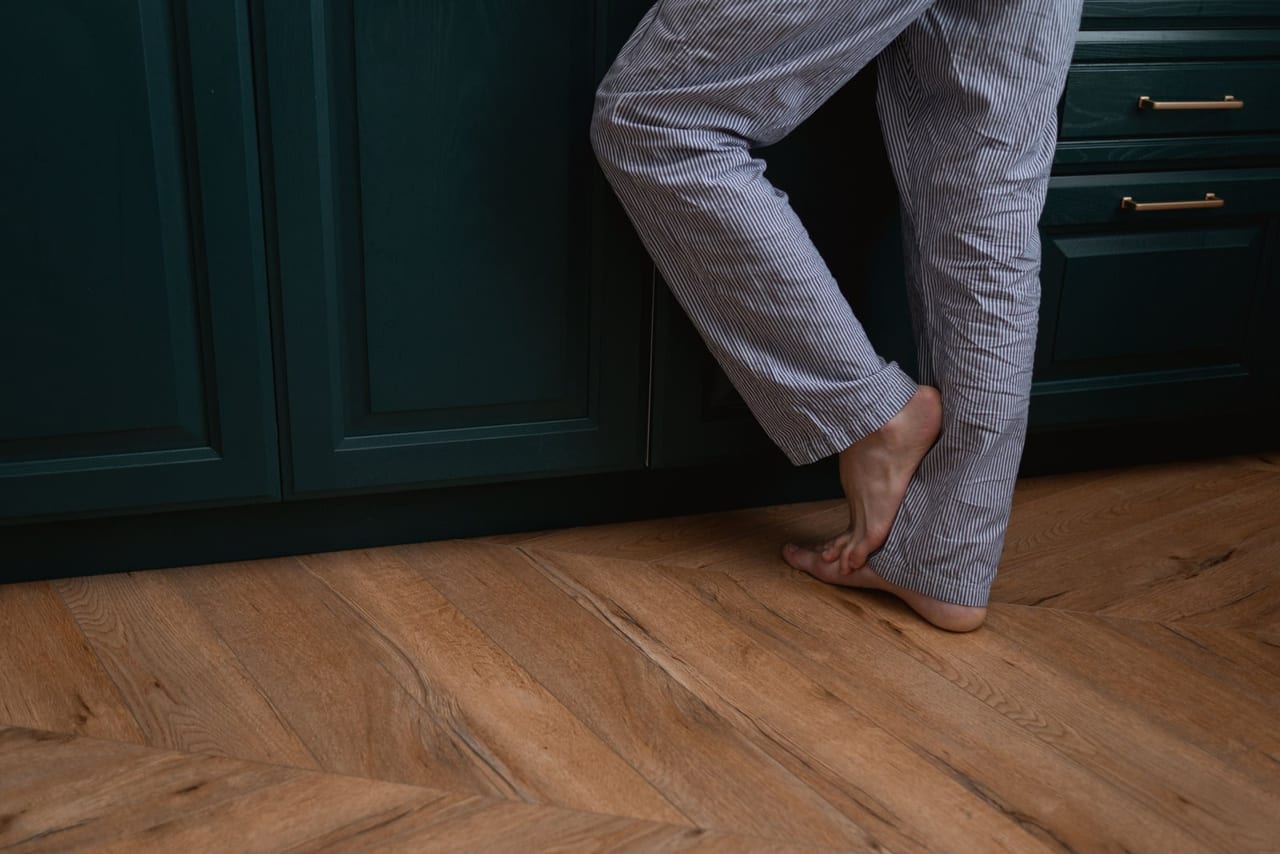
Sit and look at the inside of each foot. Then stand beside a counter, hold on, and rise slowly onto the toes of one foot. Notice whether the arch looks higher than it did in your print.
Compare both feet and keep the result
Check both prints, since your two feet are not always the same. Keep your tracing, and do the test again before you choose new shoes or insoles.
Whatever the print shows, take it as a first look rather than an answer. It becomes more useful when you set it beside what you noticed sitting and on your toes, and beside how your feet feel in the shoes you wear.
Using your result for shoes and insoles
Your print can narrow the choice, but your own feet have the final say, and how a shoe or insole feels when you stand and walk in it matters more than any label for arch type. With a low print, a firm heel counter keeps the heel steady and some support under the arch spreads pressure across more of the foot; together they may feel steadier. With a high print, more of your weight sits on the heel and the ball, so cushioning in those areas and an arch shape that fills the gap underneath can make a shoe more comfortable.
Firmer isn't always better, since a very rigid arch can feel uncomfortable. Insoles can add comfort and support, but they don't change the shape of your foot, and there's more on choosing them in insole fit basics and how to choose the right insoles. Try them in the shoes you'll wear them in, after taking out the factory insole, and walk around before you decide, because a pressure spot you feel at first may not fade with wear.
When your arches may mean something more
Arch height varies from person to person, and a low or high print on its own isn't a reason to worry. Tired feet after a long day are common with any arch. If they feel better by morning, that's the ordinary pattern.
Pay closer attention if your footprint or the shape of one foot seems to change over time, or if one foot bothers you far more than the other. The same goes for discomfort that lingers or builds over several weeks. It may not be serious, but it's a reason to get your feet checked.
Questions people ask
How do I know if I have flat feet?
A wet footprint is a simple first check: a print that shows almost the whole sole, with little or no curve on the inside, suggests a low arch, often called flat feet. It's only a first look, so if your feet hurt, or one foot changes shape, have them checked.
Do I need arch support if I have low arches?
Not necessarily, since many people with low arches have no trouble at all. If you want more support, choose what feels comfortable when you stand and walk, and remember that insoles can add comfort and support but do not change the shape of your foot.
Why do my two footprints look different?
Your two feet aren't always the same size or shape, which is why the test asks you to check both prints and keep a tracing of each. Choose shoes and insoles that feel comfortable on both feet, and have it checked if one foot starts to hurt or look different.
The bottom line
The footprint on the bath mat dries within minutes, and it captures only a moment: where your arch sits under your full weight while you stand still. It's a fair place to begin, but the better guide is the feel of a shoe on your own feet as you stand and walk, and no print can show you that.