Plantar Fasciitis: Why Your Heel Hurts With the First Steps
A heel that's sharply sore for the first steps after getting out of bed or up from a chair, then loosens as you walk, is a familiar complaint. It leaves you wondering what's going on under the foot, and whether to keep walking on it.
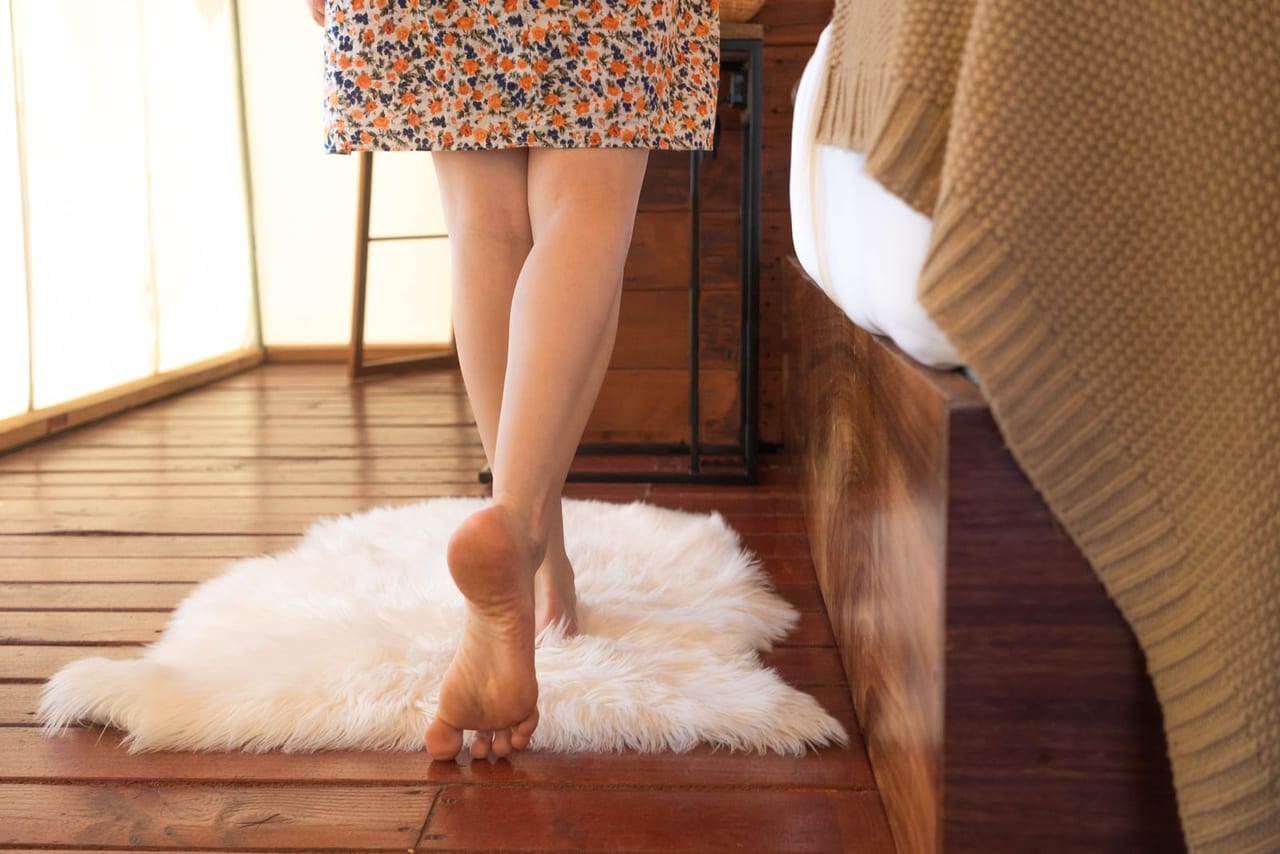
The alarm goes off, you swing your legs out of bed, and the first step lands on a heel that feels bruised. A few steps later the soreness has dulled, and by the time the coffee is made you've almost forgotten it. Then comes an hour at a desk or a long drive, and the same sharp ache is back for the first steps after you stand. It's an odd pattern, a heel that hurts most when it has done the least, and it's easy to wonder whether something is damaged or whether this is simply what the years bring.
The short answer
Plantar fasciitis is heel pain from the plantar fascia, the thick band of tissue that runs along the bottom of the foot from the heel bone to the base of the toes. When the band is asked to carry more than it's ready for, it can become irritated and strained, and the pain is typically sharpest with the first steps after rest and fades as you move. Day to day, people commonly ease back on whatever sets it off, stretch the calves and soles and choose cushioned, supportive shoes. Talk with a healthcare professional if the pain hasn't started to ease after a few weeks, or if it comes with numbness, swelling, redness or trouble walking.
What plantar fasciitis is
Along the bottom of each foot runs the plantar fascia, a thick band of tissue that stretches from the heel bone to the base of the toes. It helps hold up the arch, and it takes on stretch each time you step. Plantar fasciitis is the name for pain that comes from this band becoming irritated and strained, and it's one of the most common causes of heel pain. The "-itis" in the name sounds like a sudden flare-up, but the picture is often slower: tiny tears and wear in the fibers, usually near the heel, building up faster than the tissue can adapt.
The pain is usually felt under the heel, sometimes along the arch, and it tends to build gradually instead of arriving all at once. It's typically sharpest with the first steps after waking or after a long time sitting, and it often fades after a few minutes of walking. It tends to return after long periods on your feet and can be sorer after exercise than during it. It can affect one foot or both. Other heel problems can feel similar, so if this sounds familiar, a healthcare professional can tell what's going on.
Why the first steps are the sorest
While you sleep or sit, the foot rests in a relaxed position, and one common view is that the band tightens a little in that time. The first steps then stretch it all at once. Walking stretches it gradually, which fits the way the sharpest soreness tends to fade within a few minutes.
That idea would also explain why the soreness can return later in the day: after a long spell in a chair or a car seat, the band has had time to tighten again. Hours of standing or walking add load on top of that, so for some people the heel gets sorer toward evening.
Why the heel takes the strain
The plantar fascia handles everyday walking well, and trouble tends to start when the load rises faster than the tissue can adapt. A sudden step up in walking or running, a new job on a hard floor, or a long day on your feet after a quiet week can all do it. Hours on concrete or tile are linked to heel pain, and so are activities that pound the heel, such as running and dance.
Tight calf muscles and a stiff Achilles tendon limit how far the ankle bends, and both are linked to this kind of heel pain. So are very flat feet, very high arches, worn or thin-soled shoes and higher body weight. It's most common in people between about 40 and 60. It isn't fully understood why one person gets plantar fasciitis while another with the same job, shoes and habits doesn't, and it's usually a mix of factors rather than a single cause.
Everyday habits for a sore heel
These are everyday habits people commonly use, not a course of care. You need a wall, somewhere to sit and a pair of cushioned, supportive shoes. For the stretches, move slowly and gently, never bounce, and stop anything that doesn't feel right; people recovering from an injury or surgery should check with a healthcare professional first.
Ease into the first steps
Before you stand, some people circle their ankles and flex their feet a few times. Supportive shoes or sandals by the bed mean the first steps aren't barefoot on a hard floor.
Stretch your calves
Face a wall and step one foot back, keeping that knee straight and the heel down. Lean in until you feel a gentle pull, hold for about 30 seconds and switch sides.
Stretch the sole of your foot
Sit with one foot across the opposite knee and slowly pull the toes back toward your shin until you feel a stretch along the sole. Hold for about 10 seconds, then repeat a few times on each foot.
Choose cushioned, supportive shoes
Look for a cushioned heel, some structure under the arch and a sole that isn't worn through. Many people find these more comfortable than flat, thin or backless shoes, and some add cushioned or arch-supporting insoles.
Break up long spells on your feet
If your day means hours standing or walking on a hard floor, many people sit when they can, shift their weight and change position now and then.
Calf and sole stretches are among the habits most often suggested for heel pain, and plenty of people fold them into their morning and evening. Both are walked through in more detail in the guides to calf stretches for people who stand all day and stretches for the soles of your feet. Some people also like rolling the sole slowly over a chilled water bottle for a few minutes. It's a comfort habit only, so skip it if cold bothers your feet or you have reduced feeling in them.
What a healthcare professional may do
A healthcare professional can often tell what's going on from the story of the pain and a physical exam. They may ask when it hurts most and what your days, workouts and shoes involve, then press along the heel and arch and move the foot and ankle. Imaging isn't always needed, and when it's used it's often to look for another cause of heel pain, such as a stress fracture.
From there, a professional may talk through options. These can include a stretching routine, supportive footwear, heel pads or other padding, custom-made inserts, resting from the activity that sets the pain off, and a splint worn at night. For some people whose pain lasts, other care or surgery may come up. Which of these makes sense depends on the person.
When heel pain may mean something more
Ordinary heel soreness tends to follow a recognizable rhythm. It's sharpest with the first steps after rest and looser within minutes, and it creeps up over weeks rather than hours. It often tracks a change in what your feet have been doing, such as more walking, a new job or different shoes. That rhythm is common.
Pay closer attention when the picture changes. Pain that's there even at rest, pain that's getting worse, or pain that comes with numbness, tingling, swelling, redness or warmth are reasons to have it looked at, not to push through. Heel pain also has other causes, including trouble with the Achilles tendon at the back of the heel, a stress fracture and an irritated nerve.
Questions people ask
How long does plantar fasciitis last?
It varies a lot from person to person. The pain often eases gradually over weeks to months, and for some people it takes longer, in some cases more than a year. If it isn't getting better after a few weeks of everyday care, a healthcare professional can talk through other options.
Should I keep walking if my heel hurts?
Many people keep moving but change what they do: they cut back on whatever keeps setting the pain off, add time or distance in small steps, and sometimes swap in low-impact activity such as swimming. If walking is hard or the pain is getting worse, a healthcare professional can help sort out what's reasonable.
Is a heel spur the same as plantar fasciitis?
No. A heel spur is a small hook of extra bone that can form where the band attaches to the heel bone, and it sometimes shows up on imaging. Spurs aren't thought to be the source of the pain, and plenty of people have one without any pain at all. More in how heel spurs differ from heel pain.
The bottom line
A heel that hurts most at the first step is often reporting on the weeks before it. Hours on hard floors, tight calves and tired shoes can add up in a band of tissue that adapts slowly. That's why a sore heel so often turns out to be a story of load and time rather than one dramatic event.