Calf Stretches for People Who Stand All Day
A day on your feet keeps your calves working for hours, and by evening they can feel tight. A gentle routine at a wall and a step at the end of the day can help them loosen.
Sitting down at the end of a long shift is often the moment your calves speak up. They feel tight, a little heavy and slow to loosen. It can seem odd, since all you did was stand, but standing still is not rest for the muscles at the back of your lower legs.
If you stand for work, you probably know the routine: you sit down, press a thumb into a tight calf and wonder what would loosen it. The floor, the shoes and the sheer number of hours all seem to have a hand in it. A stretch at the end of the shift feels like the obvious response, though it leaves a fair question behind: how do you tell ordinary tightness from something that deserves a closer look?
The short answer
Five simple moves cover the calves after a long day: stretch at a wall with the back knee straight, then bent, lower your heels gently from a step, use a towel on the floor, and finish with a few slow calf raises. Hold each stretch for about 30 seconds, aim for a gentle pull and never bounce. Move slowly, and stop any stretch that doesn't feel right. If you're recovering from an injury or surgery, check with a healthcare professional first, and remember that pain, swelling or warmth in one calf needs checking, not stretching.
Why calves feel tight after a day of standing
Tight calves at the end of a shift usually come down to a few everyday things. Your calves make constant small adjustments to keep you from swaying too far forward, and the deeper calf muscle does much of that steady work. Walking lets your leg muscles take turns, tightening as you push off and relaxing as your foot swings forward. Standing in one spot doesn't, so the same muscles hold the same job for hours, and over a long shift it adds up.
Fluid plays a part as well. Each time your calf muscles tighten, they squeeze blood and fluid back up toward your heart, and standing still switches much of that off, so by evening your lower legs can feel heavy as well as tight. Then there's the surface under you. Concrete and tile don't give, and the cushioning in shoes wears down with use, so both can add to the strain your feet and legs take over a long day.
A calf routine for the end of the day
The routine makes more sense once you know that your calf is really two muscles. The larger one, which gives the calf its shape, starts above the knee on the thighbone, and the deeper one, the soleus, starts just below the knee. Both join above the heel to form the Achilles tendon, the largest tendon in the body.
The whole set takes about ten minutes and needs only a wall, a stair with a rail, a sturdy chair or counter and a towel. Do it barefoot or in flat shoes on a floor that doesn't slip, hold each stretch still and breathe normally. For the feet themselves, add the 5-minute foot stretch.
Stretch at a wall, knee straight
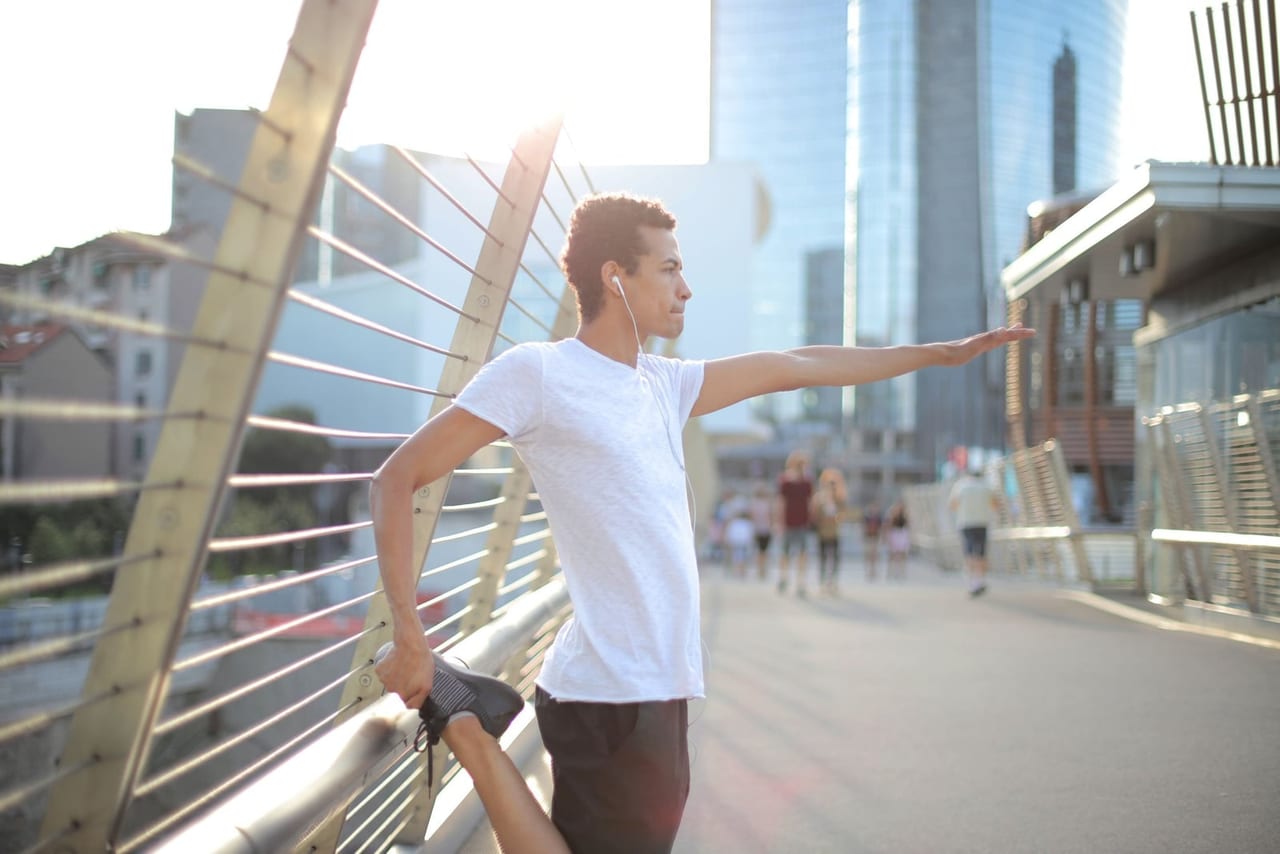
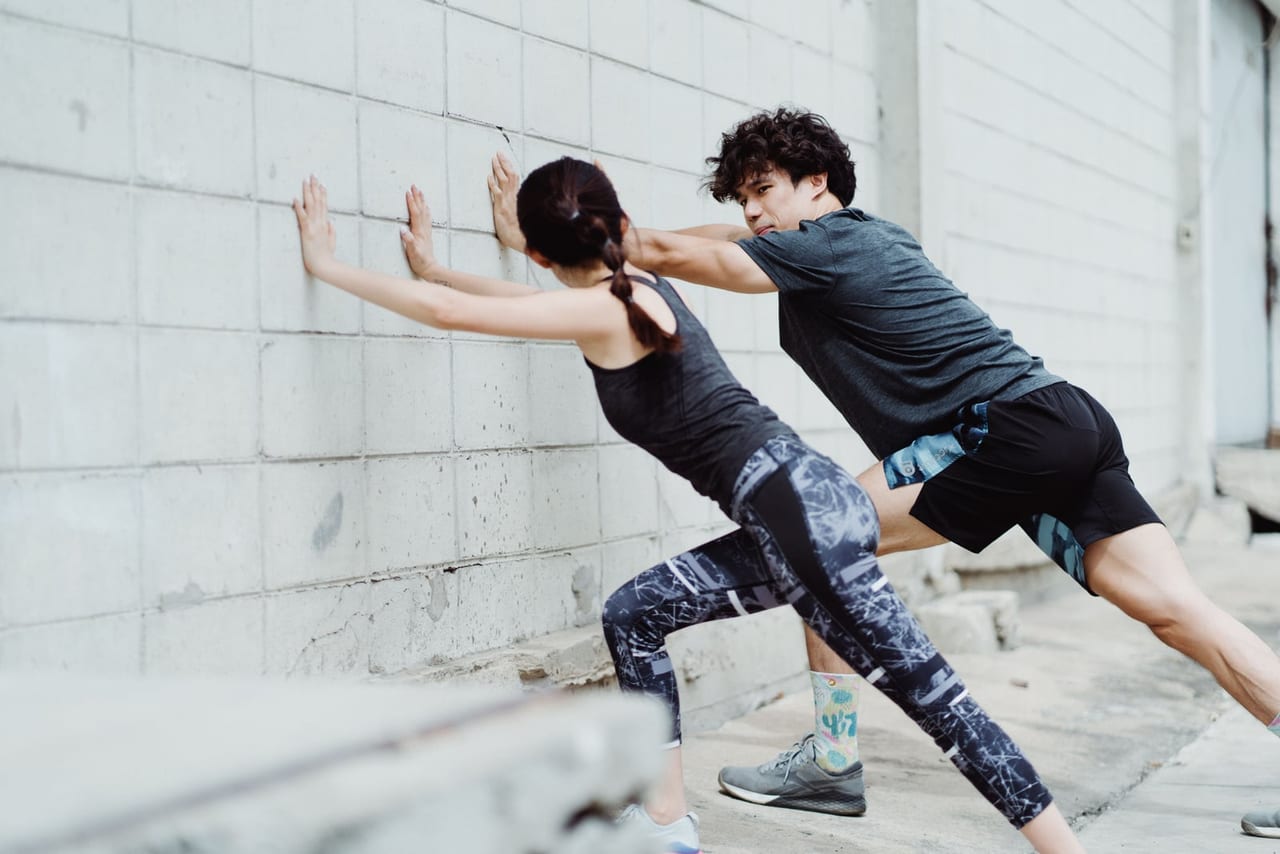
Stand facing a wall with your hands on it and step one foot back, toes pointing forward or turned in slightly. Keep that knee straight and the heel flat, and press your hips toward the wall until you feel a gentle stretch in the calf. Hold for 30 seconds, then switch legs.
Repeat with the back knee bent
From the same position, bring the back foot a little closer and bend that knee while keeping the heel down. The stretch moves lower, toward the heel. Hold for 30 seconds on each side.
Lower your heels from a step
Stand on the bottom stair holding the rail, with the balls of your feet on the edge. Let your heels sink slowly until you feel a stretch, and hold for about 20 to 30 seconds, or as long as it feels comfortable. Skip this one if your balance feels unsteady.
Use a towel on the floor
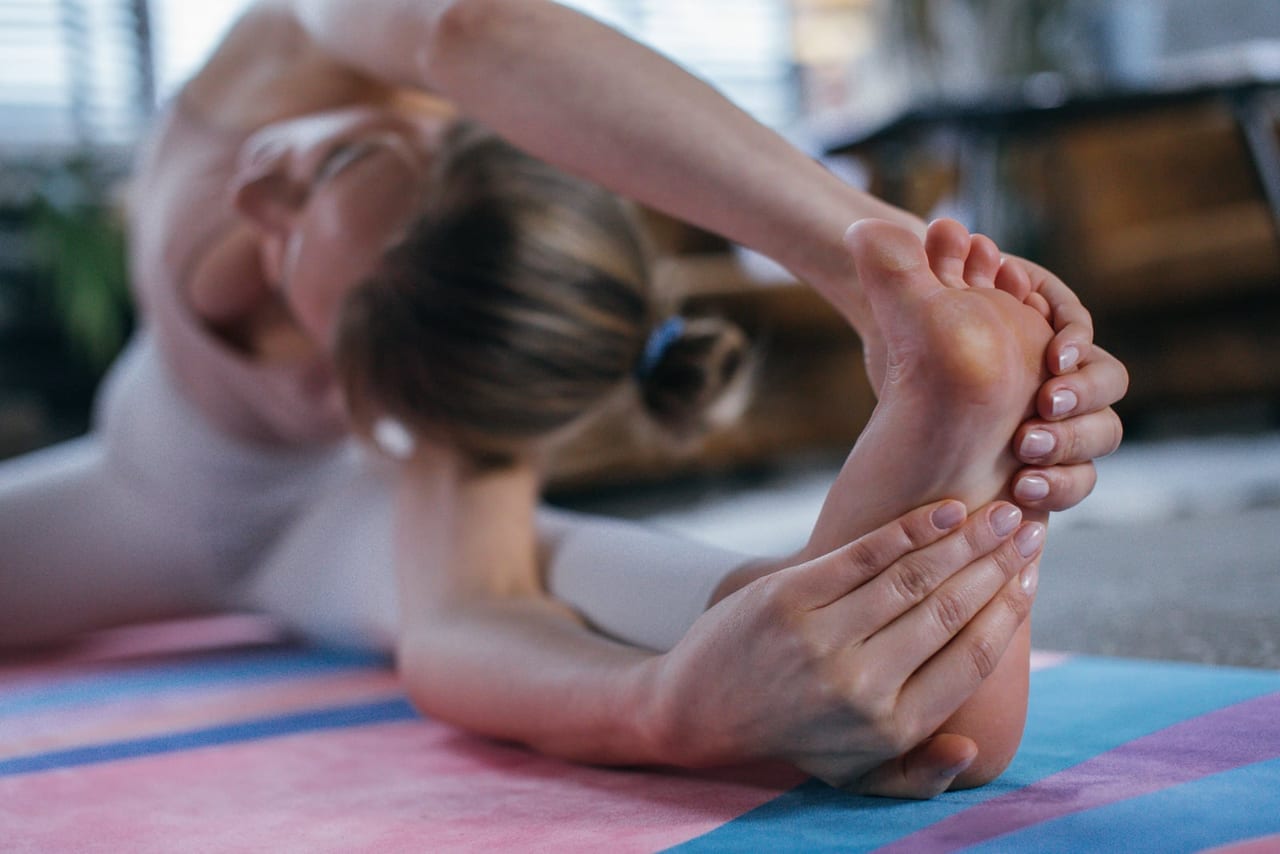
Sit with your legs straight and loop a towel around the ball of one foot. Gently pull the ends toward you, keeping the knee straight, and hold for about 30 seconds, or as long as it feels comfortable. Switch feet.
Finish with slow calf raises
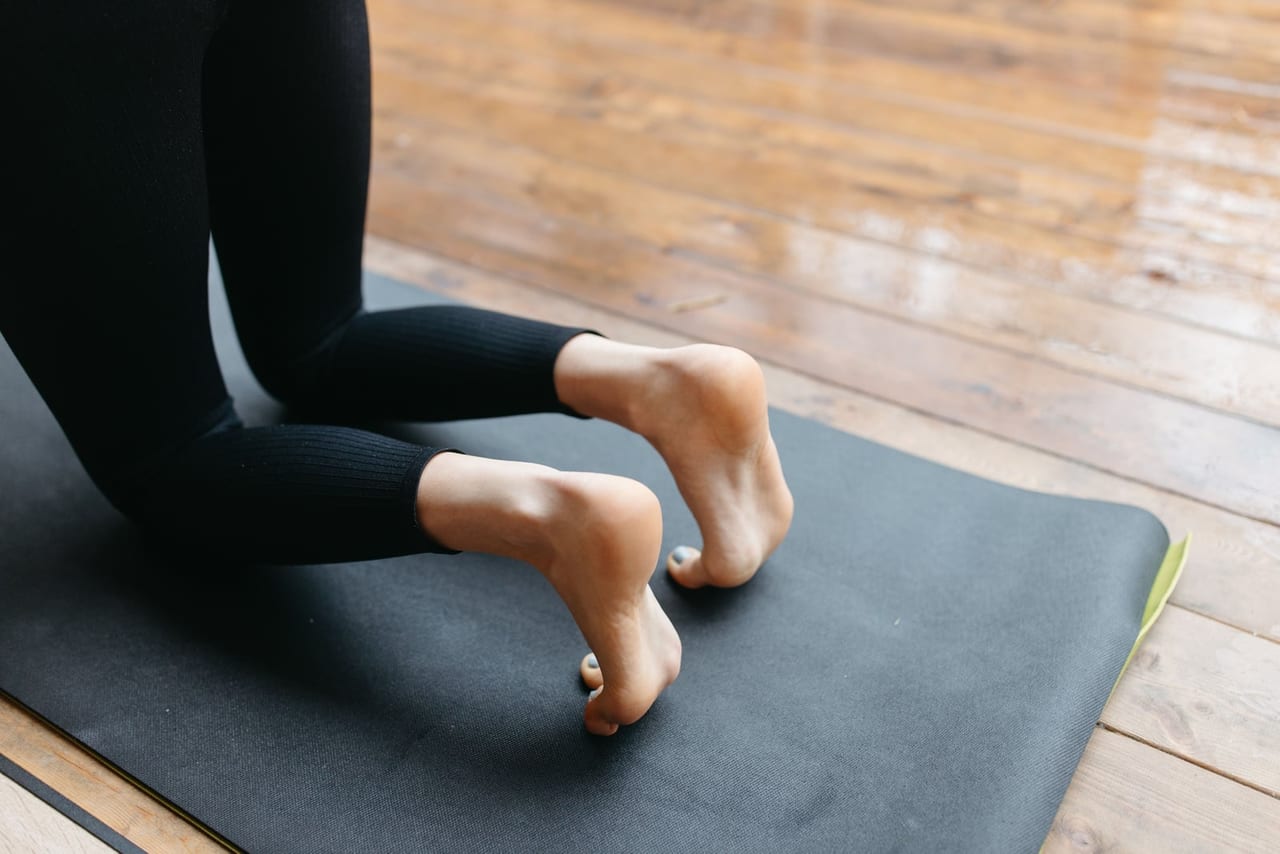
Stand holding the back of a chair or a counter. Rise slowly onto your toes, then lower your heels slowly back down, ten times. Rest, then do a second set of ten.
Notice where you feel each stretch as you go. With the knee straight, a calf stretch works mostly on the upper muscle. Bend the knee and that muscle eases off, so the stretch moves lower, to the soleus, the muscle that does much of the work of standing, which is why this routine stretches the calf both ways.
The step and the towel stretch the calf in two different ways. On the step, your body weight does the stretching as your heels sink, which is why it calls for a rail and a steady sense of balance. The towel works sitting down, with your hands setting the pull, and that suits the end of a shift, when standing a minute longer is the last thing you want.

What helps during the shift
Stretching fits the end of the day, but small changes during the shift matter too. Every half hour or so, shift your weight, rise slowly onto your toes a few times or take a short walk. If there's a low rail or step nearby, use it to prop one foot up and switch now and then. Many people find a firm anti-fatigue mat with beveled edges more comfortable than bare concrete.
Each of those small changes answers part of what a long shift takes away. A few steps let your leg muscles take turns again, and rising onto your toes gives the calves a chance to tighten and release, the squeeze that standing still switches off. Propping one foot up changes the position each leg holds, if only for a while. Most of it can happen right where you work.
Shoes count as well. Leave about half an inch in front of your longest toe, and retire pairs whose cushioning no longer springs back. An insole with cushioning and arch support can add what a thin factory footbed lacks, and there's more in insoles for standing all day.
When calf tightness may mean something more
Ordinary tightness follows a familiar pattern. Both calves feel tight or tired after a long shift and loosen up with rest, stretching and a night's sleep. Many people who stand for work feel it, and it's often most noticeable in the first weeks of a new standing job or in new shoes.
Pay closer attention if one calf hurts, swells, feels warm or looks red, if tightness lingers for weeks, or if pain comes on suddenly after an injury. Both legs share the same shift, so trouble that singles out one calf doesn't fit the everyday pattern. These are reasons to get checked, not to stretch harder.
Questions people ask
How long should I hold a calf stretch, and how many times?
About 30 seconds is enough for most people, and the step and towel stretches can be held for as long as it feels comfortable. If you have time, repeat each stretch two to four times, and hold still rather than bouncing.
When and how often should I stretch my calves?
Either before or after work is fine. Longer holds suit the end of the day, and gentle moves such as calf raises and ankle circles can get your legs going before a shift. Daily is fine if it feels good, and two or three times a week is enough to keep the benefit, because regular practice is what counts.
The bottom line
Calves that feel tight after a day of standing have been on duty since the shift began, doing one steady job in one position while the rest of you looked still. Gentle stretching at the end of the day, and a little more movement during it, gives them the variety the job never does.