5-Minute Foot Stretch After a Long Day
A long day on your feet can leave them stiff, tired and ready for a break. Five unhurried minutes with a chair, a wall and a small ball can give them one.
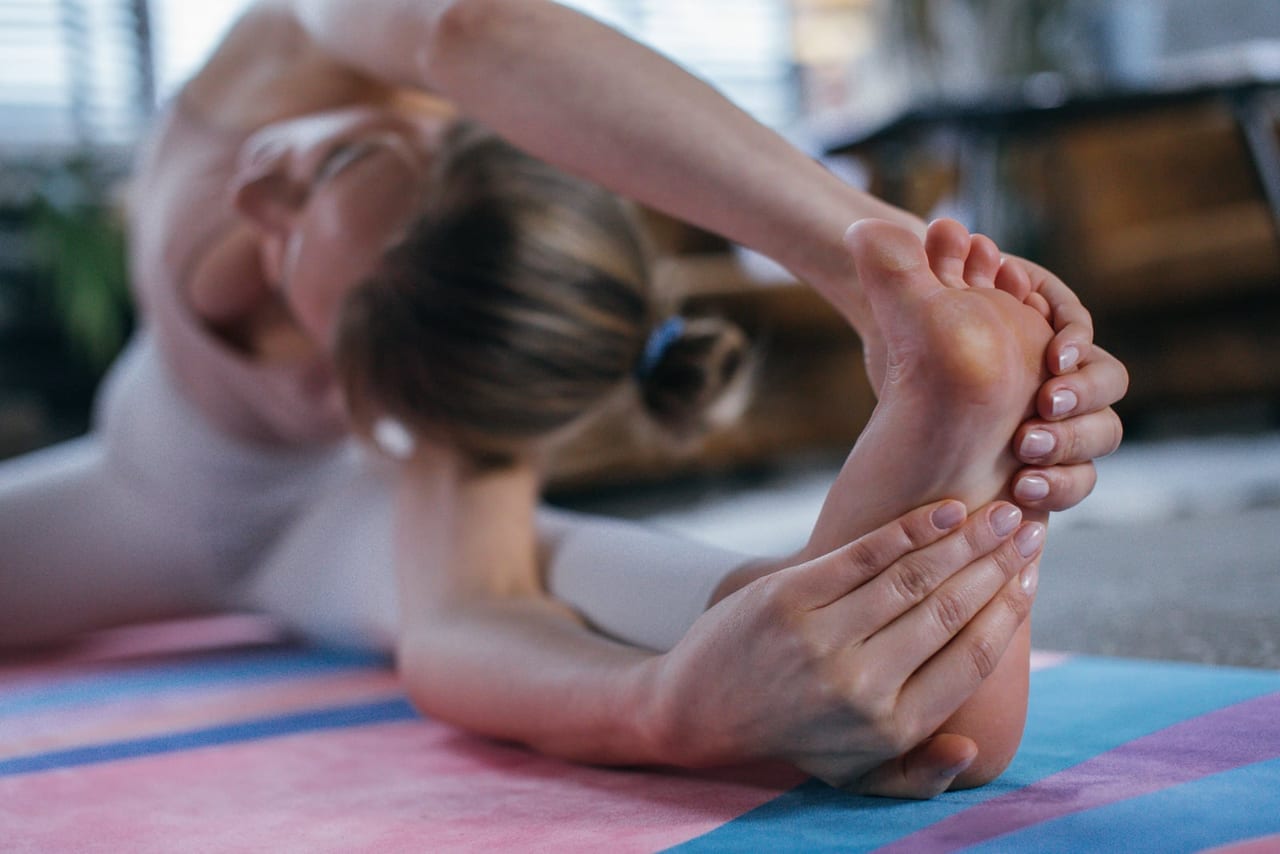
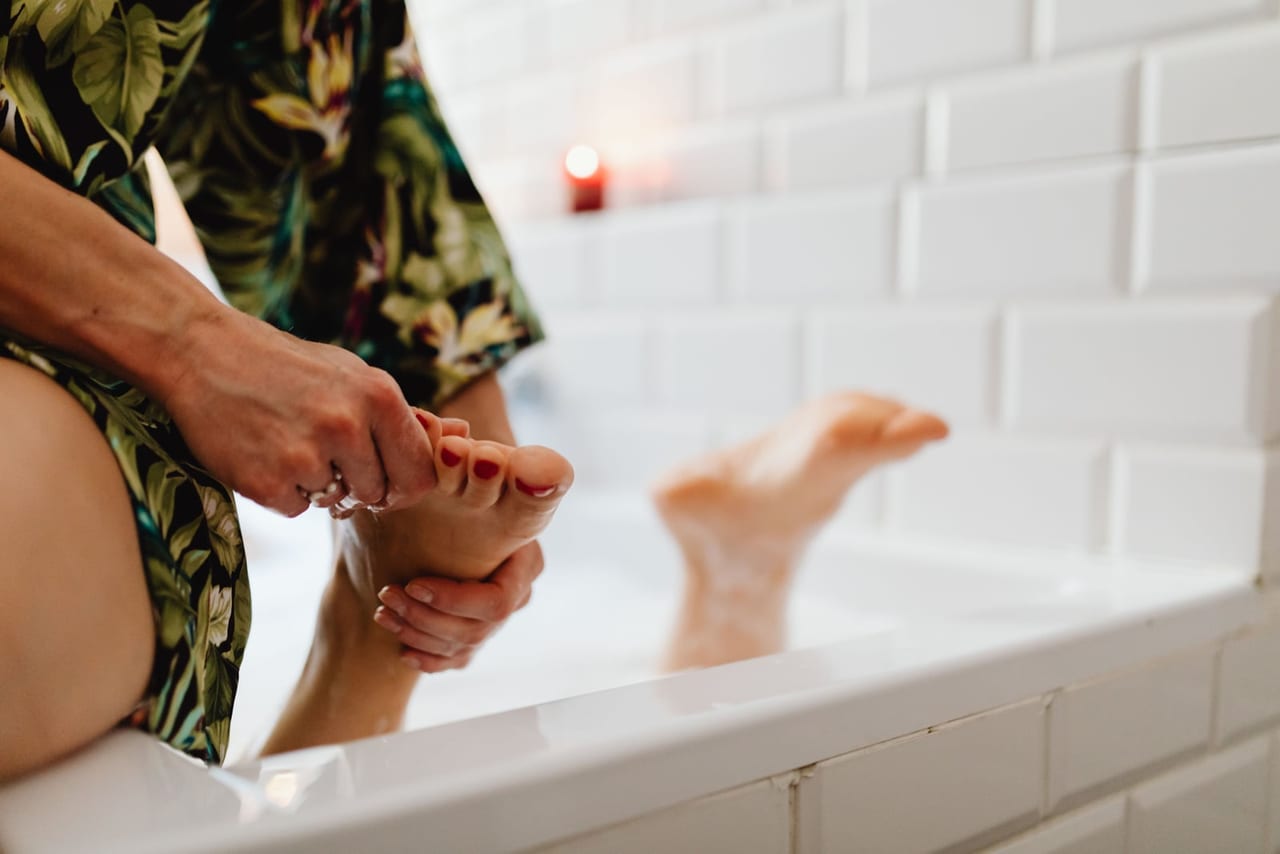
Think of the moment your shoes come off after a long day. Your feet have spent hours in one position, and the first few minutes without shoes can feel like a small release, even if nothing is wrong. It's a good moment to give them a little attention before the evening takes over.
Stretching your feet doesn't have to be a project, though at the end of a tiring day even a small task can feel like one. You can usually point to where the day has settled: toes that spent hours pressed together in shoes, ankles that feel stiff, calves that seem tighter than they were this morning. Would a few minutes of stretching make any difference, and is the soreness only the day or something more?
The short answer
A good end-of-day foot stretch works through the whole foot in a few gentle moves: circle your ankles, spread your toes, ease your toes back, roll each sole over a small ball, then stretch your calves at a wall. About a minute for each is enough. It's a simple way to wind down, and stretching regularly can help keep your feet and ankles moving freely. Move slowly and gently, stop any stretch that doesn't feel right, and check with a healthcare professional first if you're recovering from an injury or surgery or if pain keeps coming back.
Why a short stretch can feel good after a long day
Standing is not rest for your feet. The muscles in your feet, ankles and calves make constant small adjustments to keep you balanced, and when you stay in one spot the same ones work for hours, so by evening your feet can feel stiff and heavy. Your toes have also spent much of the day squeezed together in shoes. Stretching takes your toes and ankles through a fuller range of motion, and done regularly, it can help keep them flexible.
Fluid plays a part as well. Each time your calf muscles tighten, they squeeze blood and fluid from your lower legs back toward your heart, and standing still switches much of that off. Circling and flexing your ankles at the end of the day can feel like a welcome change after hours in one spot.
Stretching has its limits, and it helps to know them before you start. It does little for muscle soreness, and it isn't a fix for pain that keeps coming back. Its value here is simpler: it keeps your feet moving, and it feels good, which on a tired evening is reason enough.
The five-minute routine
It's easy to assume that longer and harder is better, but regular practice is what counts. Most of the benefit comes from stretching at least two or three times a week, and a five-minute habit covers that easily. For a larger stretch like the calf stretch, a hold of about 30 seconds is enough, while the smaller foot moves use shorter holds of five to ten seconds, repeated several times.
Most homes already have what the routine needs: a sturdy chair without wheels, low enough that your feet rest flat on the floor, and a clear wall or counter with room to step one foot back. A tennis ball is soft enough to start with, while a golf ball or a firm massage ball presses harder, so keep the pressure light, and a small towel looped around your toes helps if bending forward is hard. Bare feet grip better on a mat, so work barefoot or in socks on a floor that doesn't slip, and skip slippery socks on smooth floors. Start with the seated moves, finish standing at the wall, and breathe normally throughout.
Circle your ankles
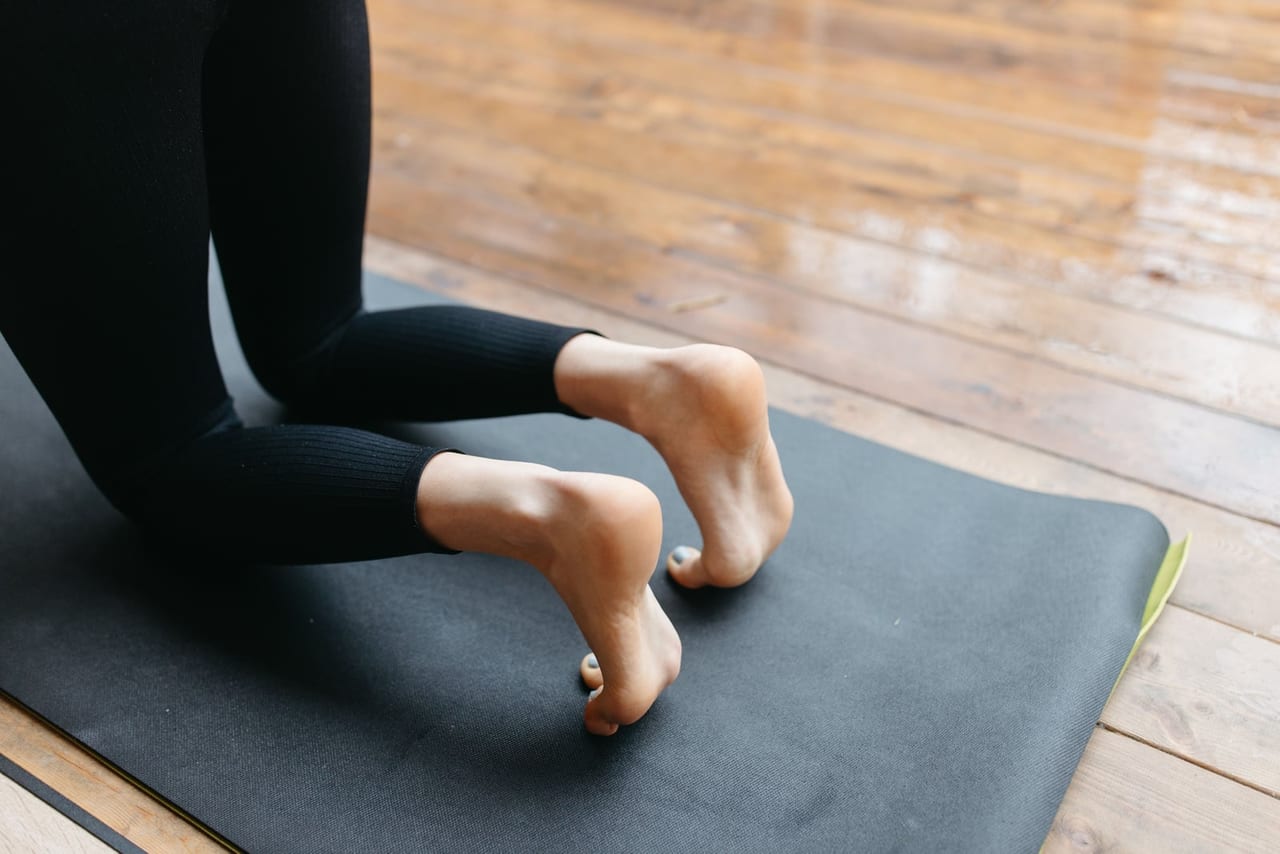
Sit on a chair or on the floor and lift one foot a little. Slowly circle it at the ankle, about ten times each way or as many as feel comfortable, then switch feet.
Spread your toes
With both feet flat on the floor, spread your toes as wide as is comfortable and hold for five seconds. Relax, and repeat ten times.
Ease your toes back
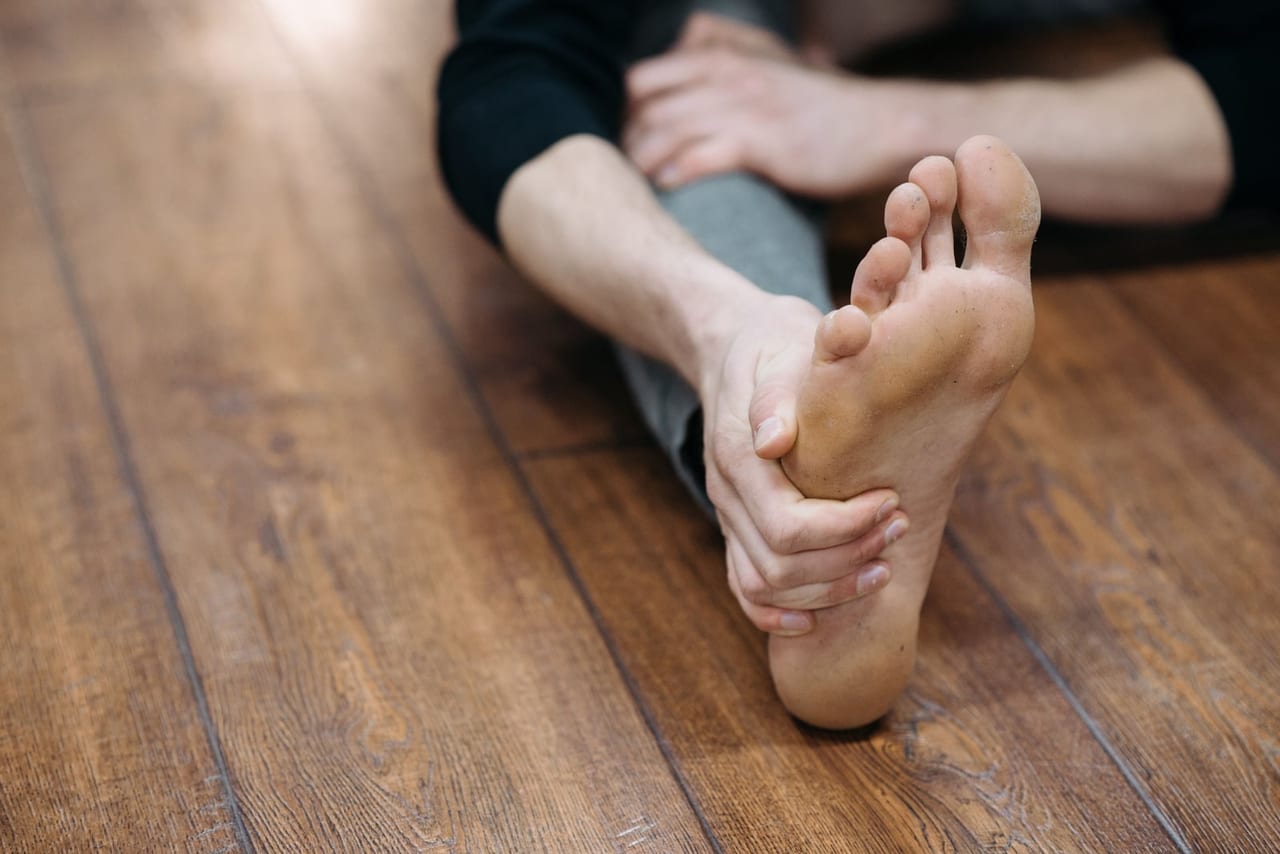
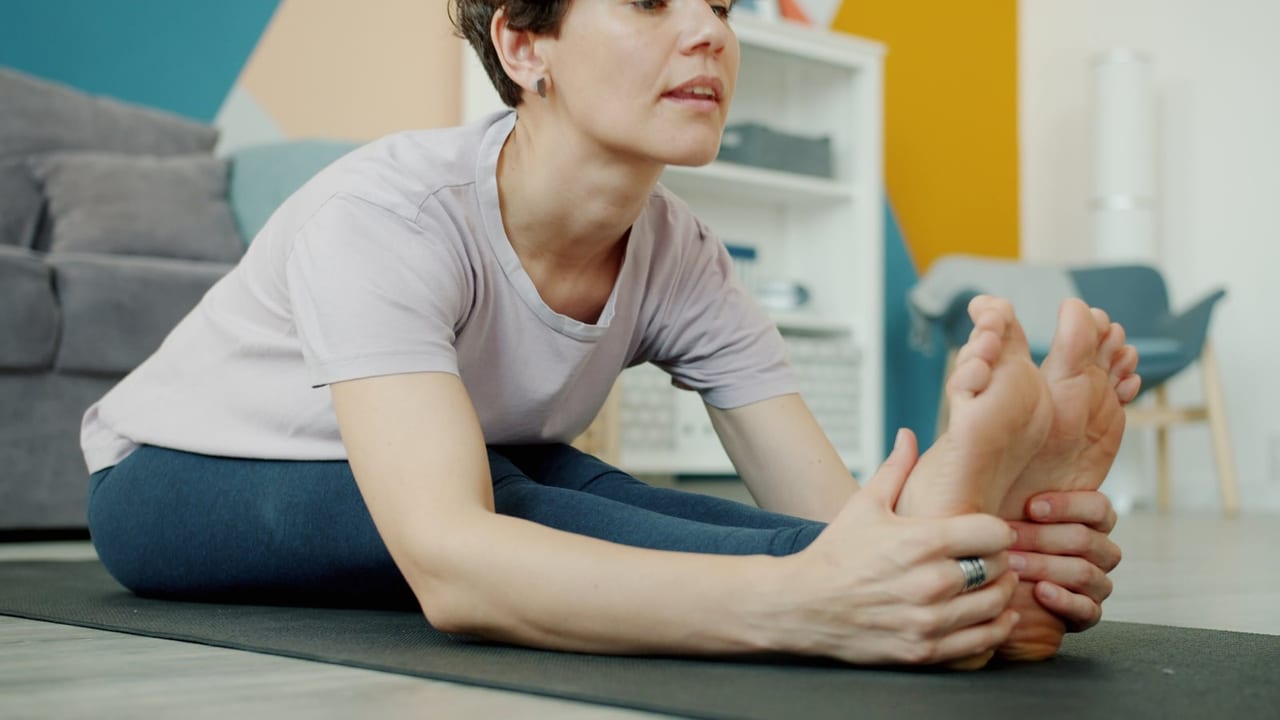
Cross one foot over the other knee, hold the toes and gently pull them back toward your shin until you feel a stretch along the sole. Hold for about ten seconds, relax and repeat a few times, then switch feet. A towel looped around the toes helps if they are hard to reach.
Roll each sole over a ball
Still sitting, put a tennis ball under one foot and roll it slowly from the heel to the ball of the foot and back for about 30 seconds. Keep the pressure light, then switch feet.
Stretch your calves at a wall
Stand facing a wall with your hands on it and step one foot back, knee straight and heel on the floor. Lean in until you feel a gentle stretch in the calf, and hold for 30 seconds without bouncing. Switch legs.
As you go, notice how each move feels. Hold each stretch still rather than bouncing, which can strain a muscle and leave it tighter, not looser. A stretch should feel like mild tension, never pain, so if a move doesn't feel right, ease off or skip it and carry on with the next one.
Making it part of your evening
The easiest time to fit the routine in is right after your shoes come off, while you're already sitting down. You can begin without getting up, because the routine starts with the seated moves and only ends at the wall. Tying five minutes to something that already happens every evening turns a decision into a habit, and a habit is what makes the routine last.
Once your work shoes are off, it's also worth taking the insoles out so they can air overnight, as in how to keep shoes and insoles fresh. On days when your soles need more attention, the longer routine in stretches for the soles of your feet goes further, and tight lower legs get their own routine in calf stretches for people who stand all day.
When sore feet may mean something more
Ordinary end-of-day soreness is familiar. Both feet feel tired or stiff after a long day, and they feel better after rest and a night's sleep. A mild pull during a stretch is normal too, and it's this everyday stiffness that the routine is aimed at.
Pay closer attention if a stretch brings sharp pain, if soreness lingers into the next morning, or if one foot hurts far more than the other. Heel pain that's worst with your first steps out of bed is also worth noticing, especially if it keeps coming back.
Questions people ask
How often should I stretch my feet?
Most evenings is a good rhythm, and even two or three times a week can help keep your feet and ankles flexible. Regular practice is what counts, so a gentle five minutes you repeat is worth more than a long session you skip.
Is it better to stretch my feet in the morning or at night?
Either works. This routine suits the evening, but a gentle toe pull-back before you get out of bed can feel good if your feet are stiff first thing. Whichever time you choose, the same rules apply: move slowly and stop any move that doesn't feel right.
Should a foot stretch hurt?
No. A mild pull is normal, and a stretch should feel like tension rather than sharp pain. If a move hurts, ease off or skip it. Pain that stays after you stop, or that keeps coming back, is worth having checked.

The bottom line
What tired feet ask for at the end of a long day is attention, not effort. You can't always change how long they spend in one position, but a few gentle minutes when the shoes come off, kept small enough to repeat most evenings, can give them the movement the day didn't.