How to Give Yourself a Foot Massage
After a long day on your feet, your soles can stay tight and tired long after the shoes come off. Your own hands, a little lotion and ten unhurried minutes are enough to give them some care in return.
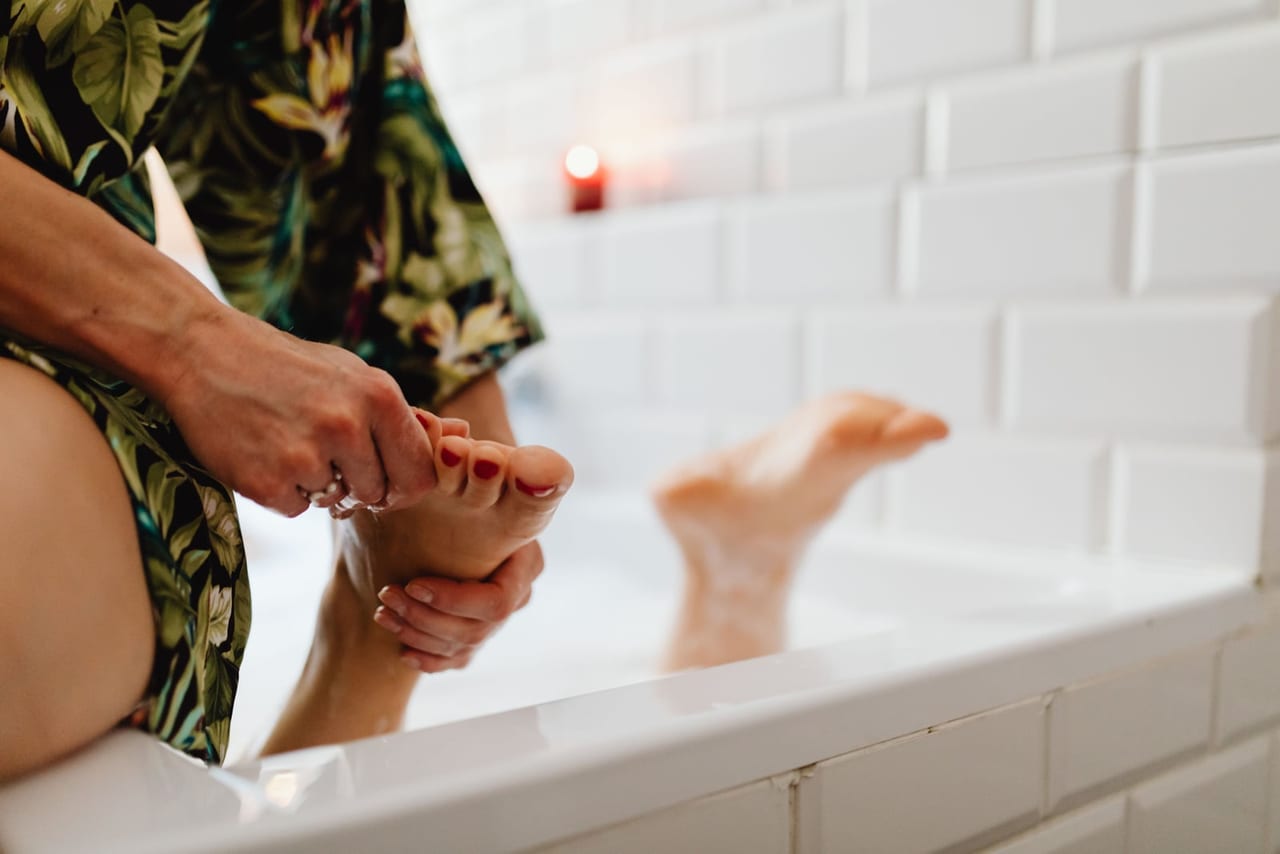
Pull a foot into your lap at the end of the day and your hands tend to find the same places without being told: the middle of the arch, the thick pad under the heel, the base of the toes. Rubbing them can leave the sole warm and a little looser than it felt in your shoes, even as a quick, absent-minded squeeze while you talk or scroll.
That instinct is worth following on purpose. Done slowly, from the heel to the toes, the same rubbing becomes a short routine that reaches the whole foot. The practical questions remain: how hard to press, what to put on your hands, and when a sore spot is better left alone.
The short answer
Sit with one foot across the opposite thigh and rub a little lotion or oil between your palms. Stroke the whole foot to warm it, walk your thumbs along the sole from the heel to the toes, knead the arch with your knuckles, circle the heel and ankle, then roll and gently pull each toe and finish with long strokes. A few minutes per foot is plenty, at a pressure that feels good, never painful.
Skip massage over broken skin, a fresh injury or any spot that's swollen, red or warm, and keep lotion out of the spaces between your toes. With diabetes or reduced feeling, use a light touch and check your skin afterward. Pain that doesn't settle, numbness, or a calf that's painful, warm and swollen is a reason to get checked, not rubbed.
Why a foot massage can feel so good
Your soles do much of the day's work. When you stand, most of your weight rests on your heels and much of the rest on the balls of your feet, often on hard floors that give little back. Beneath the skin, a thick band of tissue runs from the heel toward the toes and helps hold up the arch, while small muscles in the sole keep making tiny adjustments as long as you're upright. By evening the sole can feel tender, tight or simply tired, and why your feet feel tired after standing all day traces how those hours add up.
Massage works through simple means: pressing, stroking and moving the soft tissues under the skin. Your hands warm the foot as they rub, slow pressure can make a tight spot feel as if it's loosening, and many people find the steady rhythm calming. None of it changes how your shoes fit or how long you stand, and a massage isn't a remedy for pain that keeps coming back. For most people it carries little risk, though firm or vigorous rubbing can leave a spot sore or bruised the next day, so the goal is comfort, not pressing on a tender spot until it gives in.
A self-massage, step by step
The routine moves from broad strokes to deeper work and back again, over about ten minutes for both feet. You need a sturdy chair, a small towel and a little lotion or oil, and bare feet let your hands feel what they're doing. Move slowly and gently, and stop anything that doesn't feel right. If you're recovering from an injury or surgery, check with a healthcare professional first.
Warm the foot with long strokes
Sit in a sturdy chair and rest one foot across the opposite thigh. Rub a little lotion or oil between your palms, then stroke the whole foot, sole and top, from the toes to the ankle and back for about a minute.
Walk your thumbs along the sole
Hold the foot in both hands and press your thumbs into the sole, moving forward in small steps from the heel to the base of the toes. Start again a little to one side, line by line, until you've covered the whole sole.
Knead the arch with your knuckles
Make a loose fist and press your knuckles into the arch, kneading slowly, the way you'd knead bread dough. Press firmly enough to feel it, never so hard that it hurts.
Circle the heel and ankle
Make small, slow circles with your fingertips over the pad of the heel. Then circle lightly around the bony bumps on each side of the ankle.
Work each toe gently
Roll each toe between your thumb and fingers, then give it a slow, gentle pull. Finish by easing all the toes back and forth, then gently apart.
Finish with strokes, then switch feet
End with a few long strokes over the whole foot, as you began. Wipe off any extra lotion, especially from the sole, then repeat on the other foot.
The order has a simple logic. Long strokes spread the lotion and let you feel the whole foot before you press anywhere in particular. The thumbs and knuckles then work the heel, the arch and the ball of the foot, where the sole does most of its work. The toes come last, and easing them back and apart moves them in directions a shoe rarely allows. If resting a foot on your thigh strains your hip or knee, prop it on a low stool or the edge of the bed instead.
How firm to press, and what to use
The right pressure is firm enough to feel and comfortable the whole way through. A tight spot in the arch may feel intense for a moment, but it should ease as you work, never sharpen into pain. Go lighter over the top of the foot and around the ankle, where there's little padding over the bone, and save the firmer kneading for the thick tissue of the sole.
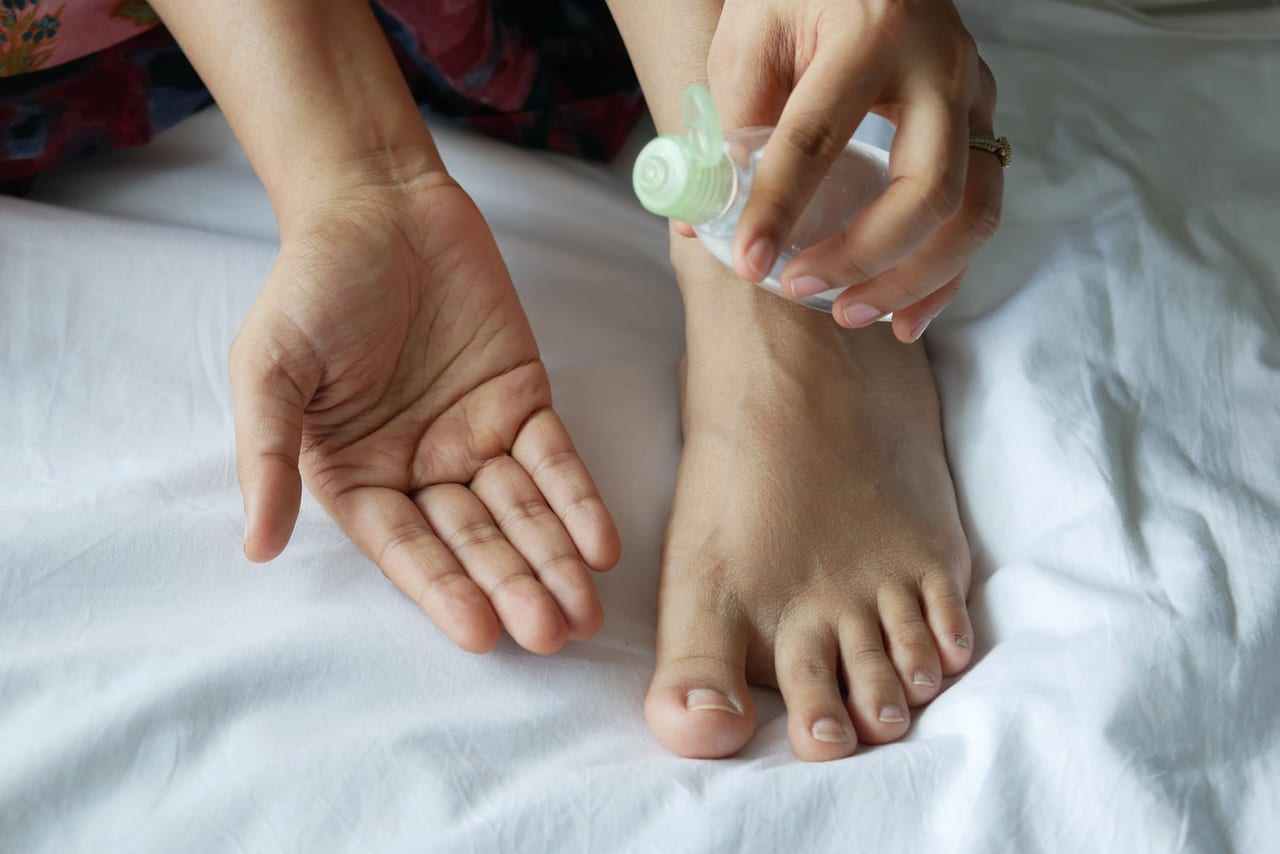
A little lotion or oil lets your hands glide instead of tugging at the skin. Lotion soaks in as you work, while oil stays slick longer; either is fine, and a thick cream on dry heels doubles as the moisturizing step in how to keep your heels soft. Keep it out of the spaces between your toes, where skin is better kept dry, and wipe your soles or pull on clean socks afterward, since slick feet can slip on a smooth floor.
Some feet need a gentler hand. With diabetes or reduced feeling in your feet, you may not feel how hard you're pressing or notice a small sore, so keep the strokes light and check your skin afterward, including between the toes. If you're pregnant, take medicine that thins your blood or have a condition that affects your circulation, ask your care team whether, and how firmly, to massage your feet.
Making it part of your evening
The end of the day suits a self-massage, ideally right after a bath or shower, when your feet are clean and warm. With a foot in your hands, it's also the easiest moment to look it over: the sole, the heel, the toes and the spaces between them, for cuts, blisters, red spots or swelling. Over time that habit shows you what your feet usually look like, so a change stands out.
On busy days, a ball can stand in for your hands. Rolling the sole slowly over a tennis ball gives the bottom of the foot a lighter, hands-free version of the same attention, as in stretches for the soles of your feet. Your hands still reach places a ball can't, though: the toes, the sides of the heel and the skin around the ankle.
When a sore foot may mean something more
Tired, tight soles by evening are ordinary after a long day, and they usually ease with rest and a night's sleep. A spot that feels a little tender the day after firm pressure is ordinary too, and a lighter touch next time usually takes care of it. Neither is a reason to worry.
Pay closer attention when a massage leaves a spot feeling sorer rather than better. Rubbing an area that's swollen, red, warm or freshly injured can make it worse. A calf that's painful, warm and swollen, especially in one leg, can be a sign of a blood clot, so have it checked, not massaged. Pain that keeps returning for weeks, numbness or tingling, and a sore that isn't getting better are reasons to get your feet looked at.
Questions people ask
How often can you massage your feet?
There's no set rule. A gentle self-massage can be part of every evening or kept for the days that ended on your feet, as long as the pressure stays comfortable. Slow strokes matter more than how often or how long, because rushing tends to turn a massage into rubbing harder.
Is it OK to massage swollen feet?
It's better to leave a swollen foot alone. Some puffiness after a long day of standing is common and usually goes down overnight. Swelling that doesn't go down after rest, shows up in only one foot or leg, or comes with pain, redness or warmth is a reason to have it looked at instead.
The bottom line
Your feet hold you up all day and rarely get anything back for it. A self-massage asks for no special tools or technique, only slow hands, a little lotion and a comfortable pressure, and those few minutes may be more attention than your feet get all week. That attention is the point: a quiet way to end the day by noticing the part of you that carried it.