Tea and Your Feet: What to Sip and What to Soak
At the end of a long day on your feet, tea turns up twice in the advice: something to sip and something to soak in. Both can be pleasant, and both come with a few details worth knowing before the kettle goes on.

The kettle clicks off, and you carry a hot mug to the couch and put your feet up. Nothing hurts, exactly. They're just heavy, the way feet get after hours of standing or walking, and a cup of tea feels like part of looking after them.
Search for tired feet and tea shows up again, this time in a basin. A strong black tea soak, a herbal blend for sore feet, a promise about circulation or swelling: it's an old pairing. The claims attached to it are often bigger than anything anyone can show.
The short answer
Tea is a pleasant, warm part of an evening and it counts toward what you drink, but it isn't an established way to change foot pain, cramps or swelling. In the evening, a herbal tea without caffeine is the gentler choice, since caffeine can make it harder to fall asleep. Black and green tea can make it harder to absorb iron from plant foods when you drink them with a meal, and some herbal teas, licorice root especially, can affect blood pressure or interact with medicines.
A warm foot soak, with or without tea, is a comfort habit many people enjoy. People often keep the water comfortably warm, soak for about 10 minutes and dry well between the toes. Those with diabetes, reduced feeling in the feet, poor circulation or broken skin are usually told to skip soaks or to ask beforehand, and tingling, swelling or cramps that keep coming back are worth raising with a healthcare professional.
What a cup of tea can and can't do for your feet
Tea has a long reputation as a gentle helper, and plenty of online advice extends it to the feet. No tea is a recognized way to change foot pain, cramps or swelling, and claims like these get passed along far more than they're tested. Foot health depends on much more than what's in a mug: shoes, activity, age, genes and health conditions all play a part, and no food or drink stands in for care when something is wrong.
What tea does offer is modest, and it's real. It's mostly water, so it counts toward what you drink in a day, and it gives you a reason to sit down. A few minutes off your feet with something warm in your hands is a break whatever the cup holds.
Caffeine, sleep and iron: what to know about the cup
Black and green tea are made from the leaves of the tea plant and contain caffeine, usually less per cup than coffee, though a strong cup holds more. Most herbal teas, such as chamomile, peppermint, ginger and rooibos, are made from flowers, leaves, roots or bark instead and are usually caffeine-free, but blends vary, so the label is worth a look. Caffeine late in the day can make it harder to fall asleep for some people, though how late is too late varies from one person to the next. For short nights, moving the last black or green cup earlier, or switching to a herbal one after dinner, is an easy experiment.
Black and green tea also contain compounds that bind to iron in the gut. Drunk with a meal, tea can make it harder for the body to absorb the iron in plant foods such as beans and leafy greens. How much that matters depends on how much iron a person's diet supplies and how much tea they drink, and a common tip for anyone watching their iron is to have tea between meals rather than with them. Whether an iron level is low is something a blood test ordered by a healthcare professional can show; tired feet can't.
Herbal teas aren't all harmless
Herbal doesn't mean inert. Plants contain active compounds, and some of them change how medicines work. Licorice root is the usual example: in large amounts over time it's linked to higher blood pressure and low potassium, and it can interact with some heart and blood-thinning medicines.
If you take medicines, are pregnant or live with a condition such as diabetes or kidney problems, it's worth telling a pharmacist or healthcare professional which teas you drink regularly. Herbal teas haven't been well tested in pregnancy, so it's sensible to ask there. Check the ingredient list for anything you react to.
A warm foot soak, with or without tea
A soak is a comfort habit, not a need. If you wash your feet as part of a normal routine, there are few reasons to add one, but plenty of people enjoy a warm basin after a day in shoes. Tea in the basin is a traditional practice, most often a strong black tea for sweaty feet. It has been passed along rather than tested, and it hasn't been shown to do more than plain warm water. Tea can stain towels and light-colored basins, and anything new on the skin can irritate it, so rinse your feet if they sting or itch.
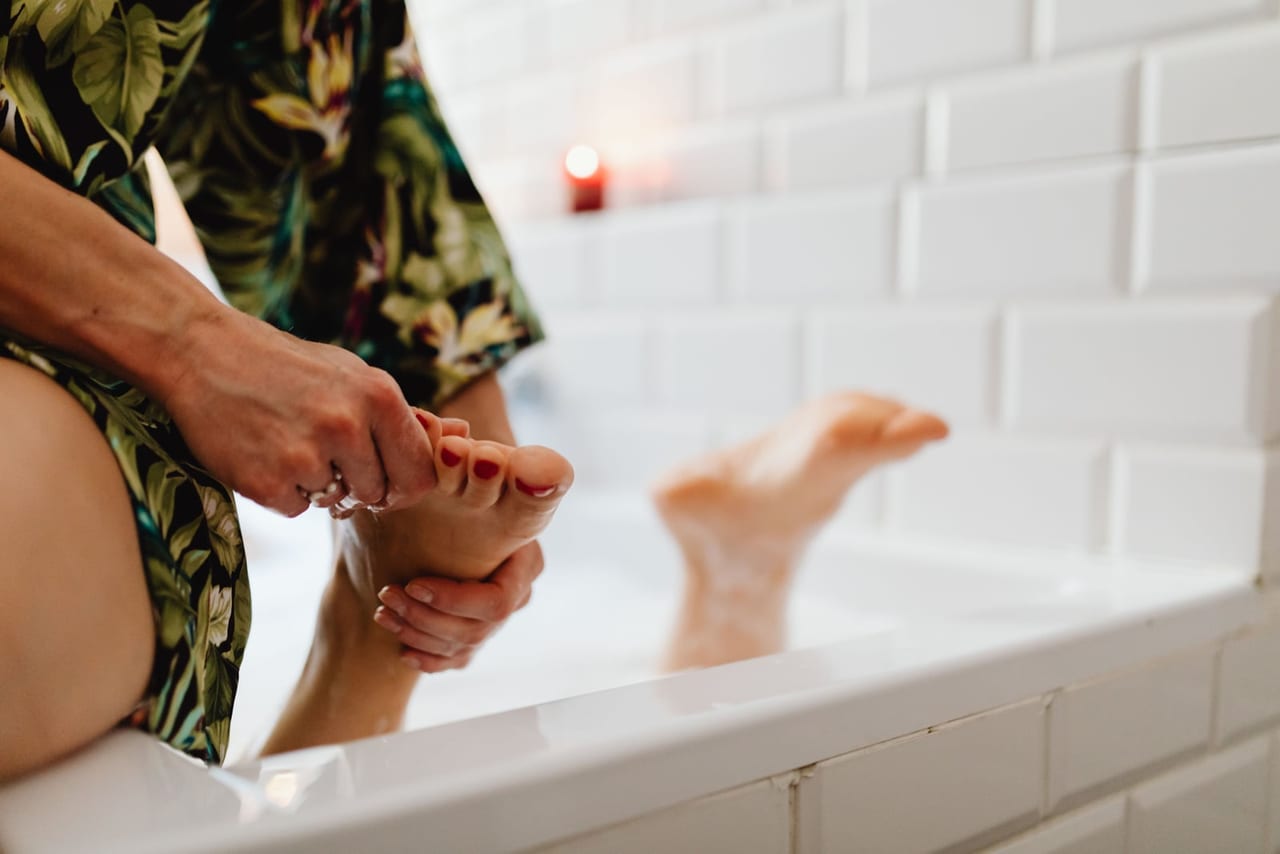
Temperature and time matter more than what's in the water. Aim for comfortably warm, not hot, and test it with your hand or elbow before your feet go in. About 10 minutes is a common length, since longer soaks can dry the skin, and skin that stays damp is where athlete's foot likes to start. Afterward, dry each foot thoroughly, especially between the toes, and use a moisturizer if the skin feels dry, keeping it out of the spaces between the toes.
People with diabetes are usually advised not to soak their feet, because soaking can damage the skin, and anyone with reduced feeling can be burned by hot water without noticing. The same caution applies to poor circulation, open sores, cuts, cracked or broken skin, and an itchy, peeling rash between the toes.
An evening routine with tea
This routine takes about 25 minutes and needs a kettle, a mug, a basin big enough for both feet and a clean towel. Keep the cup, the basin or both, and leave out the soak if the cautions above apply to you.
Brew a caffeine-free tea in the evening
Choose a herbal tea made without tea leaves for the hours before bed, and read the label to be sure it's caffeine-free. If you take medicines or are pregnant, ask a pharmacist about a blend before making it a habit.
Sip tea between meals if iron matters
Black and green tea can make it harder to absorb iron from plant foods eaten at the same meal. If iron is a concern for you, have your cup between meals.
Fill a basin with comfortably warm water
Run water that feels pleasantly warm, never hot, and test it with your hand or elbow before your feet go in. Strong black tea is optional and can stain a light basin.
Soak for about 10 minutes
Sit somewhere comfortable and keep it short, since longer soaks can dry the skin. Skip it if you have diabetes, reduced feeling or broken skin.
Dry well, especially between the toes
Pat each foot dry with a clean towel, getting between every toe. If the skin feels dry, smooth on moisturizer, keeping it out of the spaces between the toes.
Put your feet up
Rest your feet on a stool or cushion for a few minutes while you finish your tea. Rinse the basin so it's ready for next time.
Afterward, a few minutes of movement is a natural next step, either the gentle moves in stretches for the soles of your feet or a foot massage. Move slowly, stop anything that doesn't feel right, and check with a healthcare professional first if you're recovering from an injury or surgery.
When tired feet may mean something more
Feet that feel heavy by evening and recover after a night's rest are an ordinary result of a day spent on them. The tiredness follows the effort and tends to fade once the effort stops. It isn't a sign that something is missing from what you eat or drink.
Pay closer attention when the pattern changes. Tingling or numbness, swelling, cramps that come often and tiredness that lingers are signs to get checked, not signs of a missing nutrient, and no tea is a stand-in for finding out what's going on.
Questions people ask
Can you soak your feet in tea?
Most people can, and a strong black tea soak is an old habit for sweaty feet. Let the brew cool until it feels comfortably warm, strain out loose leaves, and expect some staining. The cautions about diabetes, reduced feeling and broken skin apply here too, and it hasn't been shown to do more than plain warm water.
Does tea dehydrate you?
Not in the amounts most people drink. Caffeine can make you urinate a little more, but the water in the cup outweighs that, so tea counts toward the fluids you drink in a day. How tea sits beside water, milk and coffee is covered in what to drink for your feet.
The bottom line
The most useful thing a cup of tea does for tired feet may be the sitting down that comes with it. Tea in a mug or a basin gives an evening a pleasant shape, and that is a fine reason to enjoy it, without asking it to do the work of good shoes, rest and attention to your body.