Stretches for the Soles of Your Feet
Your soles carry every step of the day, and by evening they can feel tight and tired. These gentle stretches work along the sole, from the heel to the base of the toes.
Kick off your shoes at the end of a long day and you may find yourself pressing a thumb into the arch. Or you roll the sole over whatever happens to be on the floor, a tennis ball or a water bottle. Either way, it's a small, unplanned attempt to get the soles to let go after hours of holding you up.
When you pull your toes back toward your shin, the stretch is felt along the sole rather than in the toes you're holding. That can seem odd, and it leaves the practical questions open. How hard should you pull, how long should you hold, and is a ball or a towel the better place to start?
The short answer
The simplest way to stretch the sole is through the toes. Pulling them back toward your shin tightens the thick band of tissue under the arch, and rolling the sole over a small ball gives it a gentle massage. A towel stretch and, if your knees allow, a gentle kneeling toe stretch round out the routine. These stretches are for comfort and flexibility, not a fix for ongoing pain, so move slowly and gently, and stop any stretch that doesn't feel right. If you're recovering from an injury or surgery, check with a healthcare professional first; heel or arch pain that lasts for weeks is worth having checked too.
Why the soles of your feet feel tight after a long day
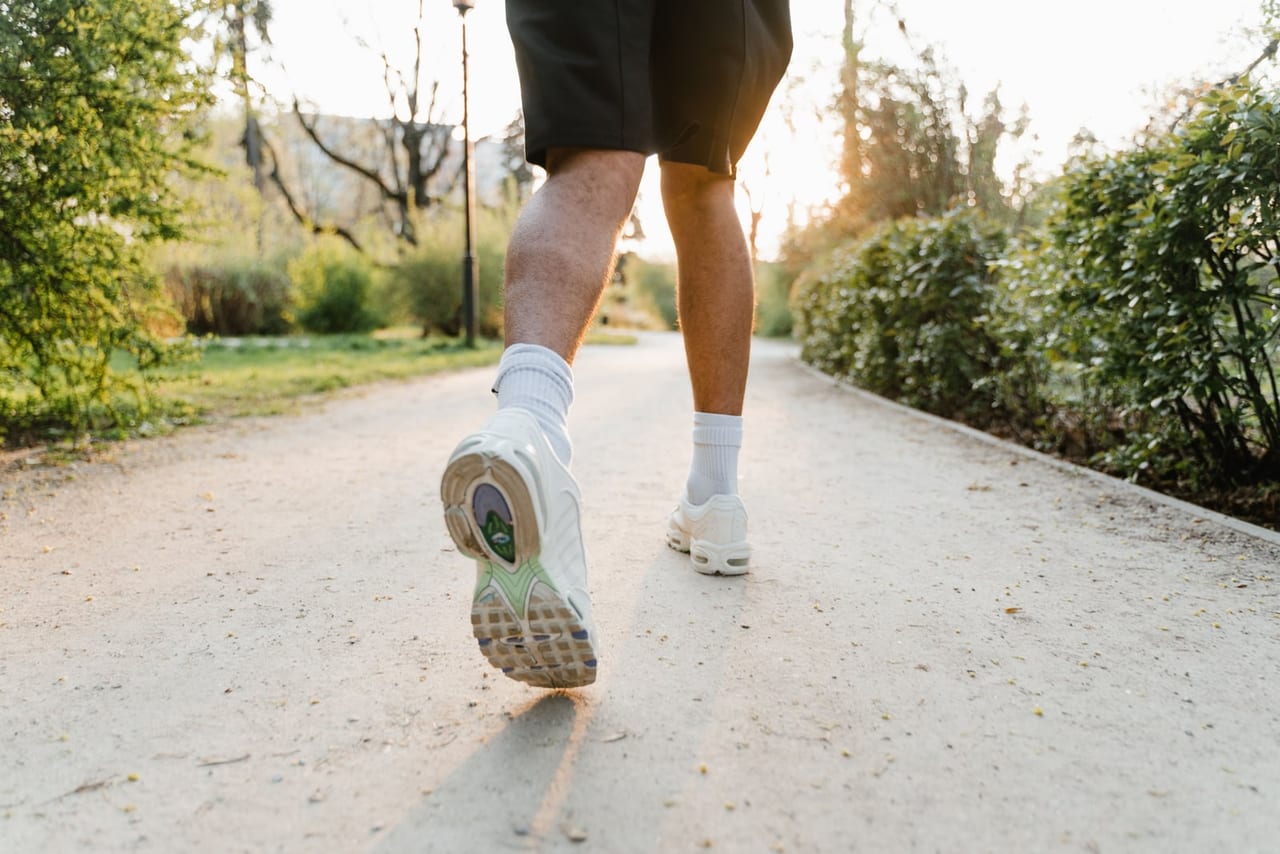
The sole is a busy place, and a long day asks a lot of it. When you stand, most of your weight rests on your heels, and much of the rest on the balls of your feet. Hours of that pressure, often on hard floors, can leave the sole feeling tender by evening.
Beneath the skin of the sole, a thick band of tissue called the plantar fascia runs from the heel bone toward the toes and helps hold up the arch. It's strong and a little stretchy, like a thick rubber band, and long days on your feet can put it under steady strain. Small muscles in the sole help steady the arch and adjust your foot to the ground, and like your calves, they keep working the whole time you stand.
Why pulling your toes back stretches your sole
The plantar fascia attaches near the base of the toes. When your toes bend back, the band wraps around the ball of the foot and tightens along its length, and the arch lifts a little. If you stand and gently lift your big toe, you may see your arch rise.
That's why a toe pull-back is felt as a band under the arch rather than in the toes alone. The same thing happens in every step: as your heel lifts and your toes bend, the band tightens and helps lift the arch. There's more on the arches in how your feet work.
Because the band tightens as soon as your toes bend back, the stretch doesn't need force, and a slow, steady pull is enough to feel it along the sole. The feeling to aim for is tension, never pain. Hold the position still rather than bouncing, and let go if the pull ever turns sharp.
A sole routine, step by step
The routine runs from a ball roll to a toe pull-back, a towel stretch and a gentle kneeling toe stretch, with an optional chilled bottle at the end. Sit for the first moves and kneel only for the last stretch. Go barefoot or wear socks, and keep every stretch to a gentle pull. For a shorter routine that also covers the ankles and calves, see the 5-minute foot stretch.
Roll the sole over a ball
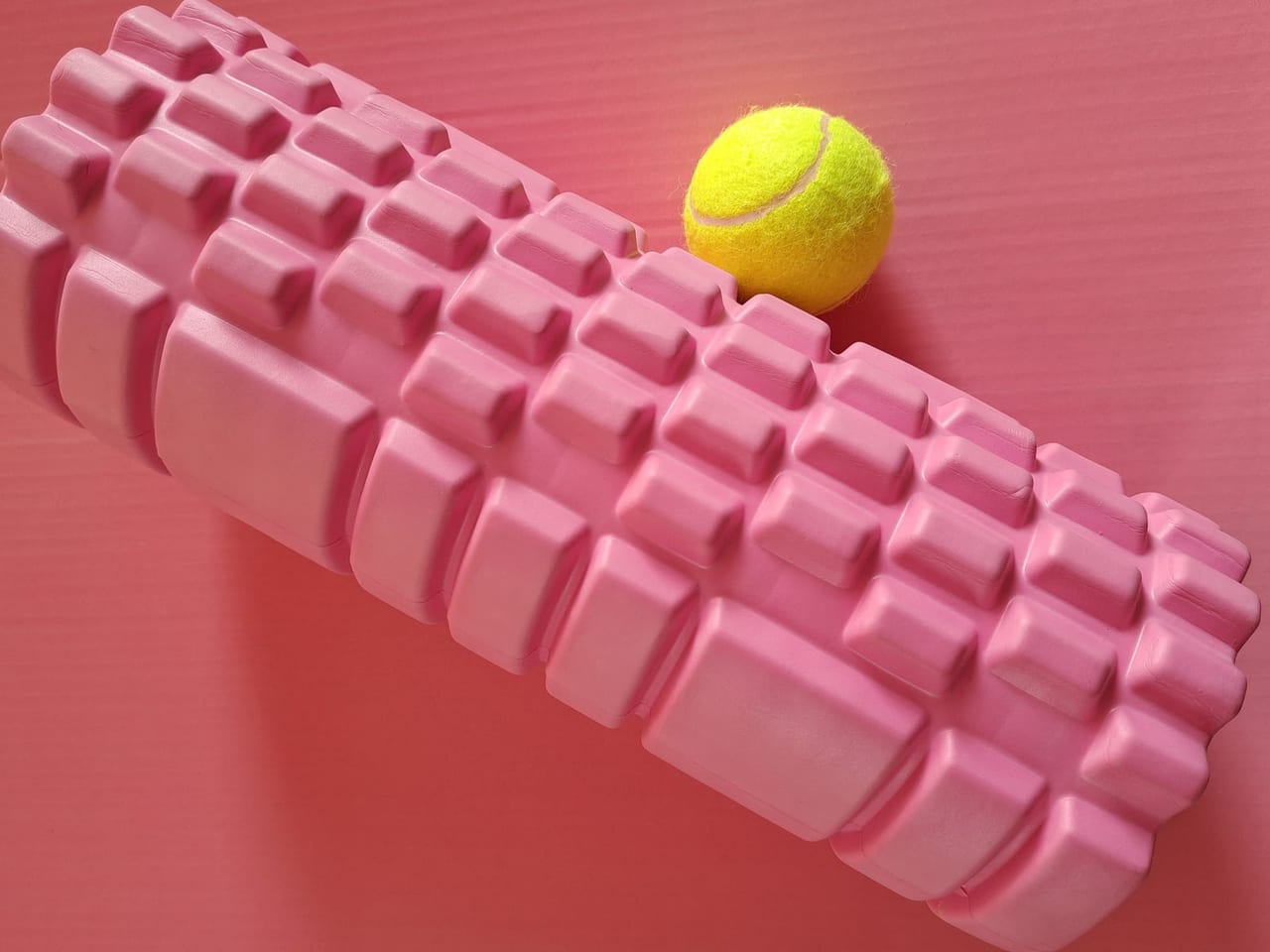
Sit and put a tennis ball under one foot. Roll it slowly from the heel to the base of the toes and back for about a minute, pressing lightly, then switch feet.
Pull your toes back
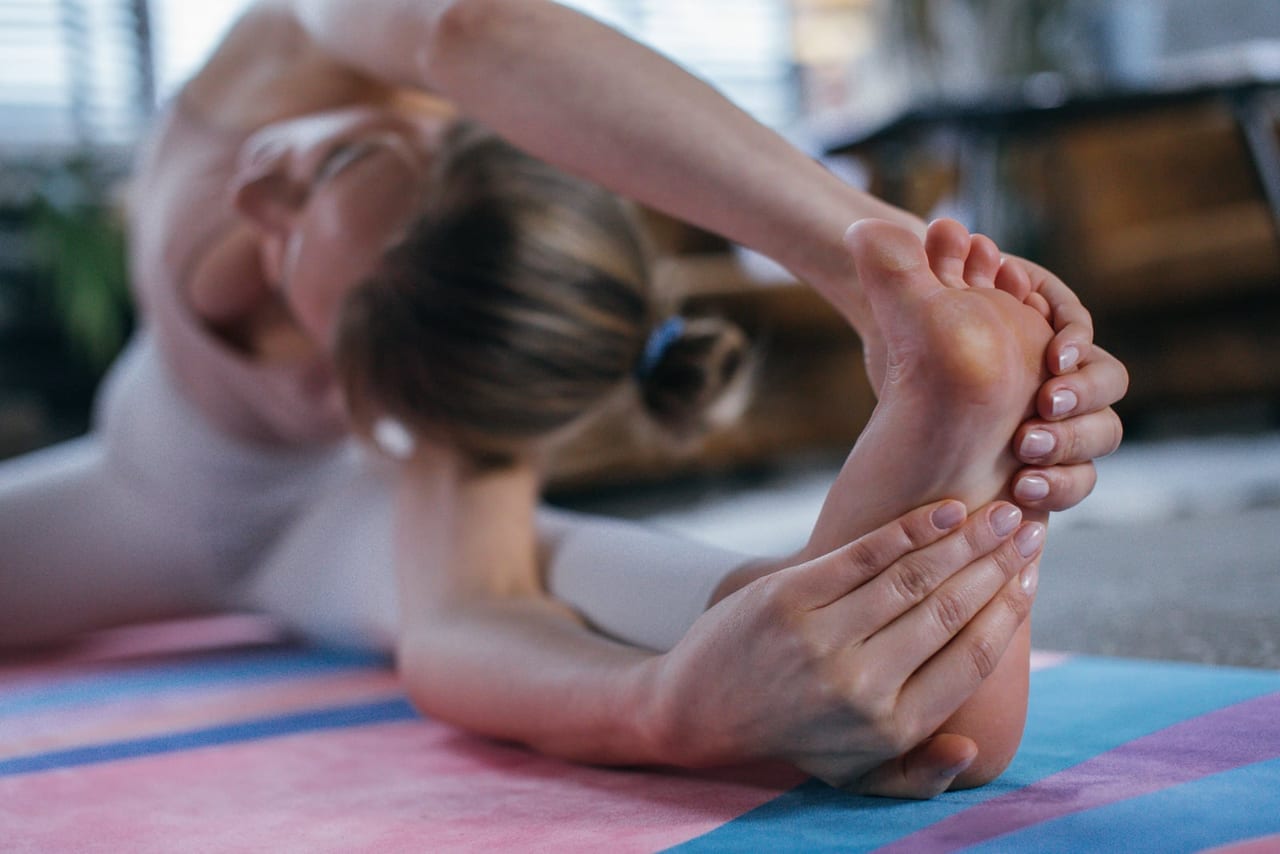
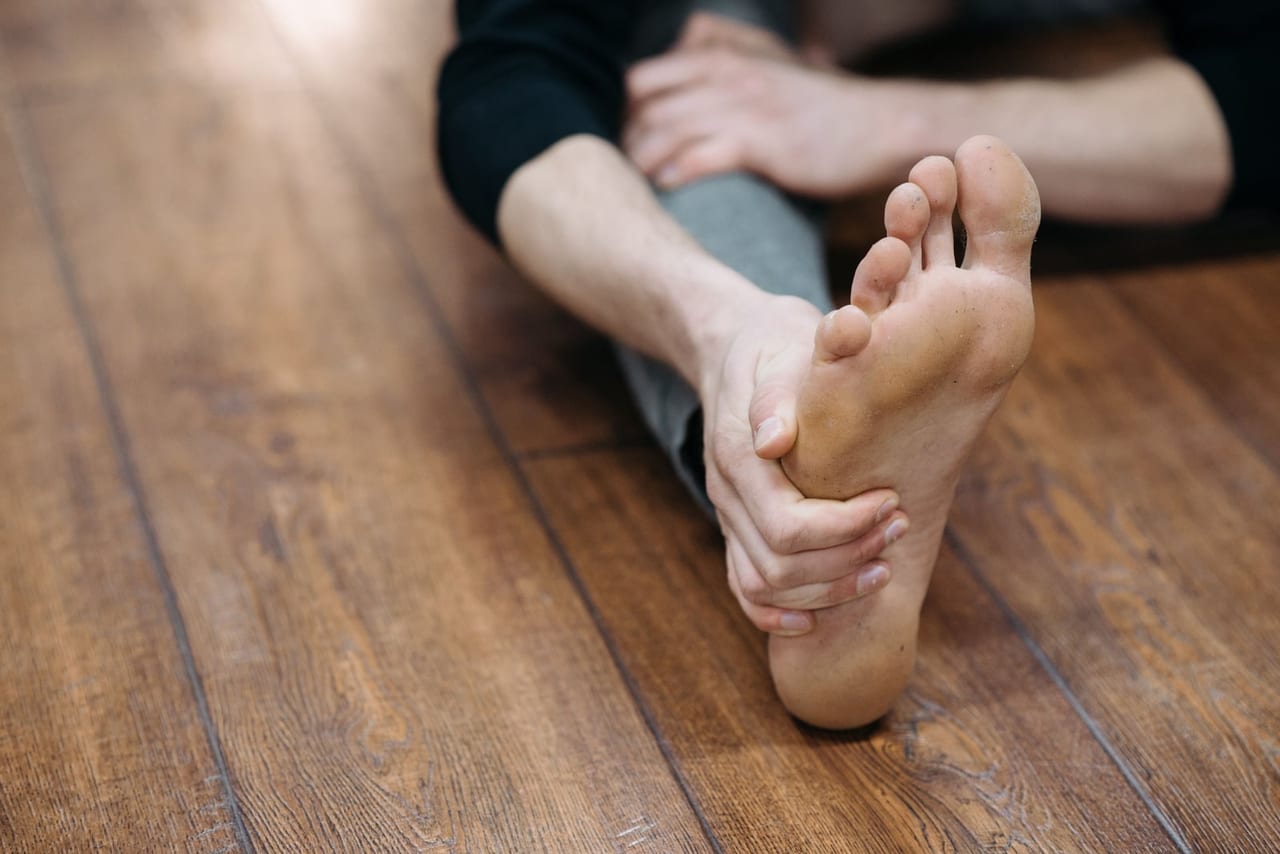
Sit with one foot across the other knee. Hold the toes and pull them slowly back toward your shin until you feel a stretch along the sole, like a band tightening under the arch. Hold for about 10 seconds, relax, and repeat several times on each foot.
Stretch with a towel
Sit with one leg straight and loop a towel around the ball of the foot. Pull the ends gently toward you until you feel a stretch in the calf and along the sole. Hold for about 20 to 30 seconds, or as long as it feels comfortable, then switch feet.
Try a gentle kneeling toe stretch
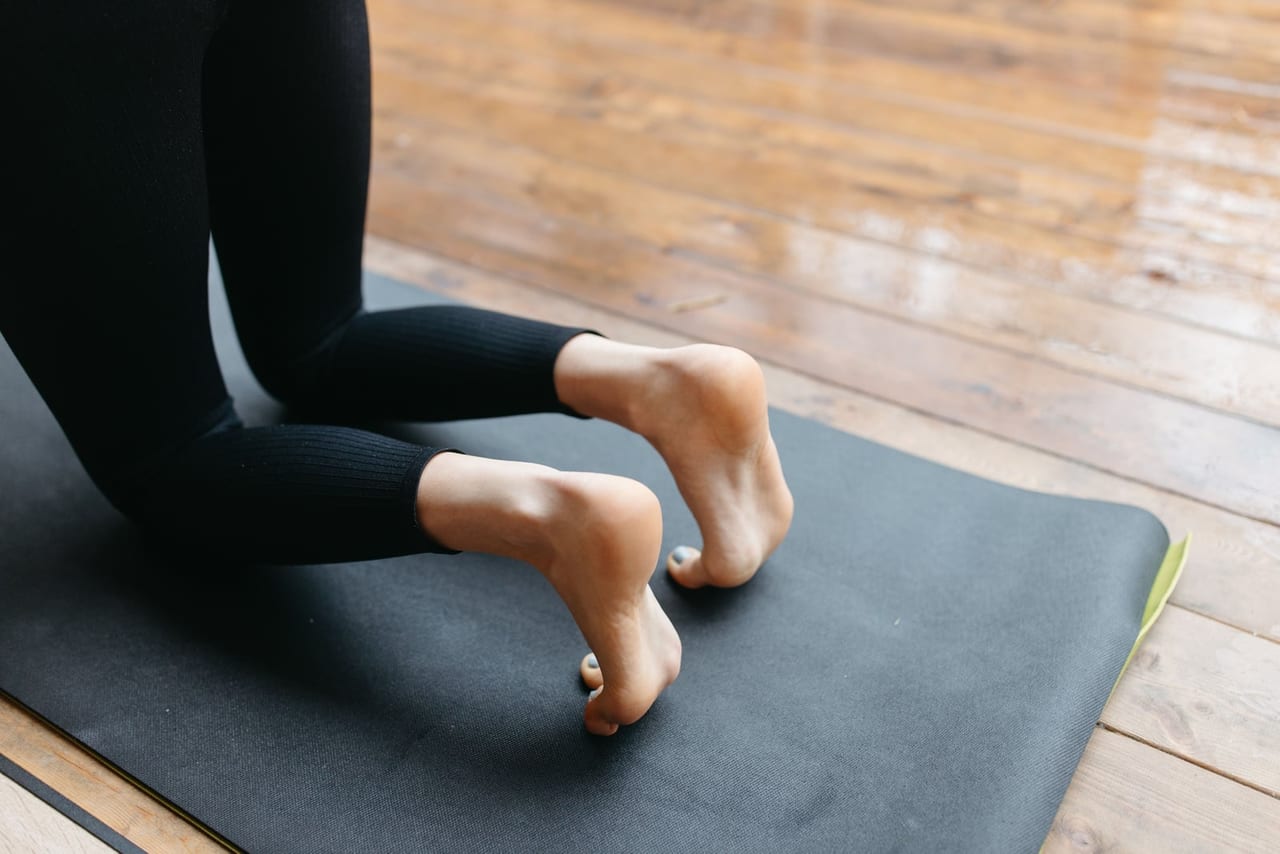
Kneel on a soft mat with your toes tucked under and your hands on the floor in front of you. Sit back toward your heels only as far as feels comfortable, and hold for about 10 to 20 seconds. Skip it if kneeling bothers your knees or toes.
Roll a chilled bottle, if you like
On warm evenings, some people like to roll the sole slowly over a chilled water bottle for a few minutes. It is for comfort only, so skip it if cold bothers your feet.
You don't need special equipment, but the tool changes how the routine feels. A tennis ball is soft and forgiving, which makes it a good place to start, while a golf ball or a firm massage ball is smaller and harder and presses deeper, so use light pressure and slow strokes. The towel helps you reach your toes, and the mat cushions your knees for the kneeling stretch. You don't need all five moves every night, either: when time is short, the ball roll and the toe pull-back fit into a few minutes on the edge of the bed or the couch, and the rest can wait for an evening with more time.
What you stand on the rest of the day
Stretching looks after your soles at the end of the day, while what sits under them is with your feet for the rest of it. When cushioning flattens or a footbed gives the arch little support, more of the pressure lands on the heel and the ball. You may feel the difference by the end of a shift.
Shoes with cushioning and some arch support spread pressure across more of the sole instead, as insoles for standing all day explains. The stretches and the footwear cover different hours of the same day. One gives the soles some attention once the load is off, and the other affects how that load is shared while it's on.
When sore soles may mean something more
Ordinary tightness in the soles comes on after a long day and eases with rest, a night's sleep and gentle stretching. It usually affects both feet and fades by morning. That's the kind of discomfort these stretches are meant for, and it's a different thing from pain that keeps coming back.
Pay closer attention to heel or arch pain that's sharpest with your first steps in the morning or after sitting. The same goes for pain that builds over several weeks, or one foot that hurts far more than the other. It may not be serious, but it's a reason to get your feet checked.
Questions people ask
How often should I stretch the soles of my feet?
Once a day is plenty, after work or before your first steps in the morning. Regular practice is what counts. Hold each stretch only as long as it feels comfortable, and skip any move that bothers your knees or toes.
Is it OK to roll my foot on a ball when it is sore?
Gentle rolling with light pressure is fine for ordinary end-of-day soreness, as in the first step of the routine: slowly, from the heel to the base of the toes and back, for about a minute on each foot. Skip any spot that's swollen, red or very tender, and have pain that keeps coming back checked.
Does rolling a chilled water bottle help?
Some people find the cold soothing after a long day, especially on warm evenings, but it's for comfort only. Keep it to a few minutes, and skip it if cold bothers your feet or if you have reduced feeling in your feet.
The bottom line
Pressing a thumb into a tired arch is a sound instinct, and these stretches are a slower, better-aimed version of it. Keep them gentle, though, because they're for ordinary tightness, not for pain that keeps coming back. Your soles spend the whole day holding you up, and a few unhurried minutes at the end of it are a small way of giving something back.