Why Do My Feet Feel Tired and Sore After Standing All Day?
A long shift loads your feet in ways you can't feel when it starts. The reasons are mostly ordinary, and so are most of the things that help.

The hardest part of a standing job often arrives after the shift is over. You get through the last hour on momentum, sit down in the car or on the bus, and twenty minutes later the short walk to your front door feels harder than the last hour of work did. Your heels are stiff, the balls of your feet ache, and shoes that fit perfectly at seven in the morning now press across the top of each foot.
Plenty of people who stand for a living know that walk and file it under the price of the job. It isn't a mystery, though: it has less to do with how tough your feet are than with how a long shift loads them, hour after hour, on the same floor and in the same shoes. The hours are usually fixed. What each of them costs your feet is not.
The short answer
Feet tire over a long day of standing because the same muscles hold you upright for hours with little rest, hard floors don't give, and worn or ill-fitting shoes add to the load. Meanwhile, fluid settles into the feet and ankles while the calf muscles that usually pump it back stay idle. Moving whenever you can, sitting on breaks, shoes that fit at the end of the day and a few minutes of recovery after work all help. Soreness that eases overnight is common, but pain that lasts for weeks, swelling in one leg, numbness or trouble putting weight on a foot is a reason to see a healthcare professional.
What happens to your feet over a long shift
In the first hour, your feet are at their smallest and your shoes fit the way they did in the store. Standing still feels easy, but it isn't rest. The small muscles in your feet and the larger ones in your calves make constant tiny corrections to keep you balanced, and because you're barely moving, the same muscles do that work minute after minute. Most of your weight settles on two areas, the heel and the ball of the foot, and on a concrete or tile floor nothing underneath gives.
By the middle of the shift, gravity has been at work for hours. Blood coming back from your feet has to travel uphill, and when you walk, each step tightens the calf muscles around the deep veins and squeezes it along, which is why physiologists sometimes call the calf muscle pump the body's second heart. Standing in one place switches much of that pumping off. Some fluid seeps into the tissues of your feet and ankles instead, and they swell slightly, often unnoticed until your laces feel snug.
By the last hour, the small muscles that hold up your arch have been working all day, and the arch itself can sit very slightly lower than it did in the morning, a small, temporary change linked to tired muscles. Add feet a little fuller than at breakfast and foam pressed flat for hours, and the heel and the ball of the foot start to register every step. Then you sit down, and after even a short drive home the first few steps feel stiff, easing as you keep moving. Overnight, with your feet level with the rest of you, the extra fluid drains back and most of the puffiness is gone by morning.
Why some shifts are harder than others
Two people can work the same hours and go home with very different feet, and the floor is often the first reason. Concrete, tile and metal give nothing back, while wood, cork and rubber give a little under every step, but most people don't get to choose what they stand on. How much you move matters just as much. Standing in one spot, at a register, a workbench or an assembly line, tends to tire the feet more than work that keeps you walking, because moving shares the load between muscles and keeps the calf pump running.
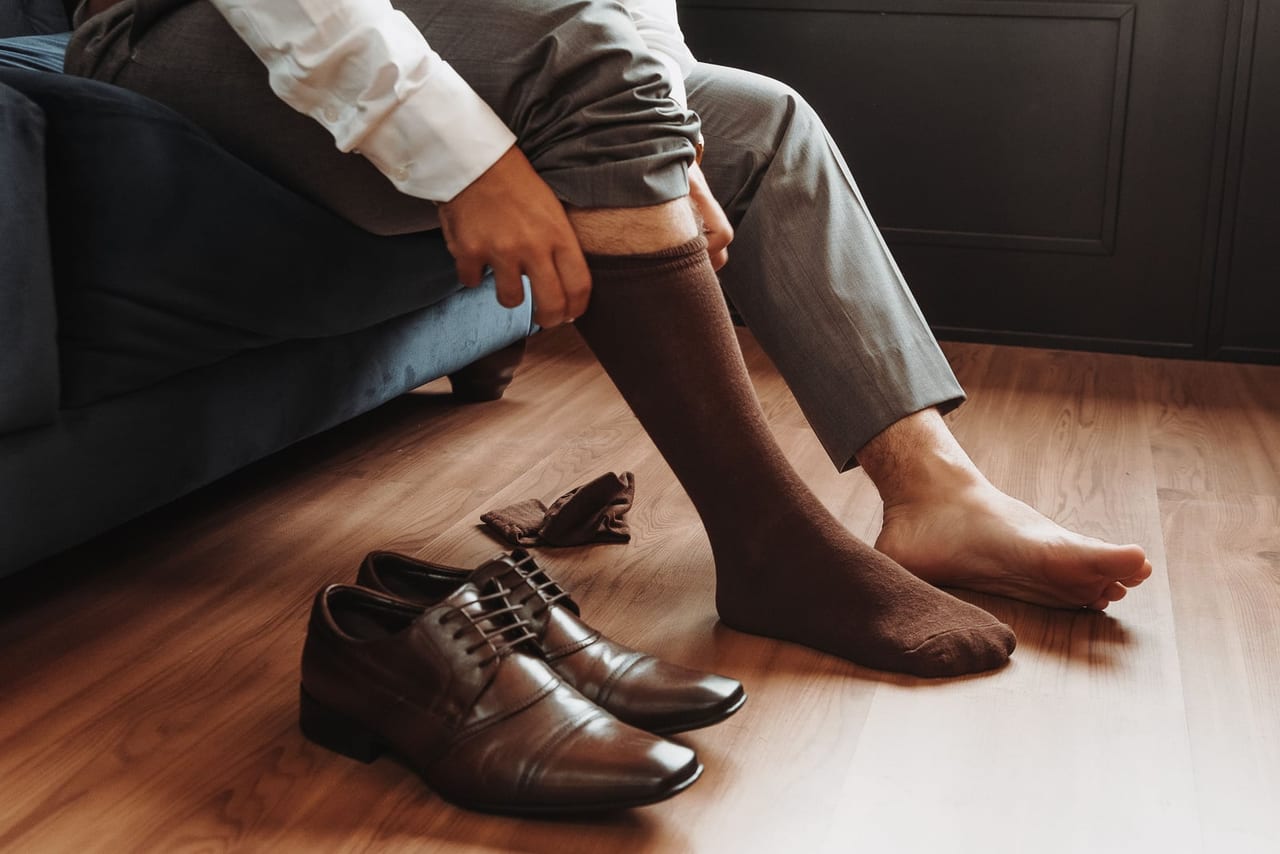
Shoes that are too tight, too loose or too flat make the feet work harder, and worn cushioning does the same more quietly. Sweat plays its part too, because feet sweat more in heat and on busy days, and damp socks rub more easily and leave feet feeling hot and heavy by evening; socks for long days on your feet covers what helps.
The body you bring to work is part of the picture too. Arch shape changes how pressure spreads across the sole: flatter arches can make the foot work harder to stay stable, while high arches concentrate pressure on the heel and the ball. Extra body weight adds to the load on every step, and both weight and age are among the everyday reasons feet and ankles swell. None of these are faults, just part of what your feet carry into every shift.
What helps most, and how sure we can be
Not all advice for standing workers rests on equally strong evidence. The clearest support is for movement: changing position, alternating between standing and sitting, and taking regular breaks are all linked with less of the discomfort that builds over a shift. Footwear comes next, because shoes that fit your feet at the end of the day and still spring back make a hard floor easier to stand on.
Mats, insoles and compression socks come after that. Each helps some people, results for each are mixed or modest, and none makes up for shoes that don't fit. Compression socks in particular aren't right for everyone, so if you have circulation problems or diabetes, ask a healthcare professional before trying them.
TakeawayMove first, fix the shoes second, and think of everything else as a refinement.

A routine for your next shift
These steps fit into moments a shift already has: the stretches when you're stuck in one spot, your breaks and the first hour at home. Start with the two or three that suit your job, and if you're recovering from an injury or have a condition that affects your feet, check with a healthcare professional first.
Rest one foot at a time
If your station has a rail, a low step or a sturdy box, put one foot up for a few minutes, then switch. Shifting your weight from leg to leg eases the load on your lower legs and feet.
Walk whenever the job allows
Take the long way to the stockroom, walk for part of each break, or march in place for a minute when you can't leave your spot.
Rise onto your toes
Holding a counter, lift both heels slowly and lower them again, about ten times, a few times an hour. It keeps the calf muscles working when walking isn't an option.
Take the weight off on breaks
Sit for at least part of every break, feet up on a bag or box if you can, and slowly circle each ankle before you stand. On a long shift, change into a dry pair of moisture-wicking socks halfway through.
Give your feet ten minutes at home
Lie down or sit with your feet raised on a pillow for a while, then do a slow calf stretch against a wall, about 30 seconds on each side. Take the insoles out of your work shoes so both can dry.
The at-home steps matter more than they look, since raising your feet lets the fluid that settled during the day drain. When the wall stretch becomes a habit, calf stretches for standing all day has more moves to add.
Your shoes, the part you control
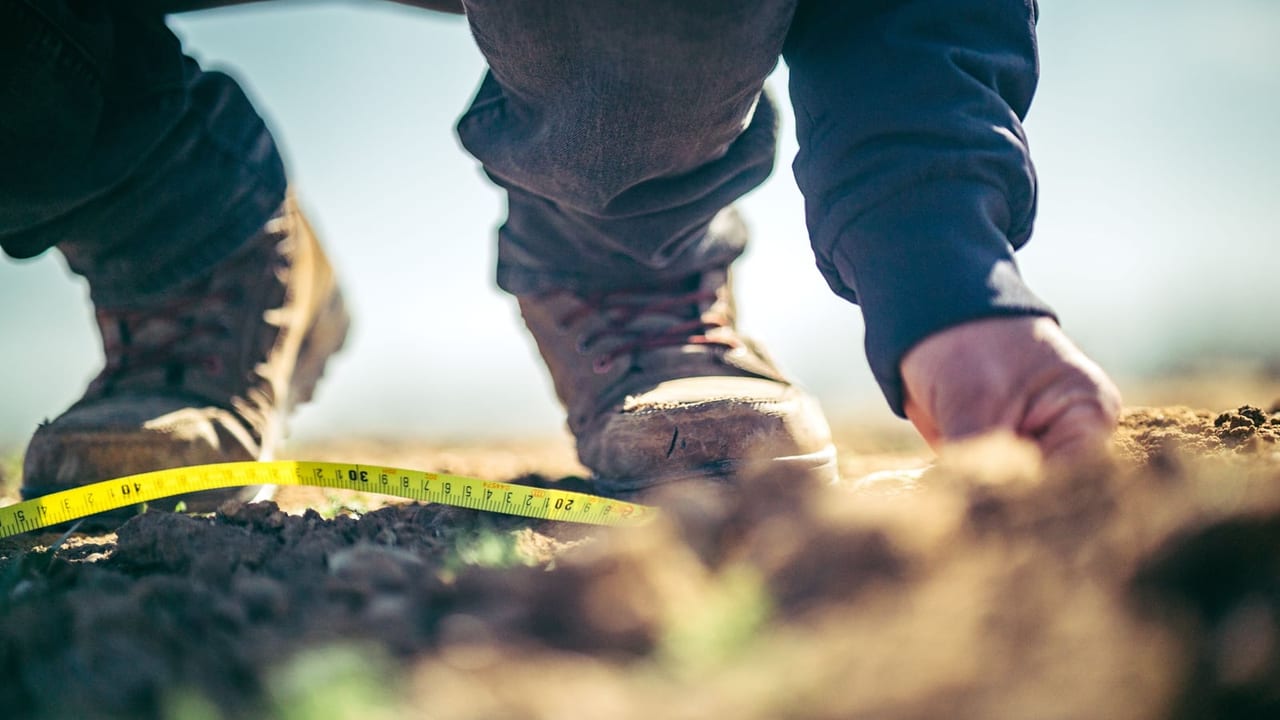
Shoes are usually the one part of a long shift you get to choose, so they're worth an honest look. Feet are larger later in the day, which means work shoes need to fit the foot you have in the last hour, not the one you had in the first: about half an inch of space in front of your longest toe, a toe box wide enough for your toes to spread, and a heel that stays put when you walk. How to measure your feet shows how to check.
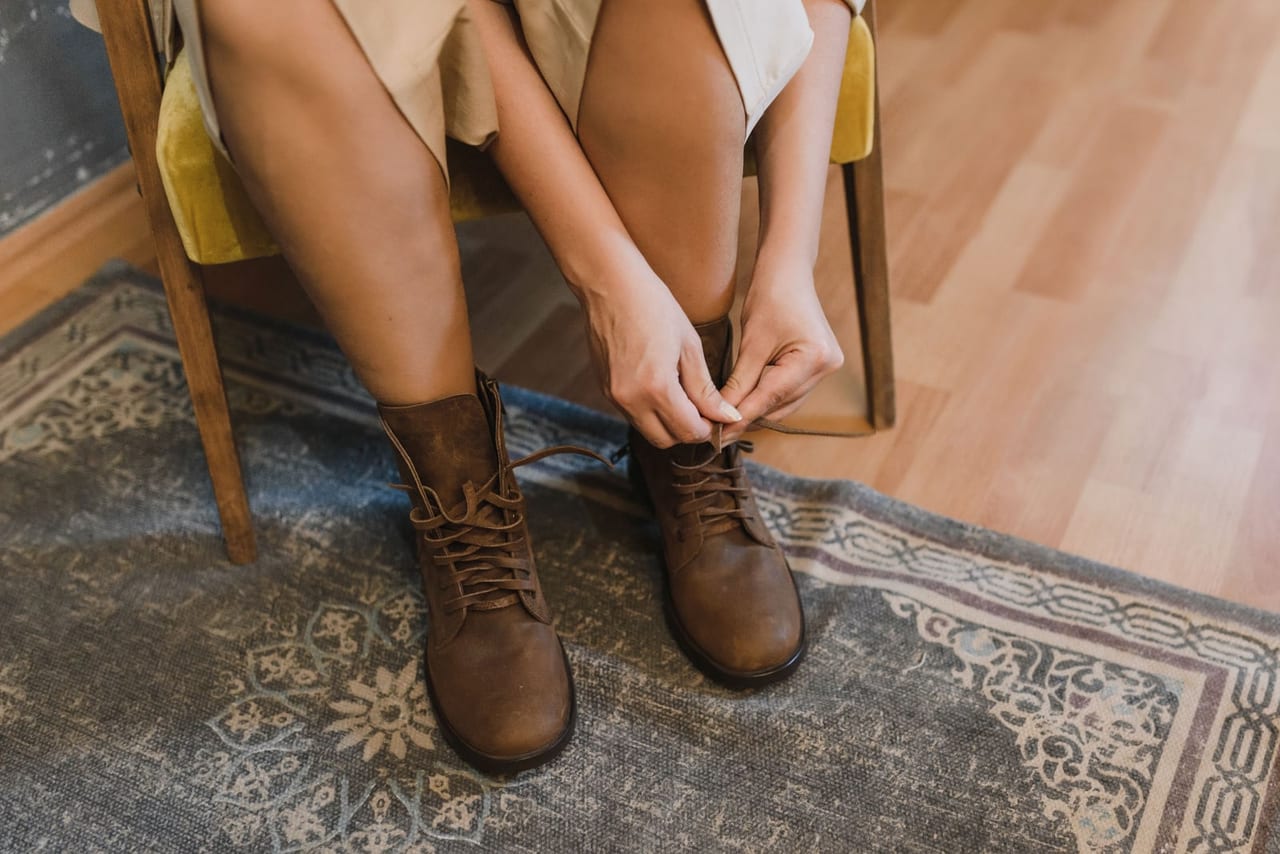
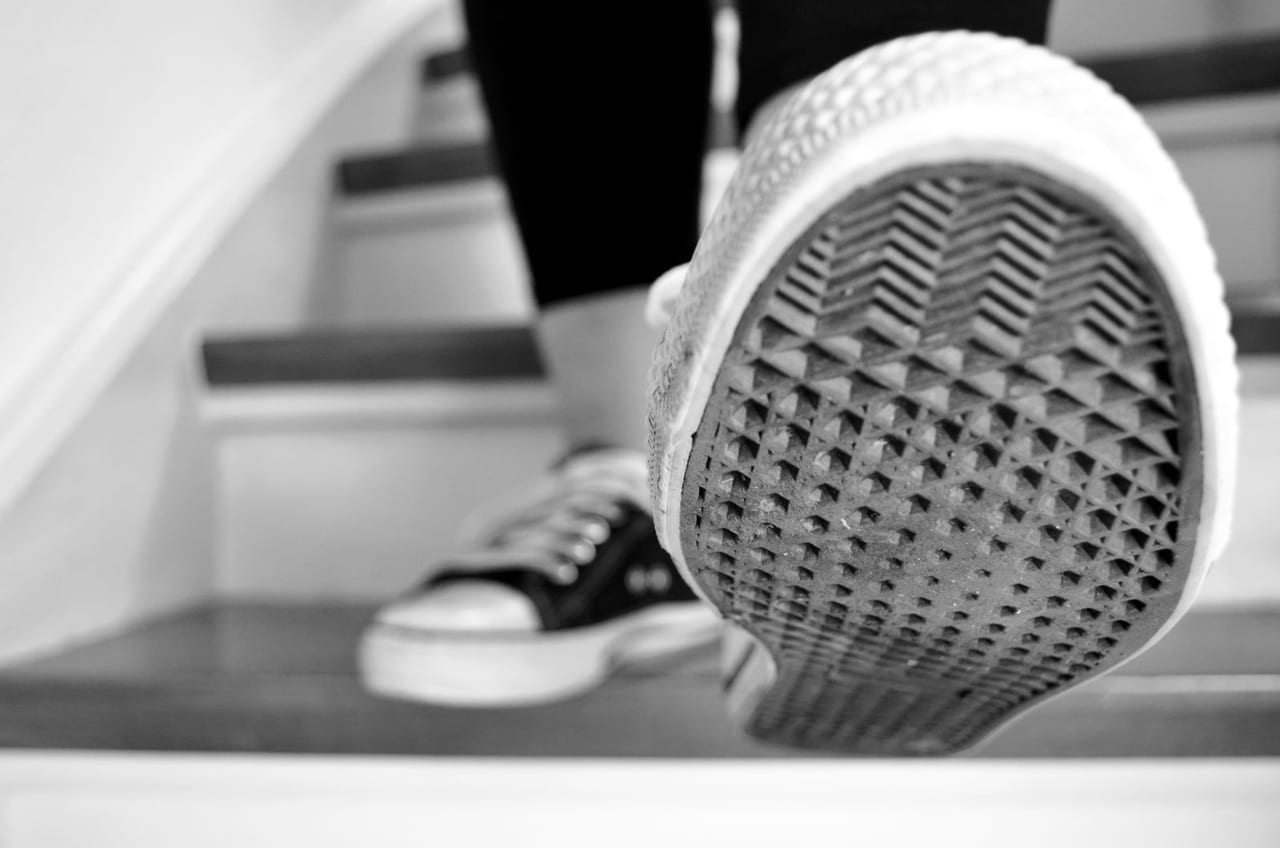
Underfoot, you want cushioning that takes the edge off a hard floor, support under the arch that spreads pressure beyond the heel and the ball, and a firm heel counter, the stiff cup at the back that keeps your heel steady. Condition matters as much as design, because foam wears with use and slowly ages even in a shoe that sits in the closet, and work shoes on hard floors can wear out sooner than they look; when to replace your shoes covers the signs.
Questions people ask
Are anti-fatigue mats worth it?
For many people who stand in one spot on concrete, a good mat makes the floor more comfortable. Choose one with some give but not so soft that you sink into it, since thick, very soft foam can add to fatigue, and look for sloped edges that are harder to trip on.
Should I replace my shoes or my insoles first?
Start with the shoe. If the midsole is deeply creased, the heel counter has gone soft or the sole tilts to one side, the shoe itself is worn, and a new insole won't change that. If the shoe is still sound but the footbed inside is thin or flattened, a new insole is the simpler fix.
The bottom line
Tired, sore feet after a long shift are usually many ordinary pressures adding up: hours in one position, a floor with no give, fluid that settles while the calves stay idle, and shoes that have quietly lost their spring. You can't always shorten the shift, but you can change what each hour of it asks of your feet.