Hip and Glute Exercises for Steadier Steps
A curb, a stair or a bag of groceries in one hand asks your hips to hold you steady over one foot for a moment. The muscles doing that job sit at the side and back of the hip, and a few slow moves at home give them some deliberate work.
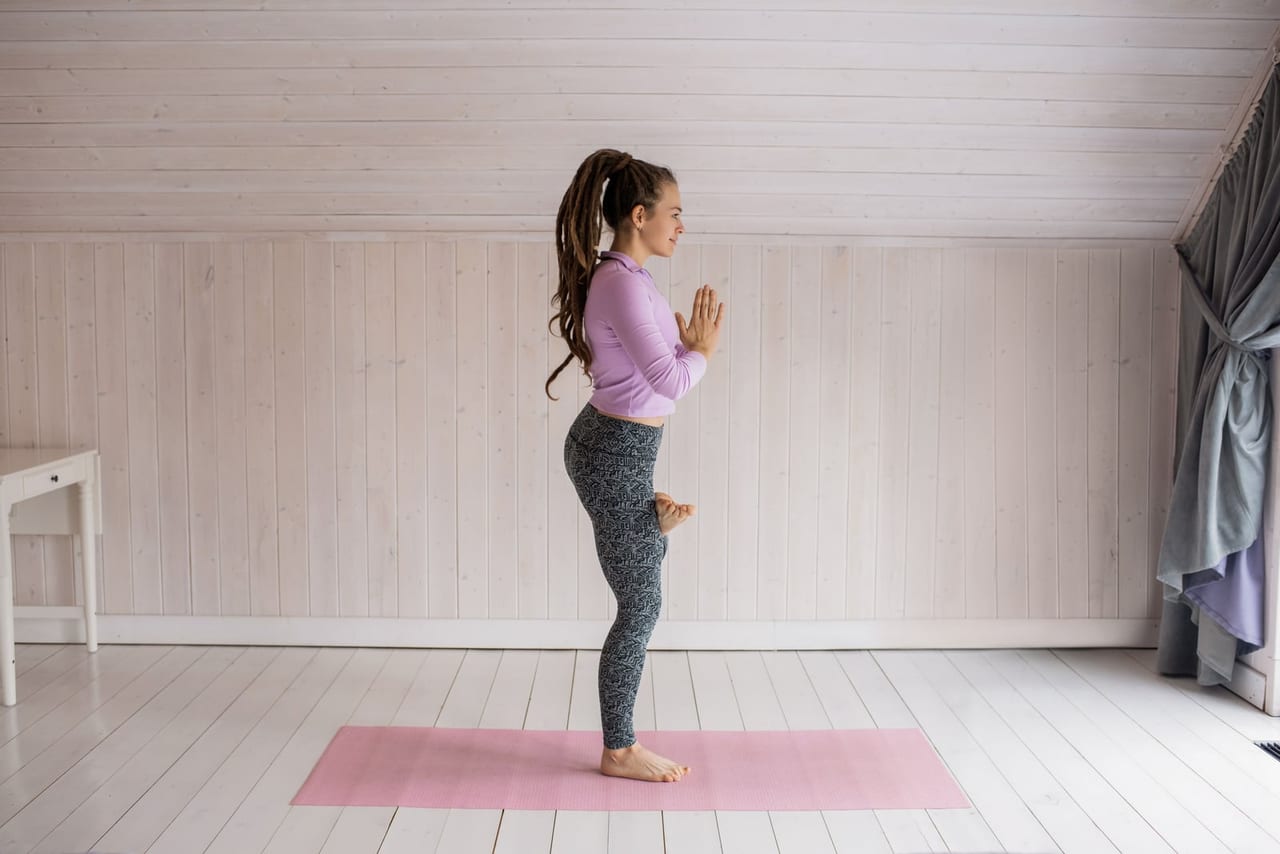
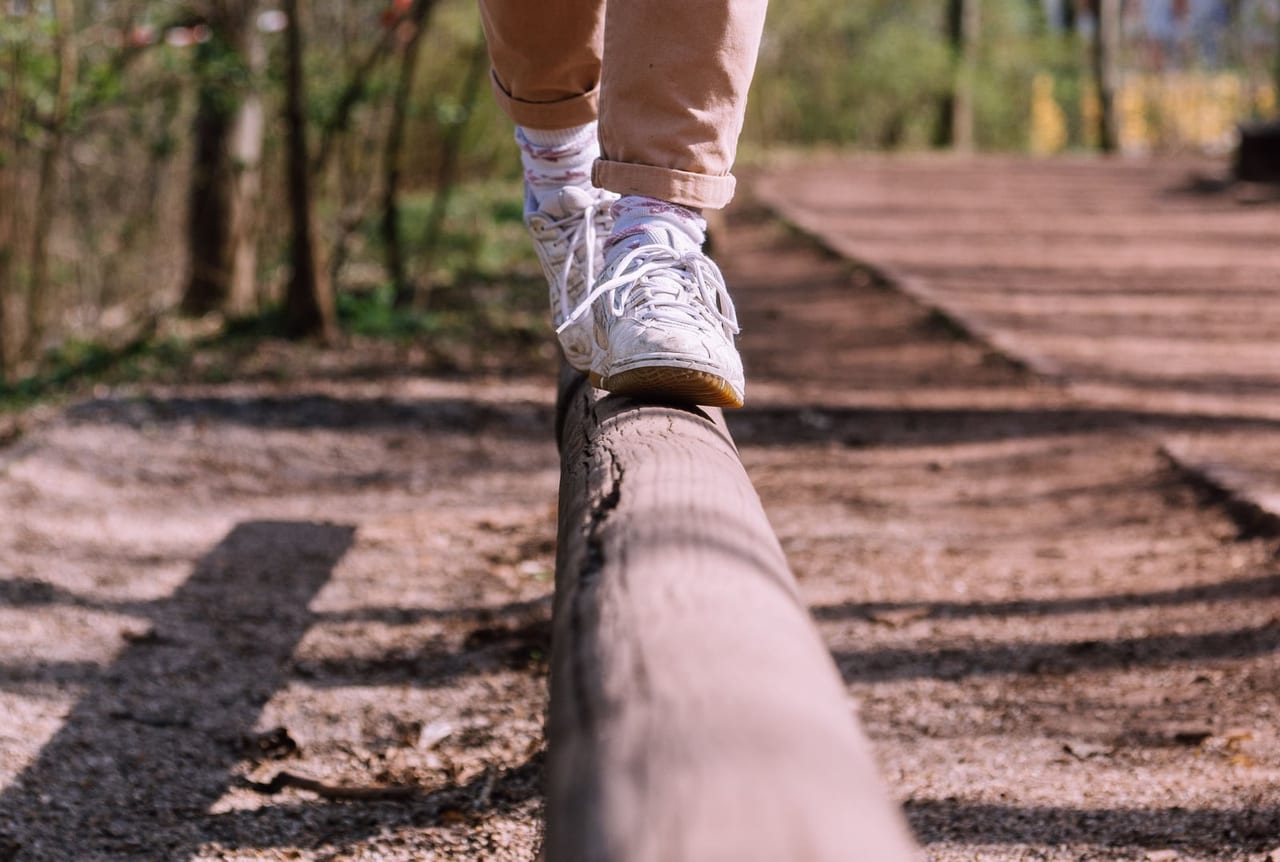
Pull on a sock while standing, or step up onto a bus, and for a moment your whole body balances over one leg. The pelvis starts to tip toward the lifted side, and muscles at the side of the standing hip pull it back to level before you notice. Walking asks for that small act of balance with every stride, which is why it so rarely gets a thought.
When steps feel less sure or the legs tire early on a walk, attention usually goes to the feet, the shoes or the knees. Those are fair places to look, but the hips sit at the top of the same chain. A day spent in a desk chair, a car seat and a sofa gives them little to do, so it's worth asking what a few minutes on the floor could ask of them.
The short answer
Hip and glute exercises work the muscles at the side and back of the hip, which help hold your pelvis level and steady the line from hip to knee to foot each time you stand on one leg. A simple home routine covers a glute bridge, a clamshell, a side-lying leg lift, a standing side raise at a counter, sit-to-stands and slow side steps, done on two or three days a week.
Move slowly and gently, keep a hand on a counter or chair in the standing moves, and stop anything that causes pain. If you're recovering from a hip, knee or back injury or surgery, have balance problems or reduced feeling in your legs, or have hip pain that lingers, check with a healthcare professional before you begin.
What your hips do with every step
Your buttocks are built mostly from three gluteal muscles. The largest sits at the back and straightens the hip, the movement that lifts you out of a chair or up a stair. Two smaller ones lie to the side, running toward the bony point at the top of the thigh, and they do the work in that moment on one leg. As the other foot leaves the ground, they pull on the standing side of the pelvis and keep the opposite side from dropping.
Below the hip, the leg works as one chain, with the knee, ankle and foot stacked under it whenever you put weight on that side. Weaker hip muscles have been linked with the knee drifting inward as people step, squat or land, and with other changes in how the leg moves. That doesn't mean hip exercises change what happens lower down, but the picture is worth keeping: the feet are the last link in a chain that starts at the hip.
Strength activity that includes the legs and hips is commonly encouraged for adults on two or more days a week, and these muscles are an easy part of it to overlook. Balance practice, such as standing on one foot at the counter, works the same muscles from another angle, as in balance exercises for your feet and ankles.
Hip and glute exercises, step by step
The routine takes about 15 minutes and works from the floor up: three moves lying down, where balance isn't a question, then three standing ones. You'll need a mat or carpet, a sturdy chair without arms or wheels, and a counter to hold. Move slowly and gently, and stop anything that doesn't feel right. People recovering from an injury or surgery, or with balance problems or reduced feeling in their legs, check with a healthcare professional first.
Lift into a glute bridge
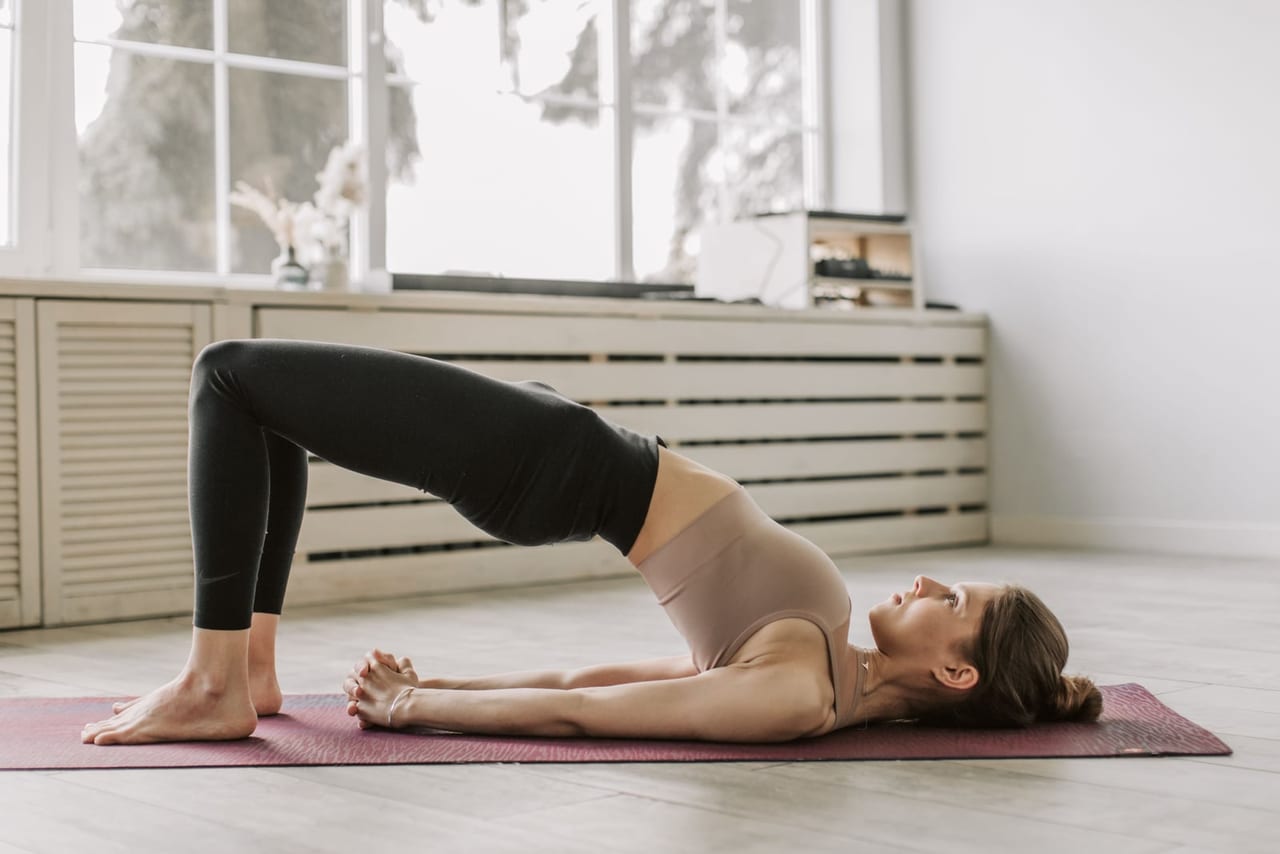
Lie on your back, knees bent and feet flat about hip-width apart. Tighten your stomach, squeeze your buttocks and lift your hips until your shoulders, hips and knees form a straight line. Pause, then lower slowly.
Open your knees in a clamshell
Lie on one side with your hips and knees bent and your legs stacked. Keeping your heels together, lift the top knee a little way without letting your hips roll back, then lower it slowly. Switch sides.
Lift your leg lying on your side
Lie on one side, lower knee bent for balance and top leg straight in line with your body. Lift the top leg slowly, toes pointing forward, then lower it. Switch sides.
Raise a leg out at the counter
Stand tall with both hands on a counter or the back of a sturdy chair. Lift one straight leg out to the side without leaning, toes facing forward, then lower it slowly. Switch legs.
Stand up from a chair
Sit near the front of a sturdy chair, feet flat and a little apart. Lean slightly forward and stand up using your legs rather than your hands, then sit back down slowly.
Step sideways along the counter
With a hand on the counter and your knees soft, take a slow step to the side and bring the other foot in to meet it. Take a few steps each way, toes pointed forward.
The floor moves take the work apart. The bridge asks the large muscle at the back of the hip to lift your weight, and the clamshell and the side-lying lift ask the smaller muscles at the side to move the leg outward. The standing moves put the pieces back together and add balance, and the side steps ask the hips to steady you as your weight passes from foot to foot. A walk asks the same with every stride, and its posture and push-off are set out in how to walk with good form.
Doing each move well
Most form trouble comes from the body finding an easier way. In the bridge, that means arching the lower back to push the hips higher. Tighten your stomach before you lift and rise only to a straight line from shoulders to knees, with your back neither arched nor pressed flat. If you feel the bridge mostly in your lower back, lower your hips a little.
In the clamshell and the side-lying lift, the usual shortcut is rolling the hips backward, which turns the movement into a twist. Keep your hips stacked and accept a smaller lift in return. In the standing side raise, the trunk tends to lean away from the lifted leg and the toes turn up toward the ceiling, so stand tall, keep your toes forward and lift only as high as you can without leaning.
For sit-to-stands, let your knees travel in line with your toes rather than falling toward each other. Sit back down slowly instead of dropping, since the lowering is part of the exercise, and keep the side steps short enough that your trunk stays upright. Through all of it, breathe out as you lift and in as you lower. Holding your breath is an easy habit in strength work, and it can briefly raise your blood pressure.
How many, how often, and how it should feel
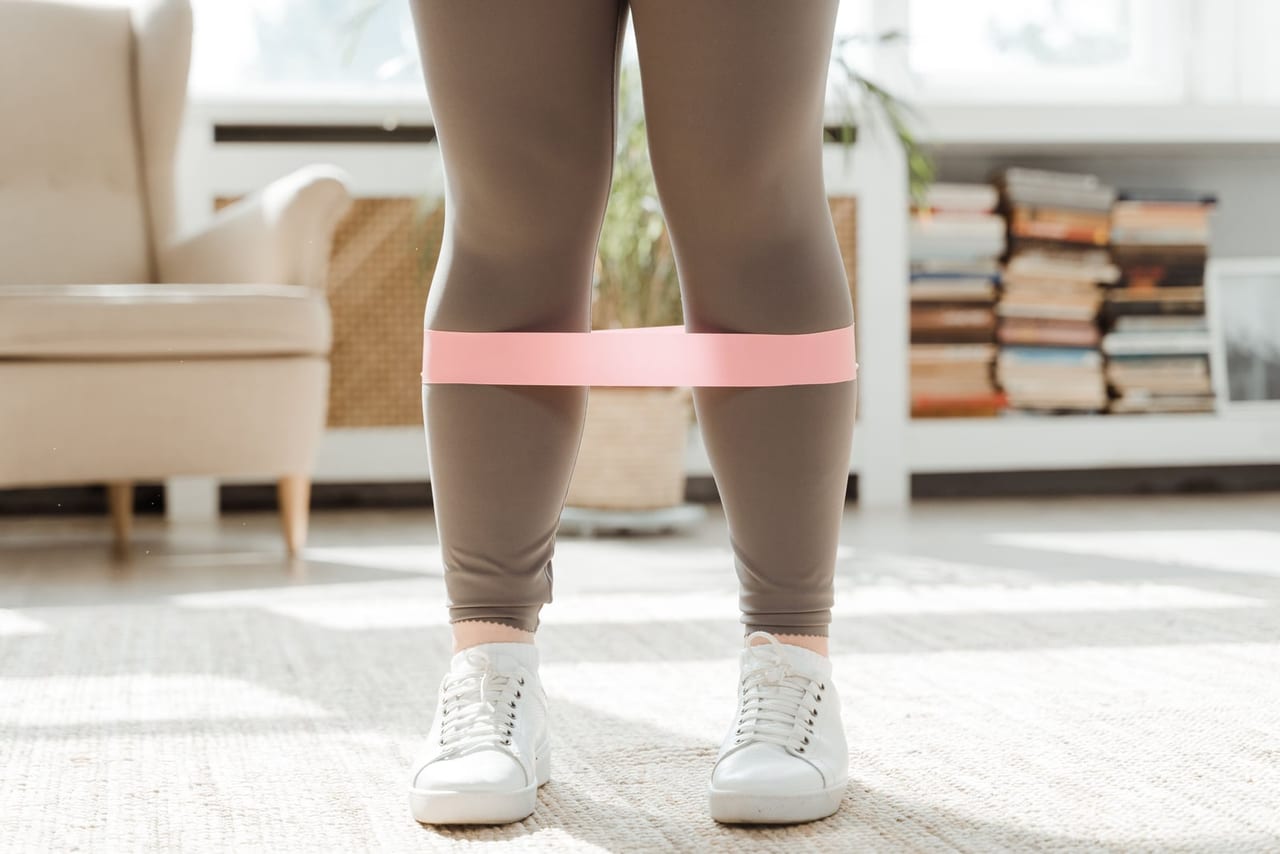
There's no need to start with big numbers. A few slow repetitions of each move, perhaps five, make a fair beginning, and many home routines build toward about ten in a row. A firm cushion on the chair seat makes the sit-to-stand easier. When the set feels easy, change one thing at a time: hold the bridge for a few slow breaths, or add a light loop band just above the knees for the clamshell and side steps. Band moves for the ankle itself are a separate routine, in resistance band exercises for your feet and ankles.
Working muscles should feel warm and tired by the end of a set, and a little soreness a day or two after a new routine is common. That ache sits in the muscle itself and fades within a few days, and fewer repetitions next time is a sensible answer. Pain that's sharp, pinching or deep in a joint is a different signal, and it's a reason to stop the move rather than finish the set.
When hip or knee trouble may mean something more
Tired muscles at the end of a set, some soreness the next day, and one side that feels weaker or less steady than the other at the start are all ordinary. So is a hip that feels a little stiff after a long drive or a day at a desk and loosens once you're moving. None of these asks for more than patience and a lighter set.
Pay closer attention to hip or groin pain that lasts more than a week or two or keeps building, pain that wakes you at night, or a limp that's new. A knee that gives way, trouble putting weight on one leg, pain after a fall, and pain, numbness or tingling that travels down the leg don't fit the ordinary pattern either. These are reasons to get checked rather than to push on, and a healthcare professional can tell what is going on.
Questions people ask
Are hip exercises safe after a hip replacement?
Exercise is usually part of recovery from a hip replacement, but the new hip often comes with its own movement limits for a while, such as how far it bends and whether the legs cross. They vary from person to person, so follow the plan from your surgical team. Ask before adding any move from a general routine.
Can hip exercises help with knee or foot pain?
Weaker hip muscles are linked with the knee drifting inward and with changes in how the leg moves, so a healthcare professional looking at knee or foot pain may include hip exercises in what they suggest. That link isn't a promise, though, and knee and foot pain have many possible reasons. Pain that lasts deserves its own look, not just more repetitions.
The bottom line
Most of what your hips do goes unnoticed: a pelvis held level as you stand on one leg, a knee kept in line over a foot, a body lifted out of a chair. A few slow moves on the floor and at the counter ask those muscles for that work on purpose, something a day of sitting rarely does. The feet get the credit for each step, but the steadiness behind it starts higher up.