Calf Raises and Heel Raises: Strength for Your Lower Legs
Every step you take ends with a calf muscle lifting your heel, a job so routine that most of us notice it only when a flight of stairs or a long day makes the legs feel heavy. A slow rise onto your toes, with a hand on a counter, gives those muscles some deliberate work.

Watch someone carry a bag of groceries up a flight of stairs and look at their heels. Each one lifts off the step just before the foot swings forward, and the muscles at the back of the lower leg do that lifting. It goes unnoticed on an ordinary day and shows itself at the end of a long one, when the stairs somehow look steeper.
Stretching is the familiar answer when calves feel tight, but a stretch asks a muscle only to lengthen. The lifting job asks for something else: a muscle that shortens against your body weight and then lowers it again under control. Rising onto your toes at the kitchen counter practices exactly that, and the questions come quickly: how high, how slowly, how many.
The short answer
A calf raise, also called a heel raise, is a slow rise onto the balls of both feet, a pause at the top and a slow lowering, done with a hand on a counter or wall. Many people begin with a few, build toward about eight to twelve in a row, and repeat for one to three sets on two or three days a week.
Move slowly and gently, and stop anything that doesn't feel right. If you're recovering from an injury or surgery, have pain in your Achilles tendon or calf, or have balance problems or reduced feeling in your feet, check with a healthcare professional before you start. Pain, swelling or warmth in one calf needs checking, not exercise.
What your calves do with every step
Your calf is two muscles, a larger one that gives the calf its shape and a deeper one beneath it, and both join into the Achilles tendon, which attaches to the heel bone. When they tighten, they lift your heel against gravity. That lift is part of the push that carries you forward at the end of each step, and when you stand, the same muscles help steady the ankle.
Strength work asks something different of these muscles than a stretch does. On the way up they shorten and lift your body weight, and on the way down they lengthen while still holding on, so the way down counts as much as the way up. The calf stretches you may do after a long shift ask the muscles to let go, while a raise asks them to work.
Everyday movement leans on the same muscles. Stairs, slopes and getting up from a chair all ask the calves to lift and lower your weight, and calf strength is linked to how quickly people walk and step, particularly in later years. Strength activity that includes the legs is commonly encouraged for adults on two or more days a week. For what the ground itself asks of your feet, see walking stairs, hills and uneven ground.
Calf raises, step by step
The routine takes about ten minutes and needs a kitchen counter or sturdy wall to rest your hands on, plus a chair if you'd like to start seated. Wear flat, supportive shoes, or go barefoot on a floor that doesn't slip. Move slowly and gently, and stop anything that doesn't feel right. People recovering from an injury or surgery, or with balance problems, check with a healthcare professional first.
Start seated if you like
Sit in a sturdy chair without arms, feet flat and knees bent at right angles. Lift both heels slowly, toes on the floor, pause, then lower them slowly. A few lifts are plenty at first.
Set up at a counter
Stand facing a kitchen counter or a sturdy wall with your hands resting on it, your feet about hip-width apart and your toes pointing forward. Stand tall, with your knees straight but not locked.
Rise and lower slowly
Press through the balls of both feet and lift your heels as high as feels comfortable, then pause for a second or two. Lower them more slowly than you rose, breathing out on the way up and in on the way down.
Add a slight bend in your knees
Soften your knees into a small bend, hold that bend, and rise and lower as before. The movement is smaller, and the deeper calf muscle does more of the work.
Try one foot at a time
When both feet feel easy and steady, shift your weight onto one foot and tuck the other behind that leg. Keep a hand on the counter, rise and lower slowly, then switch.
Build up a little at a time
Start with a few raises and add one or two each session, working toward eight to twelve in a row. Many routines use one to three sets on two or three days a week.
The bent-knee version shifts more of the work to the deeper muscle, because the larger calf muscle crosses the knee and can do much less to lift the heel when the knee bends. Seated heel raises work the same way, since the knees are bent there too.
Making the move easier or harder
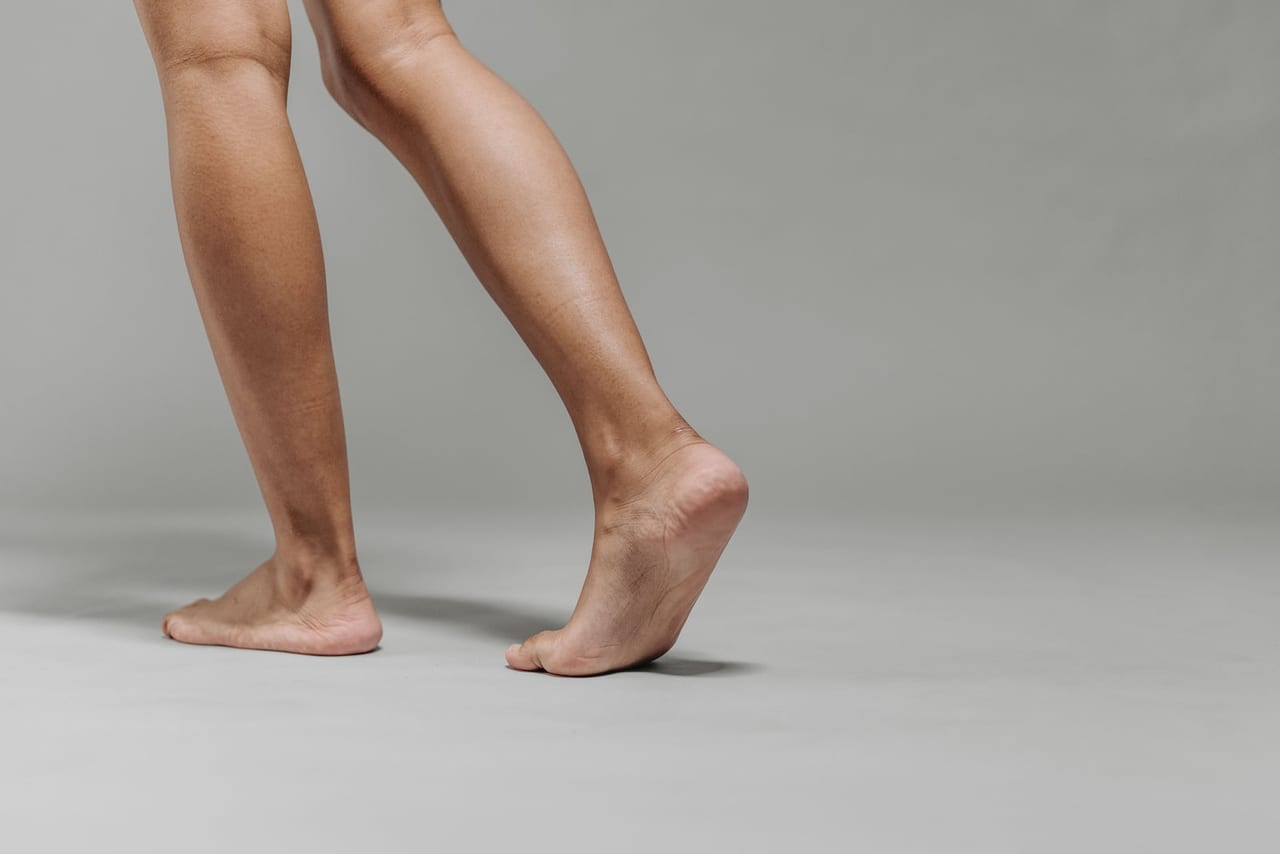
If standing on your toes feels unsteady, the seated version is a fair place to begin, and there's no rush to leave it. A chair takes balance out of the question, so the effort goes to the calves. Once you're standing, rest both hands on the counter, then just your fingertips, and try letting go when your balance allows. Standing practice such as balance exercises for your feet and ankles goes well alongside it.
A raise can be made harder in a few ways, and it helps to change only one at a time. Letting go of the counter is one, and the bent-knee version is another. One foot at a time is the bigger step, because your whole body weight then rests on one calf and one Achilles tendon instead of two, so it's worth waiting until two feet feel easy and steady.
Getting the movement right
Rise smoothly, pause for a second or two, and lower slowly. Bouncing swaps muscle work for momentum, so the calves get less to do, and dropping quickly gives away the part of the movement where the muscles are holding on. A small lift counts at the start, and when the pace speeds up or the rise turns lopsided, many people stop the set there.
Keep your knees straight but not locked, your back tall and your toes on the floor. Breathe steadily, out as you rise and in as you lower. Holding your breath is an easy habit in any strength move, and it can briefly raise your blood pressure.
How many, and how often
A common range for a calf raise is about eight to twelve slow raises in a row, which makes one set, with one to three sets in a session. That's a place to build toward, not a starting line, so begin with fewer and add a little at a time. Two or three days a week is a usual rhythm.
Calves that feel tired, or a little sore the next day, are an ordinary response to a new exercise, and doing fewer next time is a reasonable answer. Pain is different. Sharp pain during a raise, or pain at the back of the heel or along the Achilles tendon that lingers or feels worse the next day, is a cue to stop and have it checked.
When calf or heel trouble may mean something more
Tired calves at the end of a day on your feet, or a little muscle soreness the day after trying raises, are ordinary, and both legs usually feel much the same. It's also common for one side to feel weaker at the start.
Pay closer attention to pain that sits in one place, especially at the back of the heel or along the Achilles tendon, or to one calf that is painful, swollen, warm or red. Both legs share the same day, so trouble in one calf doesn't fit the ordinary pattern. These are reasons to get checked, not to push harder.
Questions people ask
Is a heel raise the same as a calf raise?
In everyday use, yes: both names describe lifting your heels off the floor and lowering them again. "Calf raise" names the muscles doing the work, and "heel raise" names what your heels do, so you'll see both on exercise sheets.
Should I do calf raises barefoot or in shoes?
Either works on a non-slip floor. Bare feet and flat shoes with a sole that grips both suit most people. Avoid socks on a smooth floor, where they can slip, and if you have diabetes or reduced feeling in your feet, keep your shoes on.
The bottom line
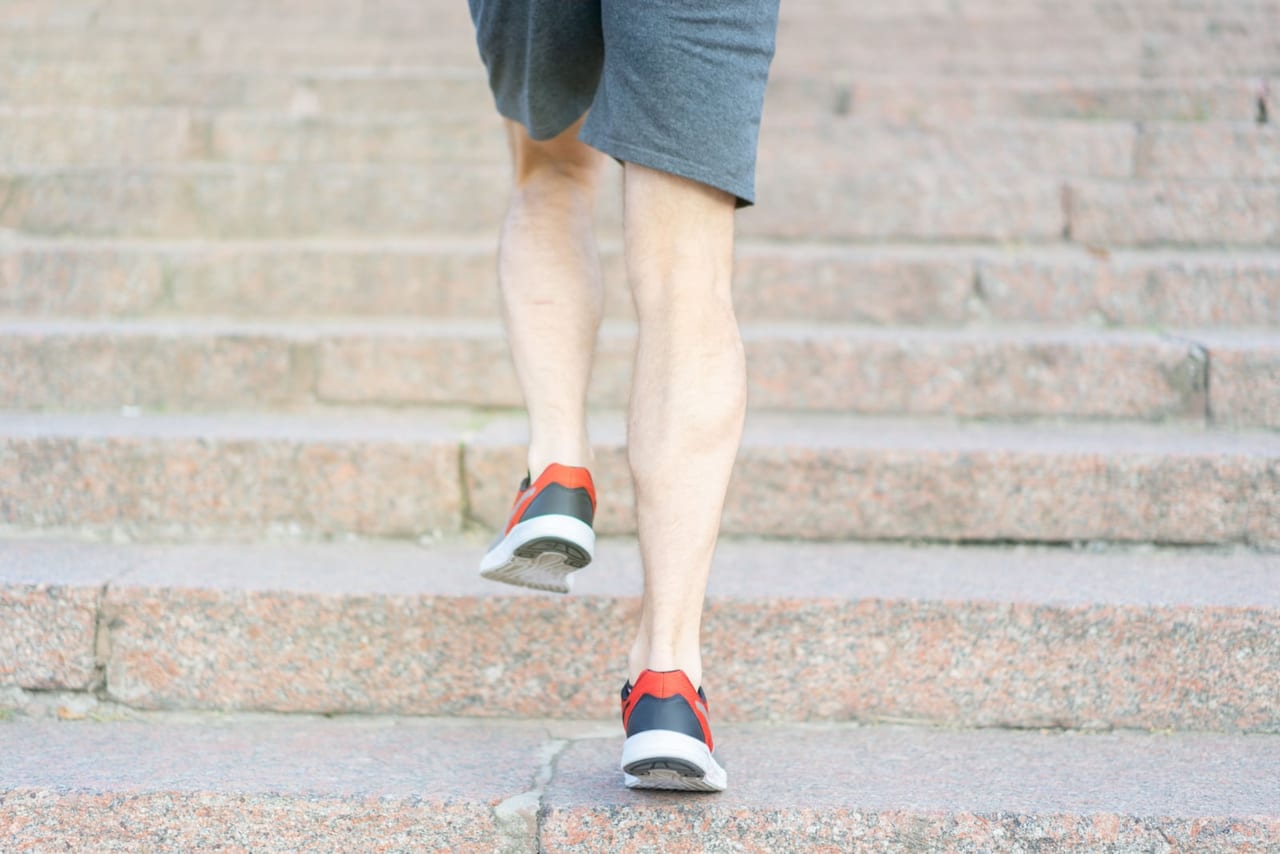
Most of what your calves do goes unnoticed: a heel lifting at the end of each step, a body carried up a stair, a slope climbed without a second thought. A slow rise at the counter asks them to do that same job on purpose, and to be as careful on the way down as on the way up. That patience, more than any number of repetitions, is what makes the movement worth doing.