Resistance Band Exercises for Your Feet and Ankles
A light resistance band turns simple ankle movements into gentle strength work, with no gym and no heavy equipment. Four slow movements take the foot through each direction it turns, all from a chair.

Sit on the edge of a chair, stretch one leg out in front of you and point your toes away from you. You may feel your calf working, the same effort that lifts you onto your toes, only slower and on purpose. Loop a light band around the ball of your foot and that movement suddenly has something to push against.
That small experiment is the idea behind resistance band exercises for the feet and ankles. You might reach for a band for ordinary reasons: an ankle that has felt less sure on uneven ground, a sprain that never quite settled, or long days of sitting that leave the legs with little to do. The practical questions come quickly: how light a band should be, and how you'd know whether you were working the muscles or straining them.
The short answer
Resistance band exercises move your foot in four directions against a light, stretchy band: pointing down, pulling up, turning the sole in and turning it out. Each direction works a different group of muscles around the ankle, and stronger muscles there can help the ankle feel steadier. Start with a light band and about ten slow repetitions each way, two or three times a week, moving gently and stopping any exercise that doesn't feel right. If you're recovering from an injury or surgery, or an ankle keeps giving way, check with a healthcare professional first.
What moves your ankle, and what can leave it weaker
Your ankle moves in four main directions, and each one has its own set of muscles. Together they steer your foot and help hold the ankle steady every time you put weight on it. Pointing the foot down is the job of your two main calf muscles, which join to form the Achilles tendon, and the tendon attaches to your heel. The same muscles lift your heel with every step and every rise onto your toes.
Pulling the foot back up is the work of the muscles along the front of your shin, which lift the front of your foot, the same effort you feel when you walk on your heels. The sides of the ankle handle the turning. The muscles whose tendons run along the outer ankle bone help turn the sole outward and steady the ankle when you stand on it, while other muscles turn it inward, so working both directions keeps the routine even.
Long spells of sitting give these muscles little to do, and a sprain that didn't fully recover can leave the ankle feeling wobbly. When the muscles are weak or tired, an ankle can feel less sure of itself, especially on uneven ground. Stronger muscles can help it feel steadier, which is what a few minutes with a light band is meant to work toward.
Choosing and setting up your band
It pays to start light, since a light, flat exercise band is plenty to begin with. Colors usually mark the level of resistance, but the order varies between makers, so check the label. Choose a band you can move slowly and smoothly from start to finish. Many bands are made of latex, so if you're allergic to latex, look for one labeled latex-free.
Look the band over before every session for nicks, tears or sticky spots, and replace a worn band, which can snap. Anchor it low and firm, around a heavy table leg or a sturdy post close to the floor, and give it a gentle test pull before you begin. Never anchor a band to something that can tip, slide or roll.
Four band exercises, step by step
The routine has four moves, one for each direction, and takes about ten minutes, sitting on a sturdy chair or on the floor. Along with the light band you need something heavy to anchor it, such as a solid table leg or a sturdy post. Keep the pace unhurried, and stop if a move feels wrong.
Check the band and sit down
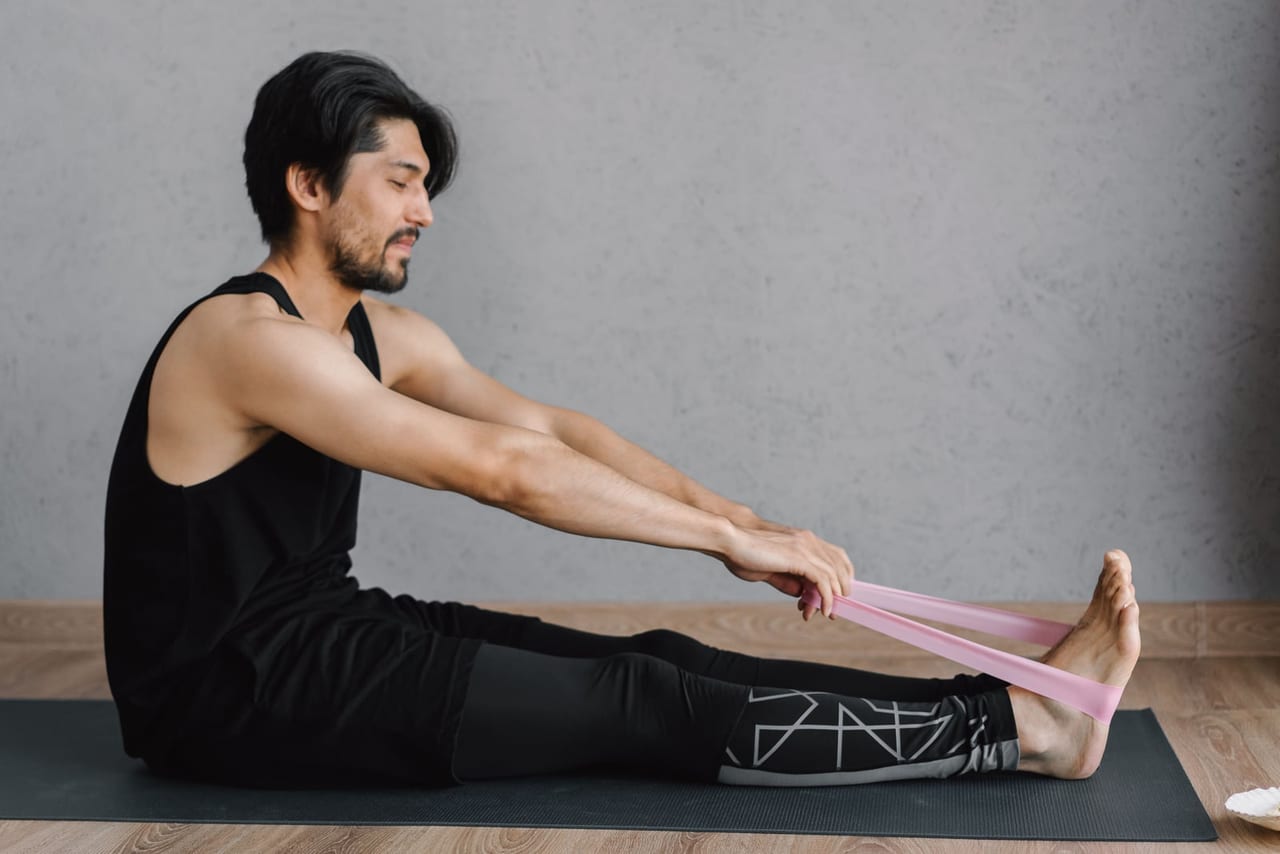
Look over the band for nicks or tears. Sit on a sturdy chair or on the floor with one leg straight out in front of you, and keep the band flat against your foot.
Point your foot
Loop the band around the ball of your foot and hold both ends. Slowly point your toes away from you, then let the band draw your foot back just as slowly. About ten slow repetitions, or fewer if that is enough, then switch feet.
Pull your foot back
Tie the band around a heavy table leg in front of you and loop it over the top of your foot. Slowly pull the front of your foot back toward you, then return with control. About ten slow repetitions, or fewer, then switch feet.
Turn your sole inward
Anchor the band on the outer side of your foot and loop it around the front of your foot. Slowly turn the sole inward, away from the anchor, then return. About ten slow repetitions, or fewer, then switch feet, with the anchor on that foot's outer side.
Turn your sole outward
Tie the band into a loop and slip it around both feet, just behind the toes. Keep one foot still and slowly turn the other sole outward against the band, then return. About ten slow repetitions, or fewer, then switch feet.
As you work through the four moves, notice where each one feels hardest. A band pulls back harder the further you stretch it, so every exercise is toughest at the end of the movement, which is exactly where to slow down and stay in control. The return counts too: letting the band draw your foot back slowly, instead of letting it snap back, keeps your muscles working in both directions and makes the most of every repetition.
What your feet wear, during and after
Both bare feet and socks work for seated band exercises, so wear whichever feels better. If you have diabetes or reduced feeling in your feet, keep your socks on. Either way, spread the band wide and flat across the ball or the top of your foot, since a band that rolls into a cord can dig in.
Band work is short, but your shoes are with you for hours, so what's inside them counts too. The muscles the band works help hold your ankle steady every time you put weight on it, and after a session they keep doing that job inside your shoes.
When ankle weakness may mean something more
Some people feel a little muscle tiredness after trying a new exercise, and one side may feel weaker than the other at first. Both are ordinary, and slow, regular practice is part of the process. Feeling the muscles work is what the exercises are for.
Pay closer attention if an ankle keeps rolling or giving way, if an exercise causes pain rather than effort, or if your feet feel numb or tingly. It may not be serious, but it's a reason to get checked. If your ankle hurts during or after band work, use a lighter band or fewer repetitions, and have it checked if the pain stays.
Questions people ask
How often should I do resistance band exercises?
Two or three times a week is a sensible start. On other days, try gentle ankle exercises for movement, and finish band days with a few calf stretches. Each session can stay short, since the whole routine takes about ten minutes.
When should I move up to a stronger band?
When ten slow repetitions feel easy in every direction, add a few more repetitions before you change bands. It's easier to change one thing at a time, the repetitions or the band, and not both at once. Whichever you change, you should still be able to move slowly and smoothly from start to finish.
Can I use a towel instead of a band?
For pointing, yes: hold a towel around the ball of your foot and press into it. A towel doesn't stretch, though, so the other three directions, which are pulling back and turning the sole in and out, need a band.

The bottom line
A band gives the muscles around your ankle something gentle to push against, and what matters is letting them do the work slowly, on the way out and on the way back. Pain is the cue to stop, but effort you can feel is the point of the exercise.