How to Choose Hiking Boots and Trail Shoes
A trail asks things of a shoe that a sidewalk never does: loose rock, wet roots, a pack and a long way down. The right pair depends less on how sturdy it looks than on where you hike and how it fits when your feet are tired.
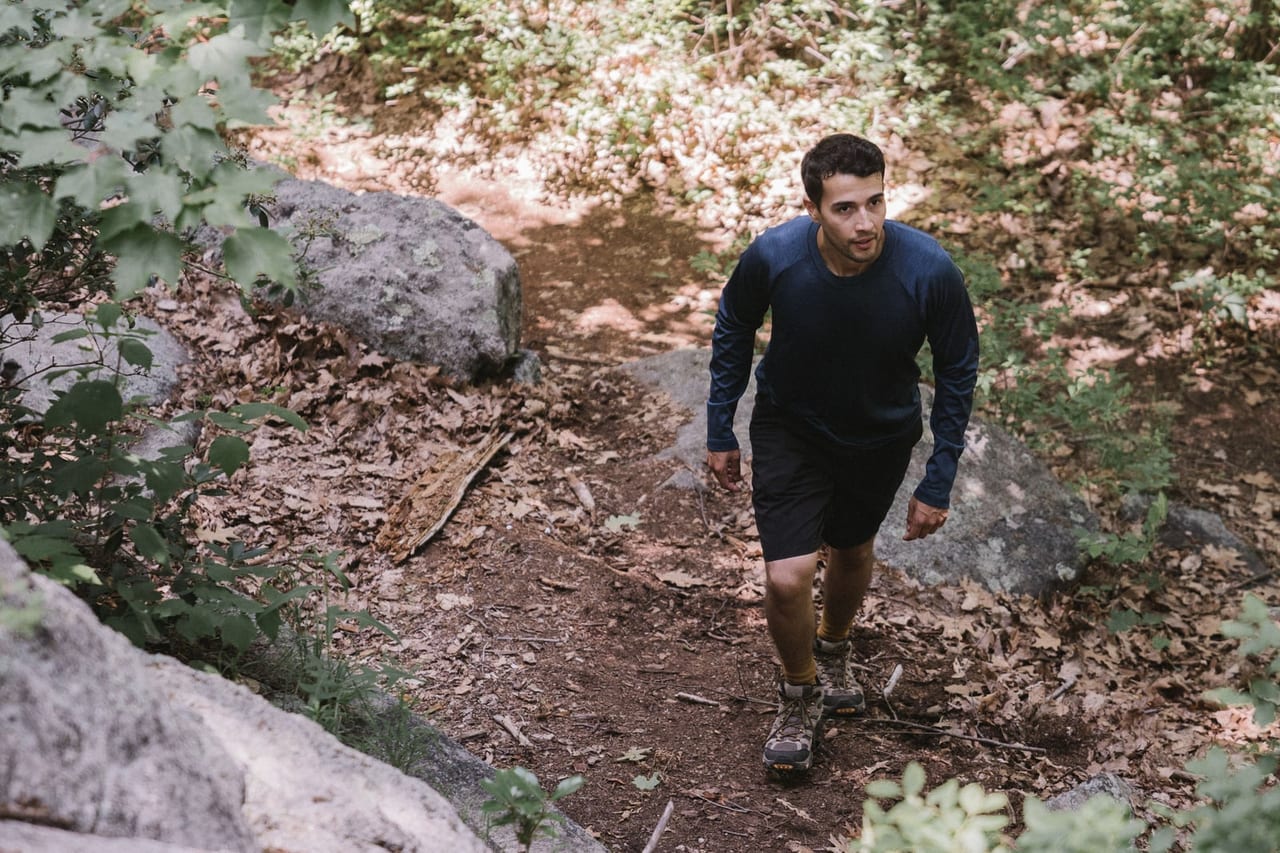
The climb gets the attention, but the walk down is where a pair of hiking shoes shows what it's like. An hour into the descent, your toes touch the front with each step, a heel that felt settled starts to rub, and boots that looked reassuring in the store feel heavy. Nothing changed at the top; the trail just started asking a different question.
A wall of trail footwear makes the choice look like a list of features: high or low, waterproof or mesh, deep tread or shallow. Most of those choices settle themselves once you know where you'll walk and what you'll carry.
The short answer
Choose by the trail and the load. Trail shoes and low hiking shoes suit well-kept paths and light day packs, while mid-cut or full boots with firmer soles suit rocky ground and heavier loads. Whatever the style, fit decides most of the comfort: try pairs on late in the day with your hiking socks, leave about half an inch in front of your longest toe for descents, and make sure your heel stays put.
Break a new pair in on short walks, and wear wool or synthetic socks, not cotton. Have a blister looked at if it oozes cloudy fluid or the redness around it spreads, and see a healthcare professional if you can't put weight on a foot after a twist or a fall.
Why a trail is harder on your feet than a sidewalk
On a sidewalk, every step lands on the same flat surface. On a trail, the ground tilts and shifts, so your feet and ankles keep adjusting, and roots and rocks press up through a thin sole. A pack adds its weight to every step, which is why a sole that feels fine on pavement can feel thin after a few rocky miles.
Going downhill changes the forces again. Each step down pushes your foot forward in the shoe, and if there isn't enough room, or the laces are loose over the top of your foot, your toes meet the front again and again. Those knocks can cause bleeding under the nail, which is how a toenail turns dark after a long descent.
Heat and sweat build over the day, and damp skin rubs raw more easily than dry skin, especially where a loose heel slides on every step. Feet also tend to swell a little over hours of walking, so a pair that feels just right at the trailhead can feel tight by the last mile.
Trail shoes, hiking shoes or boots: matching the pair to the trail
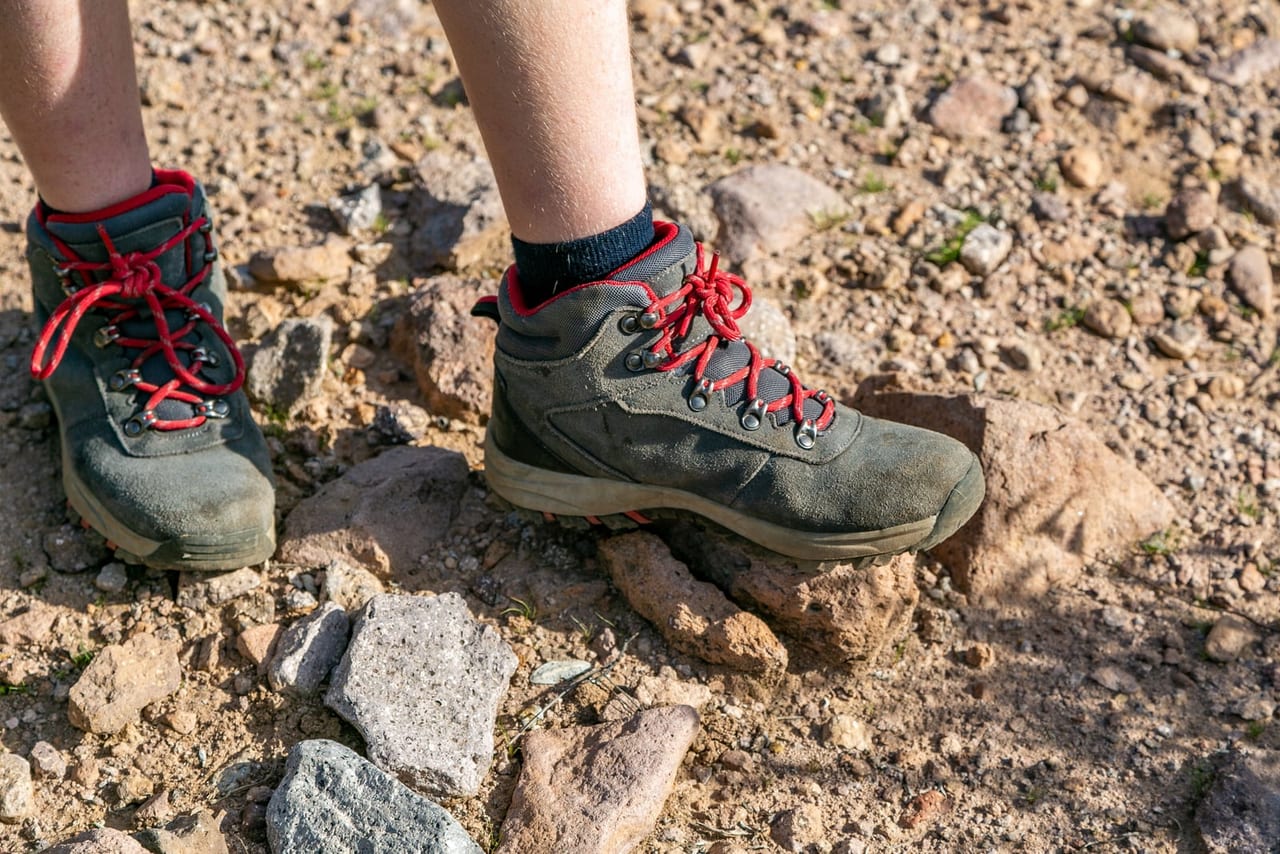
Hiking footwear runs from light to heavy. Trail running shoes are the lightest and most flexible, with grippy soles and mesh uppers, and low hiking shoes add a sturdier sole and a tougher upper. Mid-cut boots rise just above the ankle bone, and full boots go higher still, with stiffer soles and thicker uppers built for rough ground and heavy packs.
For well-kept paths, day hikes and a light pack, trail shoes or hiking shoes are often all you need, and lighter footwear can feel easier over a long day. Rocky or overgrown ground, trips of several days and a heavy pack are where boots earn their weight, with firmer support underfoot and more protection from rocks.
Ankle height is where expectations tend to run ahead of what a boot can do. A higher collar keeps stones, mud and scratches out and can make the ankle feel steadier on rough ground, which some people value under a heavy pack. It isn't a brace, though, and it can't stop every rolled ankle; careful footing and a slower pace on loose ground matter whatever the collar.
Soles, stiffness and waterproofing
Turn a pair over and the tread tells you where it's meant to go. Deeper, widely spaced lugs, the raised blocks on the sole, tend to grip mud and loose dirt and shed it as you walk, while shallower tread suits packed paths. A firmer midsole keeps you from feeling every sharp rock and helps under a heavy pack, but it's heavier and usually takes longer to break in. Any sole should still bend a little at the ball of the foot.
A waterproof lining keeps puddles, wet grass and snow out, which matters on cold, wet days. Your feet go on sweating inside it, though, so on a hot, dry trail a lined pair can feel warm and damp, while mesh lets more air move. That's why a waterproof pair suits wet seasons and cold weather, and a breathable one often feels better in summer heat.
How to try on hiking boots and trail shoes
A real fitting takes about half an hour. Bring your hiking socks and any insoles you'll use, since both take up room. Fit the larger of your two feet, and expect a pair to feel comfortable on the first try; don't count on a tight one stretching.
Try them on late in the day
Go in the afternoon or evening, when your feet are a little larger, wearing the hiking socks and any insoles you'll use on the trail.
Check the room at the toe
Lace up and stand. Feel for about half an inch, roughly a finger's width, in front of your longest toe, with room to wiggle your toes.
Seat your heel and lace snugly
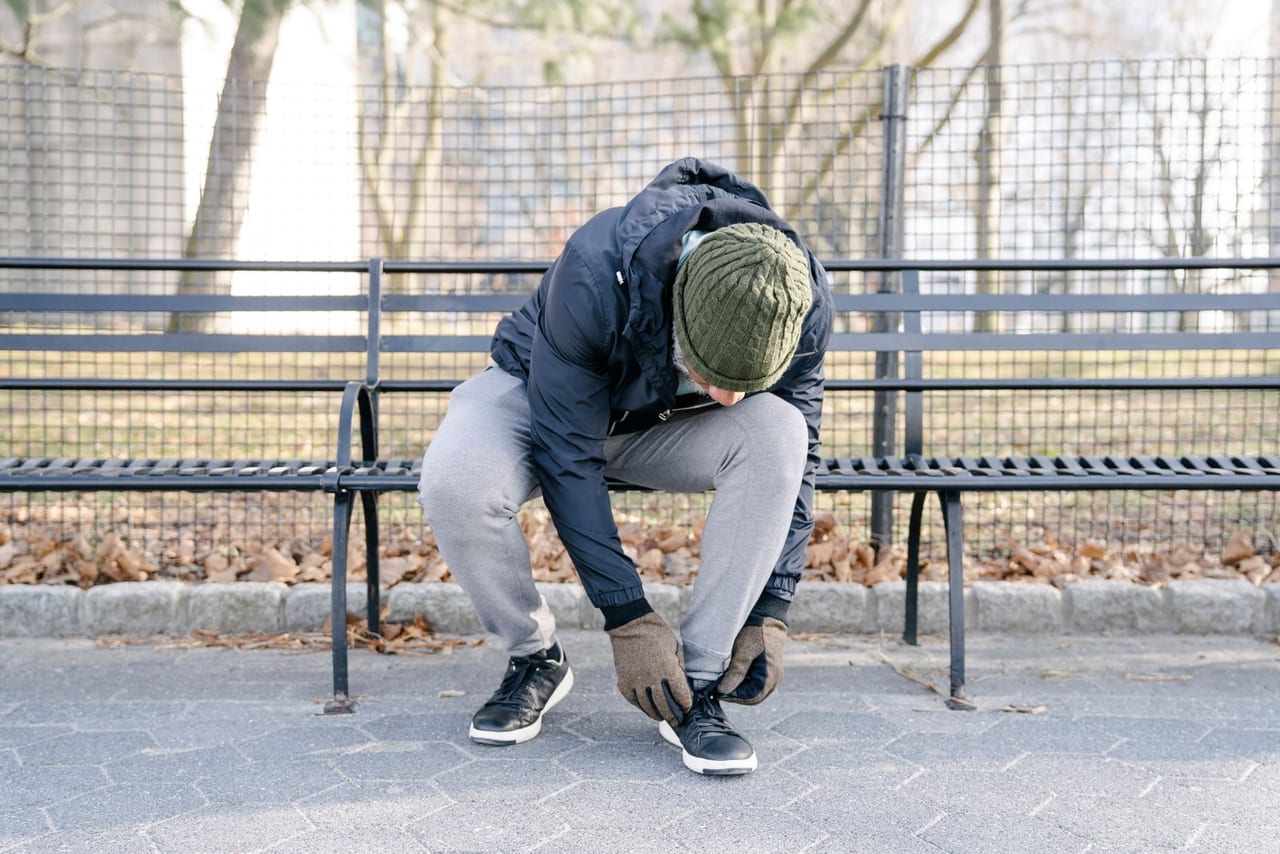
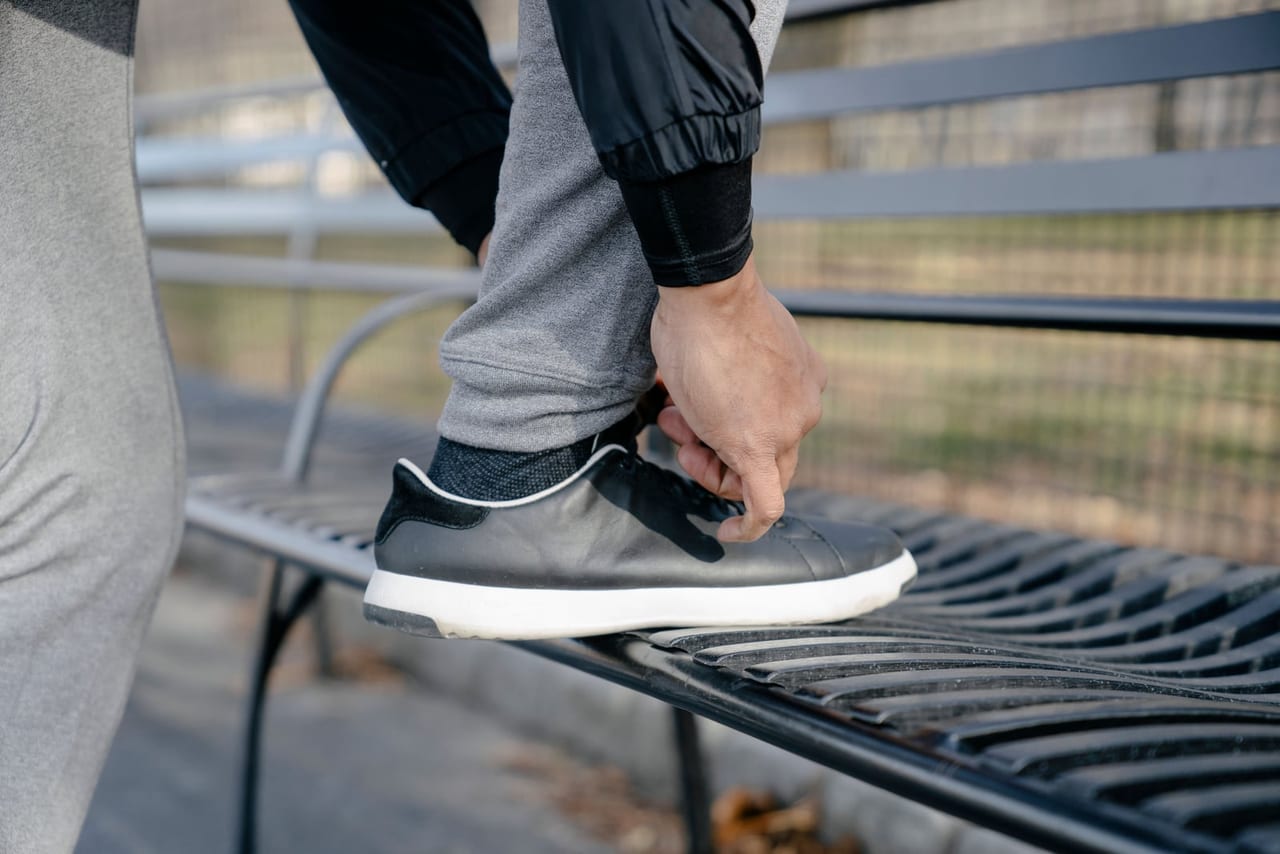
Tap your heel into the back of the shoe and lace firmly over the top of your foot without pinching. Walk up a slope or stairs; your heel should barely lift.
Walk downhill before you decide
Walk down a ramp or stairs for a few minutes. If your toes hit the front, snug the laces over your instep or try another size or shape.
Break them in on short walks
Wear the pair around the house, then on short, easy walks in your hiking socks, building up over a couple of weeks. Note any spot that rubs while there's time to sort it out.
If your toes hit the front and a longer size lets your heel slip, the shape may be the problem, so try a different model or width. A heel that lifts in a pair that otherwise fits can often be settled with a heel lock, described in how to lace shoes for long shifts.
Socks, break-in and care after a hike
Socks are part of the fit. Wool and synthetic fibers move sweat away from your skin, while cotton holds on to it, and damp socks rub. Choose a pair that lies smooth, with a cuff above the collar of your shoe, and wear the same kind on every practice walk.
Breaking in isn't about stretching a pair that's too small. It gives a stiff sole and upper time to soften and you time to find any spot that rubs: light trail shoes may need only a few short walks, leather boots a couple of weeks. Cover a spot that feels hot or sore before it turns into a blister, as how to avoid blisters explains.
After a muddy hike, knock off the dirt, take out the insoles, loosen the laces and let the pair dry at room temperature. Keep wet boots away from campfires, heaters and car vents, since heat can warp soles, shrink leather and weaken glue. Leather pairs need the extra care in how to care for leather work boots.
When sore feet after a hike may mean something more
Some soreness after a long or steep hike is ordinary, especially early in the season or in a new pair. Tired feet that feel better after a night's rest, a small blister that settles and toes that are tender for a day after a descent are part of asking more of your feet.
Pay closer attention when something gets worse instead of better. A blister that looks angrier each day, a toenail that keeps throbbing, swelling after a twist that doesn't go down or numbness that lingers are reasons to have your feet looked at, not to try another pair. So is pain in one spot that returns on every hike.
Questions people ask
Should hiking boots be a size bigger than your regular shoes?
Not automatically. Sizes vary from one maker to the next, and a thick hiking sock takes up more room than an everyday one, so the fit with your hiking socks on matters more than the number. For some people that's a half size up; for others, it's their usual size.
Can you put your own insoles in hiking boots?
Yes, if the boots have a removable footbed. Take the original one out and put yours in its place rather than on top, so the fit doesn't get tighter. Some people find added support under the arch more comfortable on long days, but no insole makes up for a boot that's the wrong size.
The bottom line
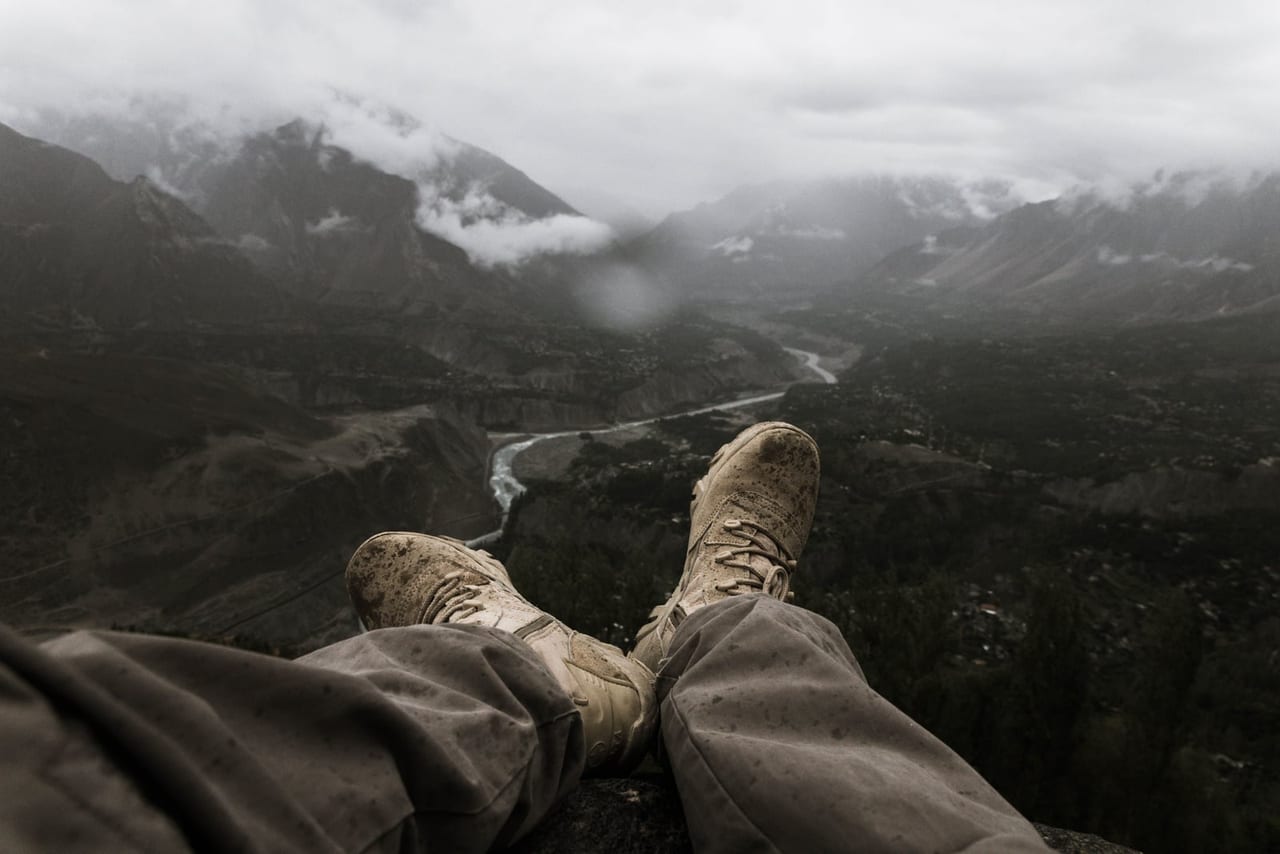
A hiking shoe is tried on in a store but judged hours later, on the way down, when your feet are tired and a little larger. Choosing for that moment, rather than for the look of the tread or the height of the collar, is what makes a pair feel right. Get it right, and the shoes fade into the background while the trail gets your attention.