How to Choose Sandals and Flip-Flops That Support Your Feet
With no upper and often no laces, a sandal relies on its footbed and straps to hold your foot. The differences between pairs are easy to feel in a minute, and easy to miss in a store.
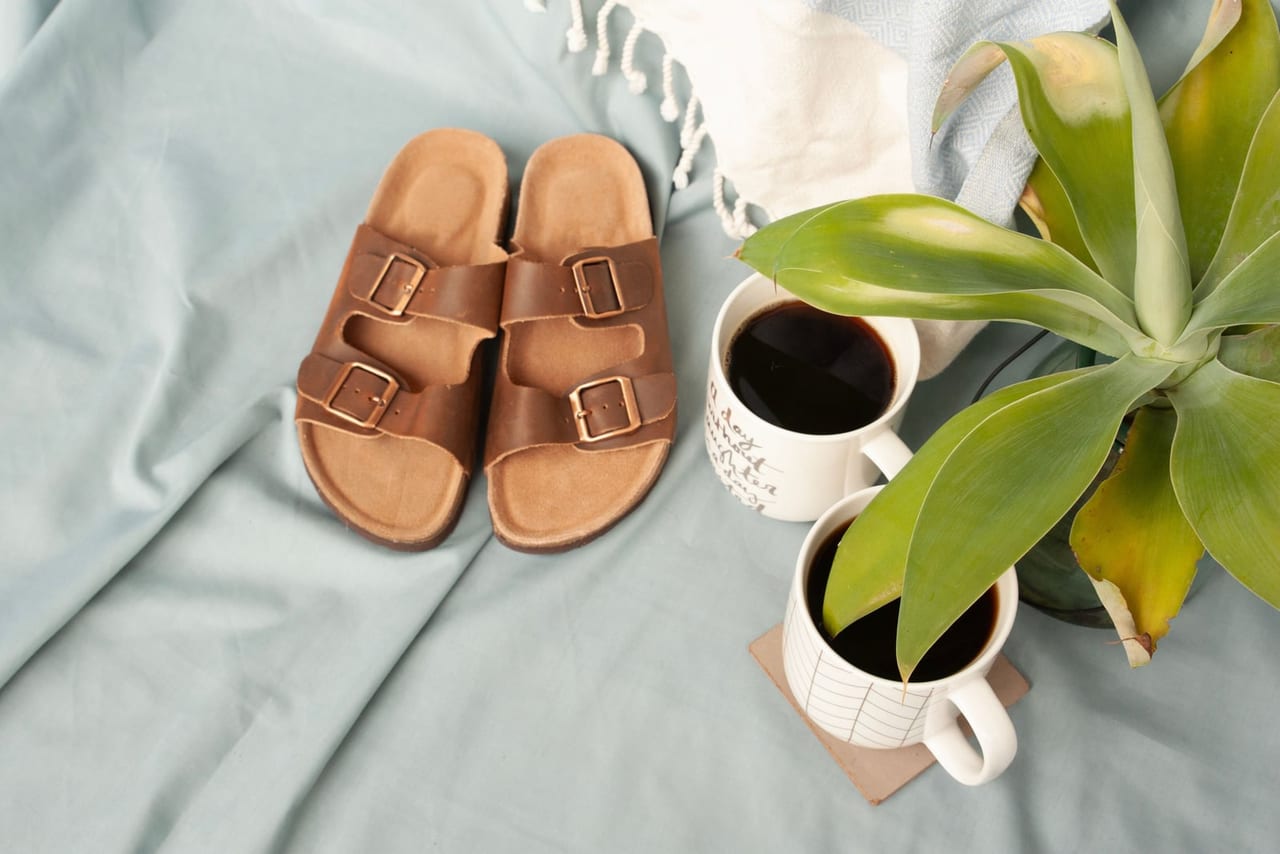
Somewhere around the third hour of a summer street fair, a pair of sandals tells you what the store couldn't. The strap that felt fine by the door has left a pink line across your foot. Your toes have curled to keep a loose sandal on, and the footbed seems flatter than it did at noon. The pair hasn't changed since morning; it's simply being asked for more than a few steps on store carpet showed.
The short answer
Look for a sandal that stays on without your toes gripping: a footbed with some shape under the arch and cushioning under the heel, a strap or cup that holds the heel, straps that don't rub, and a sole that bends at the ball of the foot rather than in the middle. Heels and toes shouldn't hang over the edge. Try pairs on late in the day, fit the larger foot and walk in them before you decide.
Flip-flops suit the pool deck, the beach and shared showers, but they're often advised against for long walks. If you have diabetes or reduced feeling in your feet, closed shoes are the usual advice. Pain that lasts for weeks, a blister that isn't getting better, or numbness or tingling are reasons to talk with a healthcare professional.
What a sandal has to do without an upper
A shoe with an upper surrounds the foot, and laces or a stiff heel counter hold the heel in place. A sandal has only a footbed and a few straps, so each part carries more of the load. The footbed meets the ground and holds your weight, and the straps keep your foot over it without squeezing.
When a sandal doesn't hold the heel, the toes tend to take over. In flip-flops and other sandals with no back strap, many people grip with their toes on every step to keep the sandal on. None of this makes sandals a poor choice, since an open shoe lets sweat dry instead of soaking into a sock, but the parts that do the holding are the parts to check.
What to look for, part by part
Start with the footbed. Many people find a gentle contour, rising a little under the arch and cupping the heel, more comfortable over a day than a flat slab, and some cushioning under the heel and ball of the foot softens hard ground. The sole should bend at the ball of the foot, where your foot bends; one that folds in the middle or in half gives the arch little to rest on.
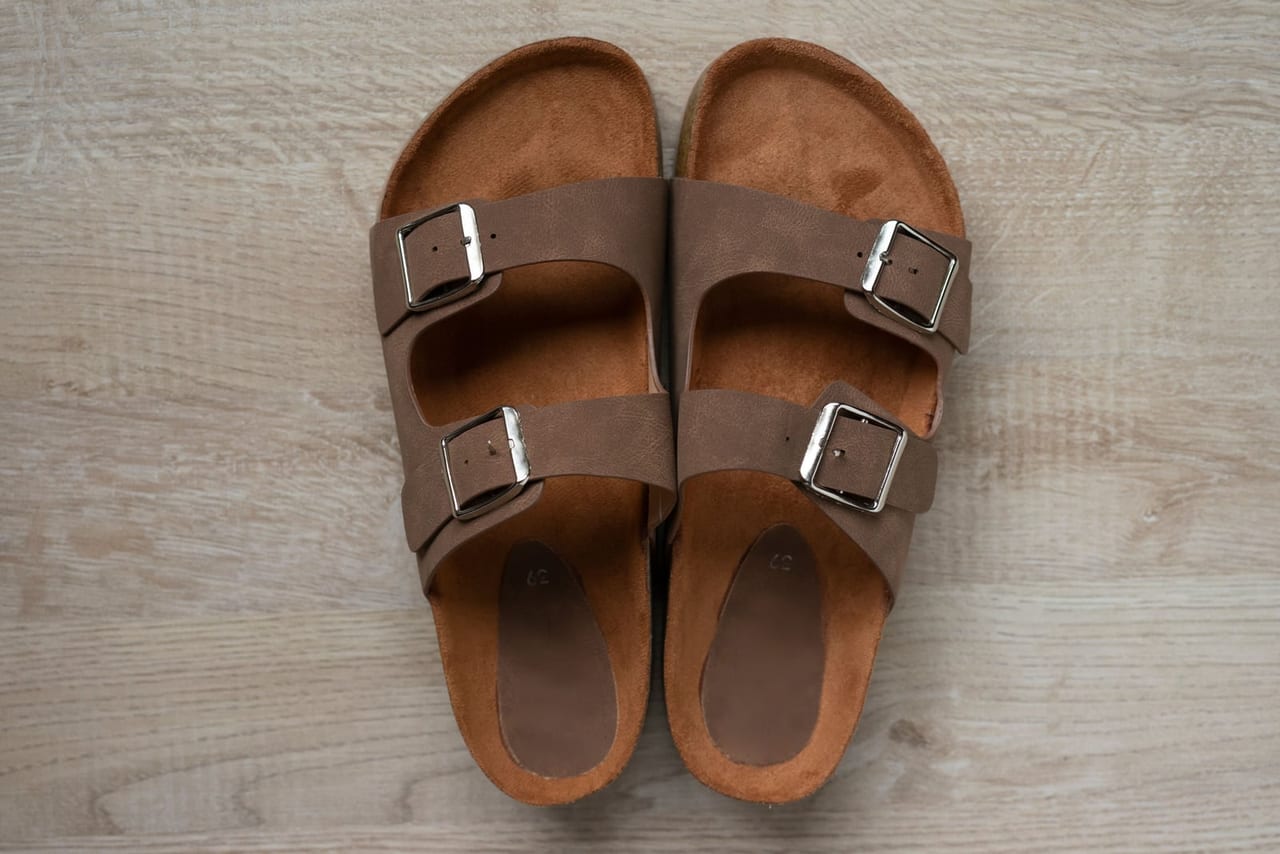
Then there's how the sandal stays on. A strap or cup around the heel, or an ankle strap, lets the toes relax, while a sandal held only at the toes tends to ask them to grip. Straps should be snug without digging in, and adjustable buckles or hook-and-loop closures let you loosen them as the day goes on. A strap between the toes, a stiff buckle or a rough seam is a common place for a blister to start, and soft leather tends to rub less than a hard edge.
Last, check the edges and the underside. A heel that hangs past the back of the footbed or toes that hang past the front have nothing under them, and toes can catch on a step or a threshold. On wet tile and pool decks, a rubber outsole with a patterned tread tends to grip better than a smooth one.
How to check a pair before you commit
These checks take about 15 minutes and work in a store or at home with a pair that came in the mail. All you need is a hard, flat floor and the sandals, plus the socks you'd wear with them, if any.
Try them on late in the day
Feet are larger in the afternoon and evening, so a pair that fits then will fit all day. If your feet differ in size, fit the larger one.
Stand on the footbed
Stand with your weight even on both feet. Your heel and toes should sit inside the footbed, and the shape under your arch should feel comfortable rather than like a bump.
Bend the sole
Hold the heel and push the toe up. The sandal should bend at the ball of the foot, not fold in the middle or in half.
Find the hold at the heel
Look for a strap or cup that keeps the heel in place. Take a few steps and notice whether your toes curl to keep the sandal on.
Fasten and test every strap
Fasten each strap and run a fingertip under it. Snug is right and digging in is not, and no buckle, seam or toe post should rub.
Walk before you decide
Walk on a hard floor for several minutes. Don't count on breaking in a pair that rubs or slips.
A sandal that stays on only because your toes are holding it can feel fine for a short walk and tiring on a long one, which is why the fourth check is worth a minute. A pair with an adjustable ankle strap is often a better choice than a different size of the same sandal.
Flip-flops, shower shoes and the days sandals don't suit
Flip-flops are the simplest sandal and the one with the most limits. A thin, flat sole with a strap between the toes offers little shock absorption or arch support, so they're often advised against for long walks. They also aren't made for sports or yard work, where a twisted foot or ankle is more likely. They suit the pool deck, the beach and a hotel room; for more than that, a thicker sole, soft leather at the strap and a heel strap give the foot more to work with.
Shared wet floors are where flip-flops and shower shoes earn their place. Warts on the soles are caused by a virus that does well on warm, damp surfaces such as locker room floors and public showers, and athlete's foot also spreads on damp floors and towels. Wearing sandals there is a common suggestion for both. It's only part of the habit, though: athlete's foot tends to start in sweaty feet inside tight shoes, so drying well between the toes counts for as much.
Some days call for a closed shoe whatever the forecast says. Long walks, rocky trails, jobs where something could drop on a foot, and cold or wet weather all ask for more cover and support than most sandals give. A closed trail shoe or boot is the usual choice for rough ground.
Summer on bare feet: sun, sweat and swelling
In sandals the tops of your feet sit in the sun for hours, and they're easy to miss. A broad-spectrum, water-resistant sunscreen is advised for them like any other exposed skin, applied again after swimming or a long sweat. Once you've chosen a pair, how to clean and care for sandals covers the footbed and straps.
Feet also swell a little in the heat, and many people find straps that felt right at breakfast tighter by evening. Adjustable straps let you loosen things as the day goes on, and trying a pair on late in the day allows for it from the start. If the swelling goes beyond a little, swollen feet covers the everyday causes and when to get checked.
When sandal trouble may mean something more
A faint line where a strap sat and tired feet after a long day are ordinary. They usually point to the sandal rather than the foot. A spot that rubs in the same place every time is useful information, and a different pair or a softer strap is a better answer than pushing through.
Pay closer attention to a blister or sore that isn't getting better, to heel, arch or ball-of-the-foot pain that keeps coming back or builds over weeks even in shoes that fit, and to tingling, numbness or burning. Those are questions about the foot more than the sandal.
Questions people ask
Can you walk all day in flip-flops?
It's usually advised against. A thin, flat sole gives little cushioning or arch support, and the toes often grip to keep flip-flops on. For a day on your feet, a sandal with a heel strap and a shaped footbed is the more usual pick.
Do sandals need arch support?
Many people find a footbed that rises a little under the arch more comfortable than a flat one, especially on hard ground. How much shape feels right differs from foot to foot. If a pair has a removable footbed, you can swap in an insole of your own.
How should sandals fit?
Snug enough to stay on without your toes gripping, and loose enough that nothing digs in or leaves a deep mark. A pair should feel comfortable on the first walk, so don't plan on breaking in a strap that pinches.

The bottom line
A sandal has no upper to cover for a poor fit, so the small things count for more: a hold at the heel, straps that sit where they won't rub and a sole that moves the way your foot does. The sign of a good match is usually quiet. By mid-afternoon you've stopped thinking about the pair, and your toes are doing nothing but walking.