How to Choose Running Shoes
Running shoes come with their own vocabulary, and it can make a simple choice feel technical. Under the labels, it comes down to fit and feel, and your feet can judge both.
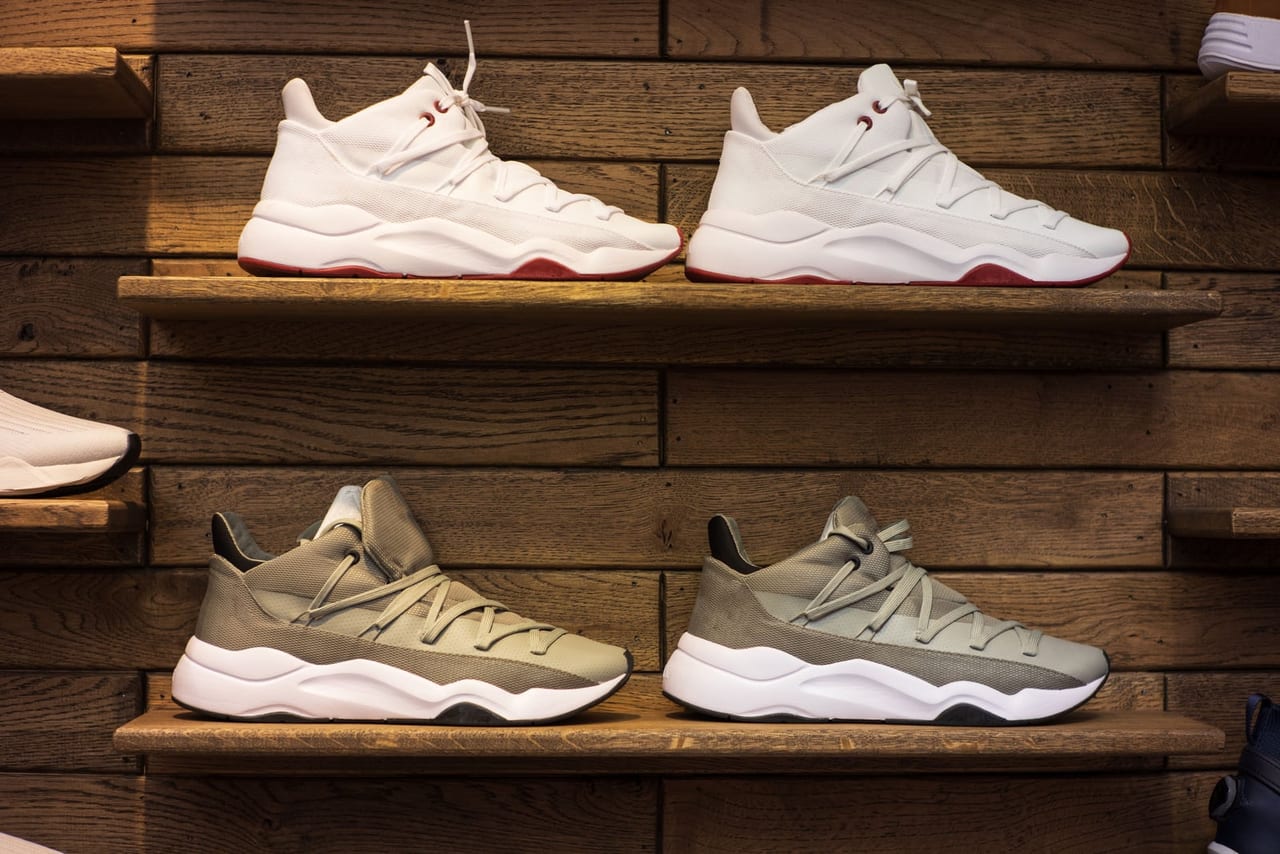
Stand in front of the running-shoe wall in a sporting goods store and it's easy to feel out of your depth. Dozens of bright pairs carry tags about foam, drop and stability, and many look nearly the same. You pick one up, press the sole, bend it and put it back, half hoping the next will announce itself.
The tags describe real differences, but none can tell you how a pair will feel three miles into your usual route. That only shows up with the shoe on your foot and you moving in it. A few minutes of jogging in the store says more than anything printed on the box.
The short answer
Choose running shoes by fit first and feel second. Look for about half an inch of room in front of your longest toe, space for your toes to spread, a heel that stays put and no pressure across the top of your foot. Match the sole to where you run, then let a short jog settle cushioning, drop and stability, since a pair that pinches in the store rarely gets better.
Replace running shoes when the midsole feels flat, often somewhere around 300 to 500 miles. Pain that doesn't ease with rest, pain in one spot on a bone, or numbness in your feet calls for a healthcare professional, not a new pair.
What a running shoe has to handle
Running isn't just faster walking. Each running stride has a moment when both feet are off the ground, so every step comes down on one foot. The midsole foam compresses under that landing and springs back as you roll forward, and the shoe bends at the base of your toes as you push off. That's why running shoes have cushioning under the heel and flexibility at the toes.
Your feet change during a run, too. They're larger later in the day and after exercise, and on a downhill the foot tends to slide forward a little, so toes that only brush the front in the store may press against it for a mile. Room at the front and a heel that stays put keep your foot in place from the first mile to the last.
Many of the checks in what to look for in walking shoes apply here, but running asks more of them: more landings, each one harder, on feet that are warm and damp. Damp skin rubs more easily, and a seam you'd never notice on a stroll can become a sore spot over a few miles.
Fit comes before everything on the label
Start with length. Standing with your weight on both feet, you want about half an inch between the end of the shoe and your longest toe, which isn't always the big toe. A thumb's width is the usual shortcut, but thumbs vary, so use it only as a rough check. Your toes should wiggle and spread, with the ball of your foot sitting in the widest part of the shoe.
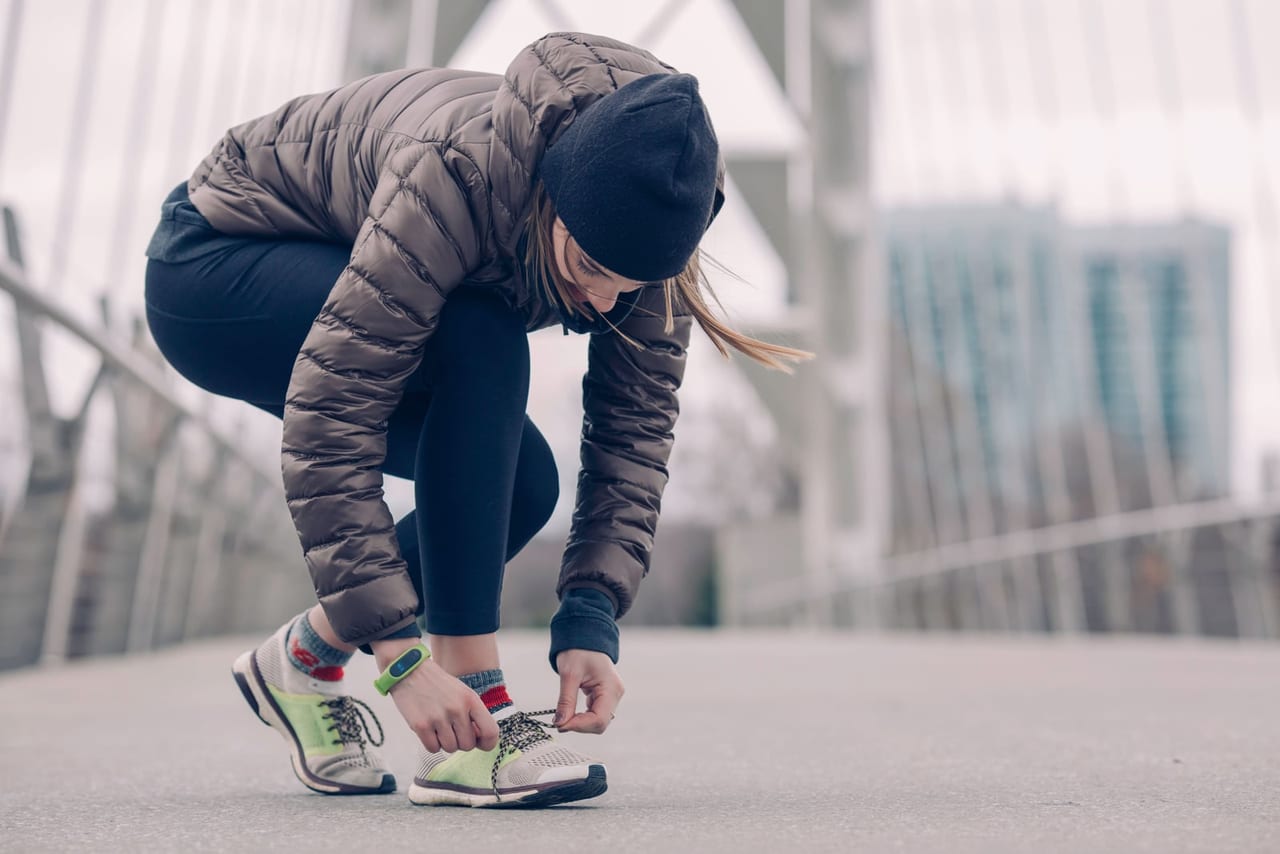
The back of the shoe should hold your heel so it doesn't slip when you jog, and the upper should close around your midfoot without pressing down. A heel lock, which loops the laces through the extra top eyelet, can snug the heel without tightening the whole shoe, and skipping a crossing eases a tender spot. If you have to crank the laces to keep your heel from lifting, the shoe is probably the wrong size or shape.
Sizes vary between makers, and many people have one foot slightly larger than the other, so fit the larger foot and go by feel rather than the number. Once those checks pass, comfort is a reasonable guide. Running shoes that fit shouldn't need breaking in, and a pair that rubs or pinches in the store rarely improves on the road.
Cushioning, drop and support, in plain terms
Cushioning is the thickness and softness of the foam underfoot. Lighter, more flexible shoes are often chosen for faster runs and thicker midsoles for long, easy ones. Some runners prefer a firmer, lower shoe that lets them feel the ground. Let the jog decide, and notice whether a very soft pair feels wobbly on a turn.
Drop, or offset, is the difference in height between the heel and the front of the shoe, measured in millimeters. A 10-millimeter drop lifts the heel noticeably, and a zero-drop shoe keeps it level with the toes. Drop can change how your foot meets the ground, so make any big switch gradually. Zero-drop shoes with little cushioning are their own category, covered in minimalist shoes.
Neutral shoes leave your foot to move as it lands, while stability shoes add structure meant to limit how far it rolls inward. A store may suggest one after watching you run, but whether matching the shoe to the way a foot rolls matters for most runners is still an open question. If both feel fine, take the one that feels steadier.
Where you run matters too. Road shoes have flatter rubber that grips pavement, while trail shoes have deeper lugs, raised rubber knobs that bite into dirt and mud but can feel clunky on hard ground. For rough trails, the choice looks more like the one in how to choose hiking boots and trail shoes.
How to try on running shoes
The test takes about half an hour in any store that lets you jog a little, on a treadmill, the sidewalk or the aisle. Bring the socks you run in, any insoles you use and your current pair, and try two or three pairs back to back.
Go late in the day
Try shoes on in the late afternoon or after a run, when your feet are largest. Wear your running socks and any insoles you use.
Check the length and width
Standing up, look for about half an inch beyond your longest toe. Your toes should wiggle freely.
Lace up and test the heel
Lace both shoes snugly. Your heel should stay put as you walk, with no pressure across the top of your foot.
Jog for a few minutes
Jog on a hard surface, noticing any rubbing, pinching or slipping. Then do the same in the next pair.
Compare with your old pair
Slip on the shoes you run in now between tries. Note what you like about them and what you don't.
Choose what feels right now
Pick the pair that felt comfortable from the first steps, sized by your larger foot. If none did, try another size or model rather than settling.
Trying pairs back to back matters more than any single check, because differences that are hard to describe alone become obvious side by side. One shoe presses on a little toe, another lets the heel lift, a third seems to disappear on your foot. That last one is the one to take home.
The first runs and the last ones
Even a pair that fit well in the store deserves a few shorter, easier runs before a long one. Keep your old pair for long runs until the new one has proved itself, so a seam that rubs at mile four shows up on a short run instead. Moisture-wicking synthetic or wool-blend socks help, since cotton holds sweat against the skin.
Running shoes tend to wear out from the inside. Midsole foam compresses with every landing and ages even in the closet, so a shoe can look fine long after it has stopped cushioning. A common guideline is 300 to 500 miles, but the signs matter more: a flat or creased midsole, tread worn smooth or unevenly, a heel counter gone soft. If your usual runs leave your legs more tired than before, worn shoes may be part of the reason.
When running aches may mean something more
Some tiredness in the calves and feet after a longer or faster run than usual is common, and it tends to fade with rest. New shoes can feel a little different for the first few runs. A sore spot that goes away once you adjust a lace is a fit problem, not a warning sign.
Pay closer attention to pain that sits in one spot, especially on a bone, and gets worse each time you run. The same goes for pain that makes you shorten your stride or limp, and for numbness that stays after you loosen your laces. A different shoe won't sort those out.
Questions people ask
Should running shoes be a half size bigger?
Not automatically, though some runners end up a little longer in running shoes than in everyday ones. Go by the half inch in front of your longest toe rather than the number. Sizes vary between makers, so one maker's size may not match the next.
Can you wear running shoes for the gym or tennis?
For treadmill runs, walks and other movement straight ahead, yes. Running shoes are built for moving forward, though. For quick side-to-side steps, as in tennis or basketball, a court shoe is designed to hold the foot through that kind of movement.

The bottom line
Running shoes come wrapped in numbers, from millimeters of drop to miles of expected life, and it's tempting to let them decide. They can narrow the choice, but they can't tell you how a pair will feel at the end of your usual loop. Your feet can, and the pair that stops asking for your attention a few minutes into a run is the one doing its job.