How to Choose Shoes for Kids: Fit, Room and Growth
A pair of kids' shoes can go from roomy to tight in a few months, and the change rarely comes with a complaint. Fitting kids' shoes well comes down to a few checks an adult can do by hand, repeated more often than you might expect.
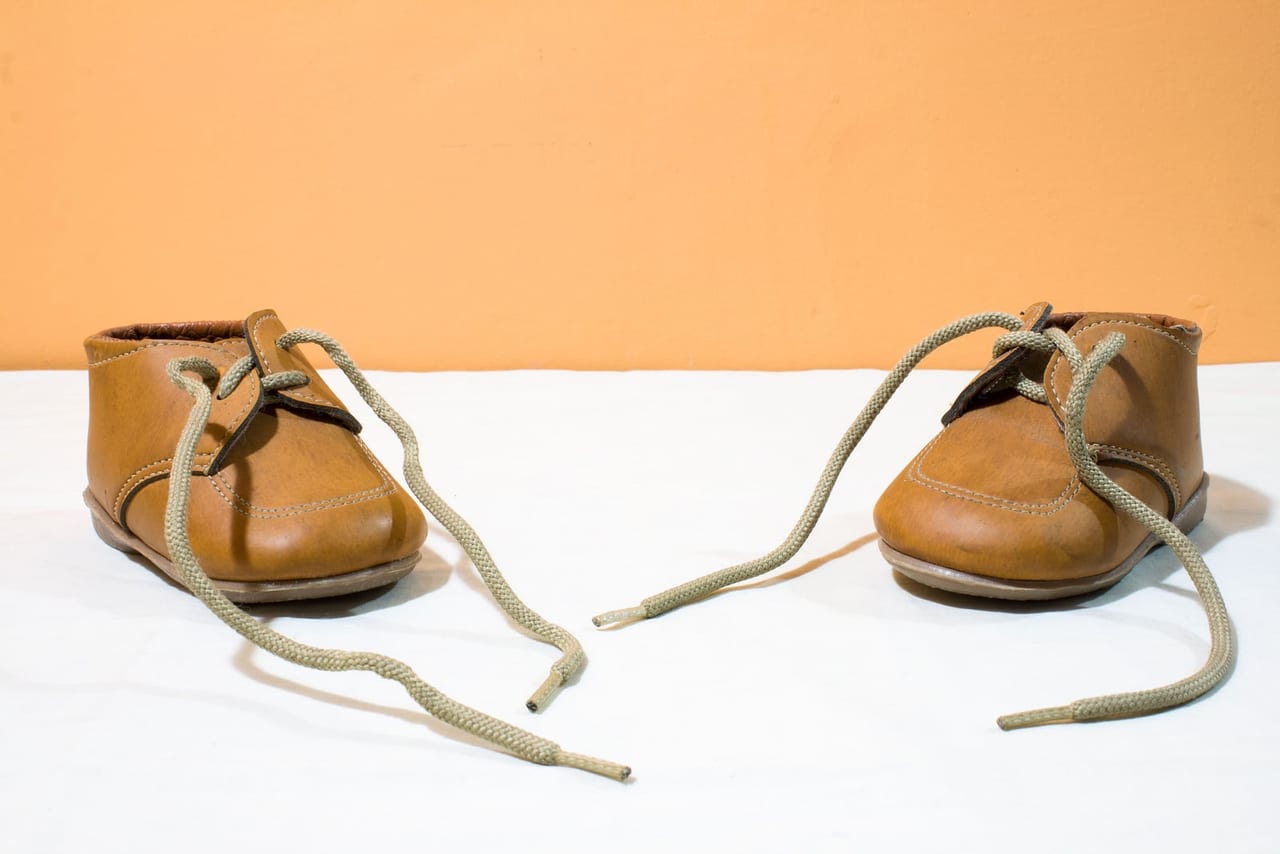
Kneel in front of a child wearing last season's sneakers and press the front of the shoe with your thumb. Often the toe is right there against the end, though nobody has said a word about it. Kids tend to adjust to a shoe rather than complain: they may curl their toes, loosen a strap or take the shoes off whenever they get the chance. The soles are barely worn and the pair still looks almost new, but from the inside it may have been snug for weeks.
The short answer
Choose shoes that fit your child's feet as they are now: about a thumb's width of room in front of the longest toe, enough width across the ball of the foot and a firm heel that stays put. The sole should bend where the toes bend without twisting in the middle, and laces, straps or a buckle should hold the foot. Measure both feet and fit the larger one.
Because children's feet grow quickly, check the fit every few months, and more often for toddlers, rather than sizing up to make a pair last. Babies who are just learning to walk generally don't need shoes indoors. Foot or leg pain that lasts, a limp or frequent tripping is a reason to see a child's healthcare professional.
Why a child's shoes need checking so often
Children's feet grow in a steady run of small steps, and their shoe size can change every few months, often faster in the toddler years than later on. An adult can stay in one size for years. A child's size is a moving target, and it changes too gradually to see from one week to the next.
What children do instead of complaining is worth learning to read. One who keeps pulling off a pair, starts to limp or trips more than usual may be saying what they can't put into a sentence. And because one foot is often a little longer or wider than the other, both feet need checking.
The shape of a young foot is still changing too. Most babies are born with very little arch, and flat-looking feet are normal in toddlers; arches tend to form over the early years, later in some children than in others. What a growing foot asks of a shoe is mostly room and protection, and the guide to flat feet covers when a low arch is worth asking about.
First steps: bare feet, soft soles and a first pair
Before a child walks steadily, there's little for a shoe to do indoors. Going barefoot on a safe floor at home is commonly suggested while babies pull up and take their first steps, and shoes can wait for walking outside. On cold or slippery floors, many families use socks with grips on the bottom or soft-soled baby shoes instead.
A first real pair earns its place once a child walks on their own outdoors, where the job is protection from rough, sharp, hot or cold ground. Many parents find that light, flexible shoes suit new walkers better than stiff, heavy ones. Look for a sole that bends easily near the toes, a soft upper, some grip underneath and a fastening that stays done up through squatting and climbing.
What to look for in a child's shoe
Start with length and width, since no feature makes up for a shoe that's too small. With your child standing, look for about a thumb's width of space between the longest toe and the end of the shoe, and remember that the longest toe isn't always the big one. The widest part of the foot should sit in the widest part of the shoe.
Then pick the shoe up. Press both sides of the heel counter, the firm back of the shoe: it should hold its shape, since that firmness is what keeps a heel from sliding around. Bend the toe up, and the shoe should bend where the toes bend without being too stiff to move. Twist it, and it should resist; a shoe that wrings out in the middle gives the foot little to stand on.
The rest is about how a shoe copes with a busy foot. Laces, hook-and-loop straps or a buckle hold the heel in place through running and climbing, while a slip-on has only its snugness to rely on. Leather, canvas and mesh uppers tend to stay more comfortable on a hot day than plastic, and a rubber sole with some tread tends to grip a playground better than a smooth one.
How to check the fit, at home or in the store
This routine takes about 15 minutes and works for a new pair or the shoes your child already wears. You need a sheet of paper, a pencil, a ruler and the socks your child will wear with the shoes. Try it in the afternoon, when feet tend to be a little larger; the tracing works much like measuring your own feet.
Trace both feet, standing
Have your child stand on the paper in their usual socks, with their weight on both feet. Trace each foot with the pencil held upright and measure both.
Let the larger foot decide
Size from the larger outline. A removable insole laid on it should show a little past the longest toe.
Press for room at the toes
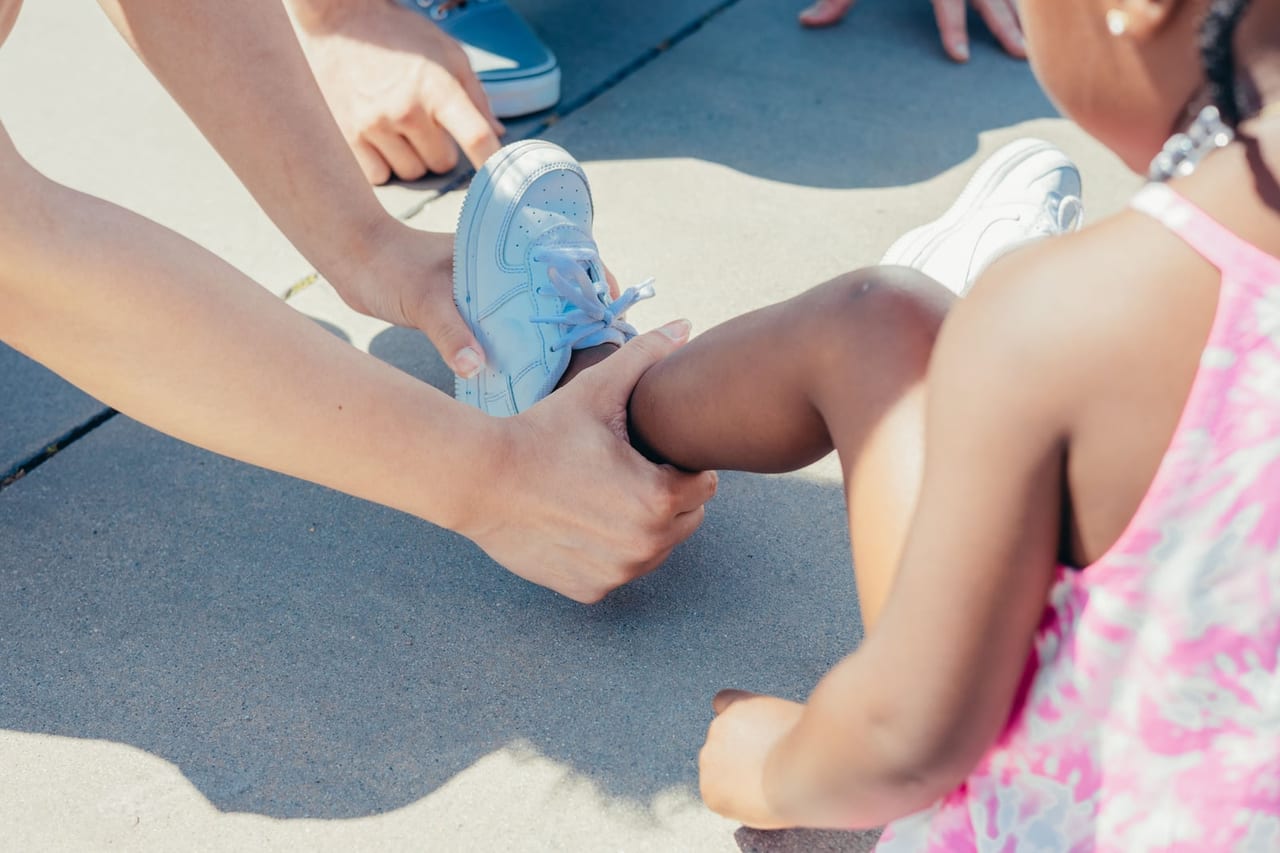
With the shoes on and your child standing, find the longest toe. Look for about a thumb's width of space.
Test the heel, bend and twist
The heel counter shouldn't collapse when pressed. The shoe should bend at the toes and resist twisting in the middle.
Fasten it and watch them move
Do up the laces, straps or buckle and let your child walk and run. The heel should stay put without slipping.
Look for marks afterward
After a few minutes, check the feet for red marks. A pair should feel comfortable from the start, with no breaking in.
Walking and running show most of what's wrong. A heel that lifts out or a child who stops to tug at a strap says more than the size printed inside, which varies between makers anyway. In a store the same checks apply, and how to try on shoes covers the rest of the fitting. If a pair is long enough but tight across the foot, a wider fit in the same length is usually a better answer than the next size up.
Sizing up, hand-me-downs and when a pair is done
Choosing a size up so a pair lasts longer is a natural instinct, and it's commonly advised against. A shoe that's too long lets the foot slide and the heel slip, which can mean rubbing, blisters and trips over the extra length, and a child may grip with the toes to keep it on. The thumb's width at the toe already allows for some growing.
Hand-me-downs are harder to give up, especially when a pair still looks new, but they're commonly advised against too. A shoe worn for months takes on the shape of the foot inside it, with the insole pressed down and the upper creased in one child's pattern, so a size that fit one child may not fit another the same way. Shared shoes can also pass along athlete's foot. A pair you do pass down deserves the same checks as a new one.
Even a pair that fit well will stop fitting, and the signs usually show before a child says anything: red marks when the shoes come off, a blister in the same spot, toes that look curled, a heel that slips or a big toe wearing through the top. Kids can also wear a sole smooth before they outgrow a pair, which is a different way for a shoe to be done.
When a child's feet may mean something more
Plenty of what worries parents is ordinary. Low arches in a toddler, some walking on tiptoe while a child is learning to walk, and tired legs that feel better after rest at the end of a big day of play are all common. A red mark that fades soon after the shoes come off points to the shoe rather than the foot.
Pay closer attention to foot or leg pain that lasts or keeps a child from playing, to a limp, or to tripping and falling more often than other children of the same age. The same goes for walking on the toes most of the time past about age two, a flat foot that hurts or feels stiff, or one foot that looks or works differently from the other. These are reasons to get a child checked, and a child's healthcare professional can tell what is going on.
Questions people ask
How much room should a child's shoe have at the toe?
About a thumb's width between the longest toe and the end of the shoe, checked with the child standing and the toes free to wiggle. Much more than that can make a shoe loose and easy to trip in, while much less can leave the toes against the end within weeks as the foot grows.
How often should you check a child's shoe size?
Every few months is a common rhythm, and more often for toddlers, whose feet tend to grow quickly. A quick check also makes sense at the start of a school year or a sports season, or whenever a child starts avoiding a pair.
Do kids need shoes with arch support?
Usually not. A young child's arches are still forming, and for a foot that doesn't hurt, an ordinary well-fitting shoe is the usual advice rather than special shoes or inserts. If a child has foot pain, a child's healthcare professional can say whether anything more is needed.
The bottom line
A child's shoe size holds for a season, not a year, and the child wearing the shoes is rarely the one who notices it change. The habit that matters most isn't finding a perfect pair but pressing a thumb at the toe every few months and watching how they run. Fit a growing foot for the foot it has today, and let the next pair be next season's question.