How to Try On Shoes: A Store Checklist
A pair of shoes gets about five minutes of your attention in the store and then years of your weight. How you spend those minutes decides most of what the pair feels like on a long day.
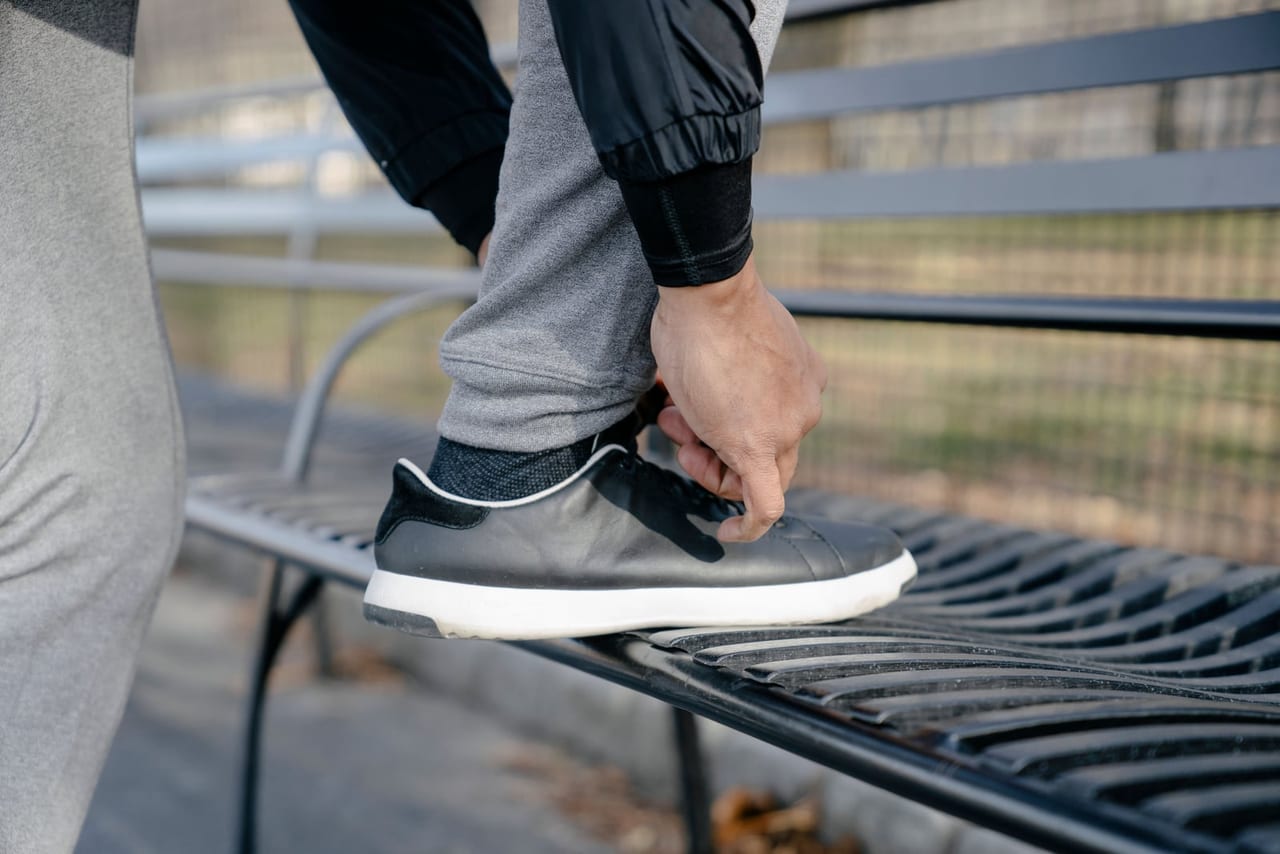
The shoe goes on at the fitting bench, you stand up, take a few steps down a carpeted aisle, and it feels fine. It's the right size, the right color, and the box is already in your hand. By late afternoon, on a hard sidewalk, the same shoe presses on a toenail and the heel has started to lift.
Nothing about that fitting was careless. It was short and early, in thin socks, without your insoles, on a floor that forgives almost anything. A shoe should be judged in the conditions it will be worn in, and a store visit gives you only a few minutes to set them up yourself.
The short answer
Try shoes on in the afternoon or evening, when your feet are at their largest, in your usual socks and with any insoles you use. Stand up in both shoes and fit the larger foot: about half an inch in front of your longest toe, the ball of your foot in the widest part of the shoe, a heel that stays put and nothing pressing on a toenail or the little toe.
Lace the shoes properly, walk on a hard floor for several minutes and take the size on the box as a starting point, because styles differ. A pair that fits should feel comfortable now, without a break-in period. Pain that outlasts a good fit, numbness or tingling, or swelling in only one foot are reasons to talk with a healthcare professional.
Why a quick fitting can mislead
Your feet are usually a little larger in the late afternoon than at breakfast, because they tend to swell as you stand and walk through the day. A shoe that feels exactly right at ten in the morning can feel snug by five, and the evening size is the one your shoes have to fit. Standing matters too: under your full weight the foot lengthens and spreads, so a shoe tried on while you sit tells you less.
What you bring changes the fit as well. A thin dress sock and a thick walking sock take up different amounts of room, and an insole takes up room too, so a pair tried on in the wrong socks answers a question you're not asking. Many people also have one foot a little larger than the other, and a shoe that suits the smaller one can crowd the larger.
The number inside the shoe deserves the loosest grip. Sizes vary between makers and between styles from the same maker, and feet change over the years, so the size you've always worn is a starting point, not a promise. If you haven't measured your feet in a while, how to measure your feet at home walks through it.
A store checklist, in order
The checklist takes about 20 minutes for a new pair and less once the routine is familiar. Bring the socks you'll wear with the shoes and any insoles you use, and give yourself time to sit, stand and walk without being hurried.
Go late, in your own socks
Go in the afternoon or evening, when your feet are at their largest, wearing the socks you'll wear with the shoes. Bring any insoles you use.
Fit both feet, standing
Try on both shoes, since one foot is often larger than the other, and stand up with your weight on both feet. Let the larger foot set the size.
Check the room at the toes
Look for about half an inch, roughly a thumb's width, between your longest toe and the end of the shoe. That toe isn't always the big one, and all of them should be able to wiggle.
Find the widest part of the shoe
The ball of your foot, just behind the toes, should sit in the widest part of the shoe, with no bulge over the edge of the sole. Nothing should press on a toenail or squeeze the little toe.
Lace up and test the heel
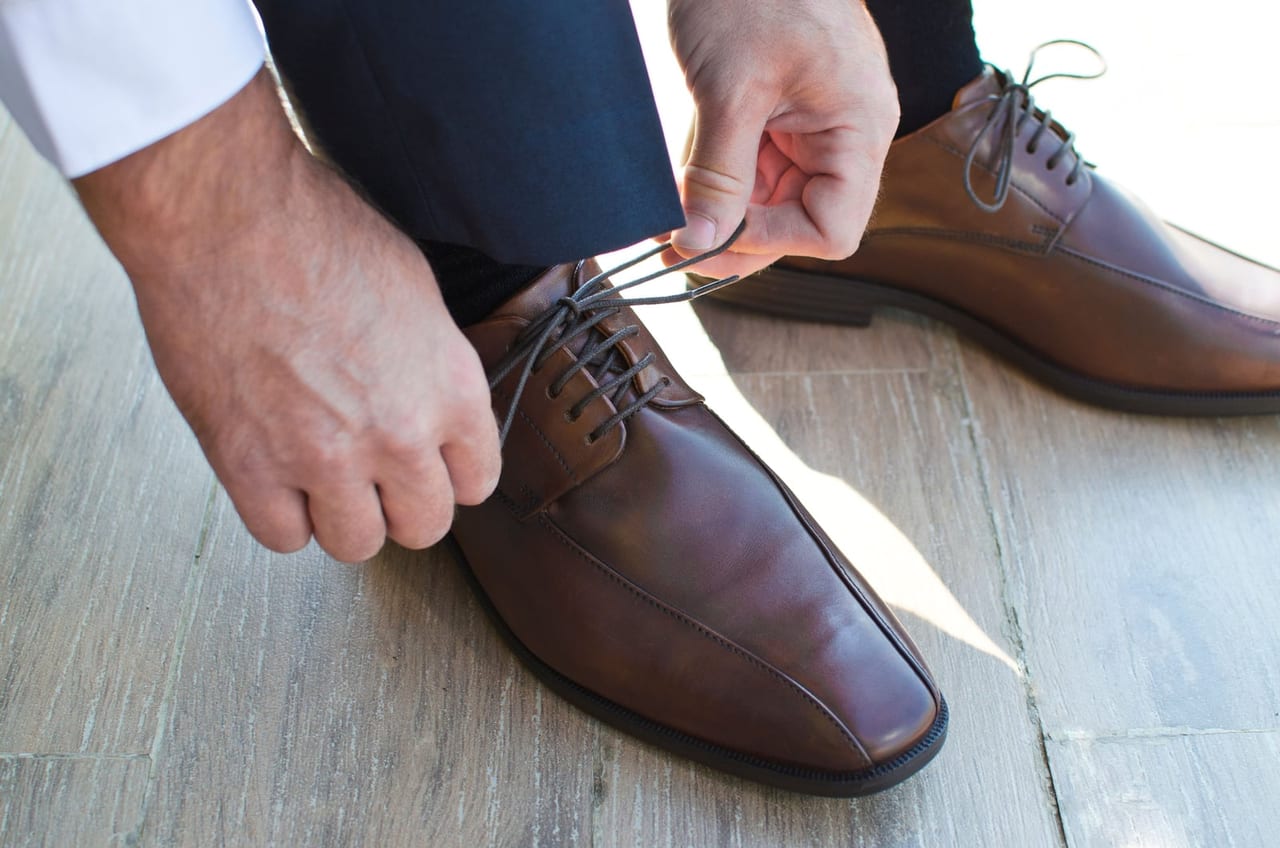
Lace the shoes snugly from the toes up and take a few steps. Your heel should stay in place without sliding up and down, and the laces shouldn't dig into the top of your foot.
Walk it out on a hard floor
Walk for several minutes on a hard floor, not only on carpet, and try stairs or a ramp if the store has them. Compare the next size or style back to back, and keep the pair that feels comfortable now.
Any single check can mislead, since toe room can look generous in a shoe that's far too wide. That's why the sequence ends with walking, which shows how the checks work together. Lacing deserves a minute of its own, because the same shoe can hold the heel or squeeze the top of the foot. How to lace shoes for long shifts shows the heel lock many people use.
What the fit is telling you
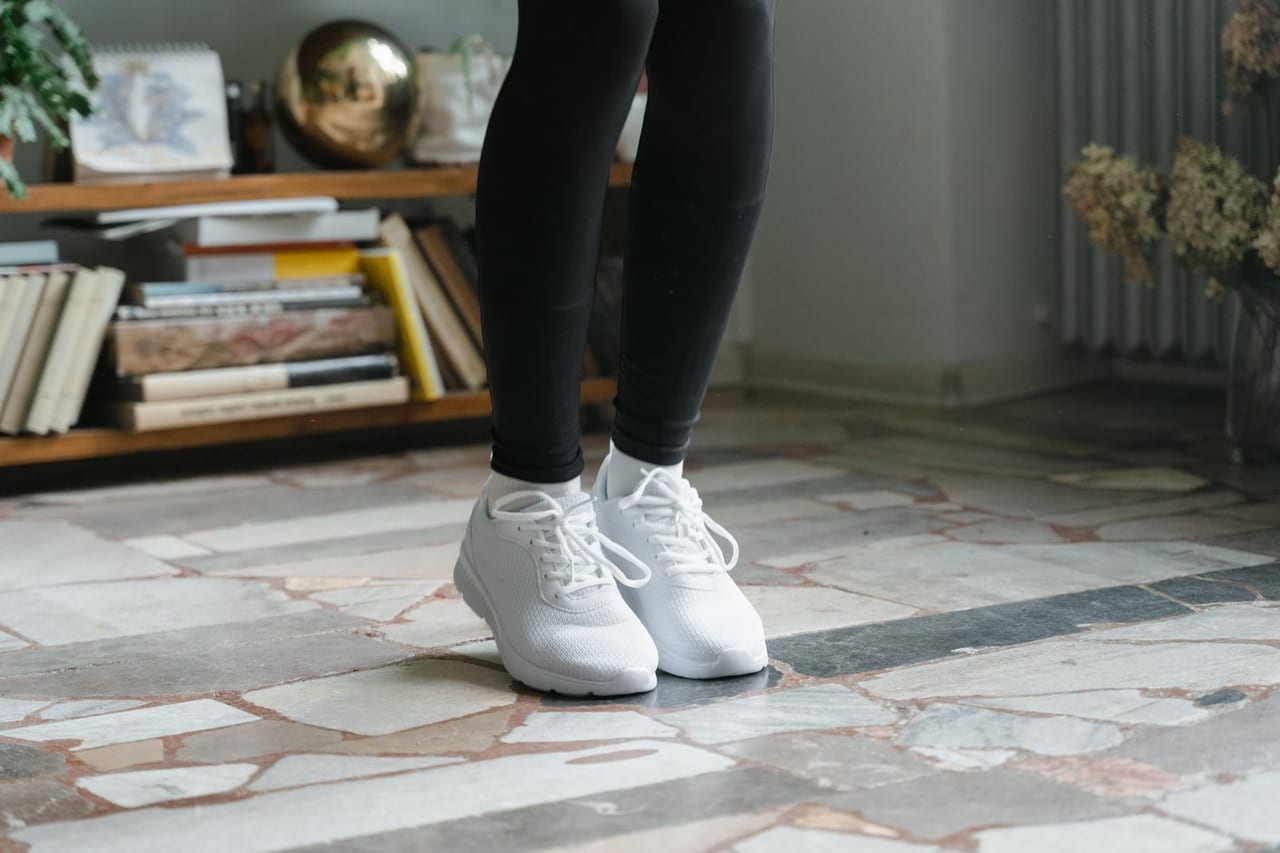
Each fault points to a different cause, which is why it helps to name what you feel. A heel that lifts with every step may settle with snugger lacing or a heel lock, but if it keeps slipping, the shoe is probably too big or shaped differently from your heel. Toes that touch the front usually mean the shoe is too short. A pinch across the ball of the foot usually means the shoe is too narrow. The next size up mostly adds length, so ask for a wider fit in your own length, as shoes for wide feet explains.
A spot that presses in the opening minutes is likely to press harder after hours of wear, when your feet have swelled a little. That goes for the little toe, the nail of the big toe, the top of the foot and the sides of the forefoot. Run a hand inside each shoe, too, because a rough seam or a ridge in the lining can rub after an hour or two.
Comfort promised for later is a poor bet. A new pair can feel a little stiff or unfamiliar, but it shouldn't hurt, and a pinch in the store isn't something to count on wearing away. If a pair is close but not right, try another size or style before settling.
After the fitting: returns, early wear and online orders
Ask about the return policy before you pay. Rules differ, including how long you have, whether the shoes must be unworn outdoors and whether you need the box and receipt. Knowing the answer lets you wear the pair at home on a clean floor for an evening, a longer test than any fitting.
Once the shoes come home, wear them for short outings and keep the old pair for the long days until the new one has proved itself. Ordering online takes away the floor, the bench and the person who can bring another size, so the return policy matters even more. Trace your foot, compare the numbers with that maker's size chart, and give the pair the same late-day test at home.
When a poor fit may mean something more
Plenty of what you notice in a store is ordinary. A shoe that feels a little snugger at the end of the day, a faint mark where a sock edge sat and one foot that's a bit bigger than the other are all common. None is a reason for concern on its own, and a pair that pinches is mostly a reason to try a different pair.
Pay closer attention if you can't find a comfortable shoe in any size or style, or if the same spot is sore in every pair. The same goes for numbness or tingling that lingers after the shoes come off, for swelling that's new or confined to one foot, and for feet that seem to change size or shape quickly. Those are reasons to have your feet looked at, not to keep changing shoes.
Questions people ask
Do shoes stretch out with wear?
Only a little, and not reliably. Soft leather and knit uppers may give slightly where the foot presses, but wear doesn't lengthen a shoe that's too short or reshape one that's wrong for your toes. If a pair is close but presses in one spot, try looser lacing there before counting on the shoe to change.
Why am I a different size in different shoes?
Each maker, and each style, shapes its shoes differently, and the number on the box is only a label. The same size can come out shorter, narrower or roomier from one pair to the next, so go by how the shoe fits your foot.
Should I bring my insoles when I try on shoes?
Yes, if you use them. An insole takes up room inside the shoe, so a pair that fits with its own insole can feel tight with yours. Take the shoe's insole out and put yours in its place, then run through the same checks.
The bottom line
A fitting in the store is a forecast, not a verdict. It tells you how a pair feels at ten in the morning on a soft floor, when what you want to know is how it will feel at 5 p.m. after a day of walking. The nearer you can bring those two moments together, the fewer surprises the shoes have in them.