How to Look After Your Feet During Pregnancy
Partway through pregnancy, favorite shoes can start to pinch by evening, and your ankles may look puffier than they used to. Most of that is ordinary, and the way you rest, move and choose shoes can make the months on your feet easier.

The shoes that slid on easily after breakfast feel snug by late afternoon, and your socks have pressed a ring into each ankle. In the evening you sit on the edge of the bed to take them off and have to lean further to reach the laces than a month ago. Part of what makes it confusing is that some of the change comes and goes while some of it stays. Ankles that look puffy at night can look like your own again by morning, while a shoe size that crept up along the way may never quite come back down.
The short answer
Swelling in the feet and ankles is common in pregnancy, especially in the later months, in hot weather and by the end of the day. Your body holds more fluid, and the growing uterus slows the blood returning from your legs, so fluid settles low. The extra weight and looser ligaments also let the arches drop and the feet spread, sometimes for good. Putting your feet up, moving your ankles, breaking up long spells of standing and wearing roomy shoes with a low, broad heel can make the day more comfortable.
Talk with your pregnancy care team if swelling comes on suddenly, shows up in your face or hands, or comes with a bad headache or changes in your vision. Swelling, pain, warmth or redness in one leg is worth raising with them too.
Why feet swell and spread in pregnancy
Pregnancy raises the amount of fluid your body holds, and over a day gravity draws some of it down toward your feet and ankles, more so in heat and after long hours standing. As the uterus grows, it also presses on the large veins that carry blood back up from your legs, so that return trip slows and fluid gathers around the ankles. That's why the swelling tends to grow through the later months, builds by evening and often looks smaller after a night lying down.
The added weight changes how your feet carry you, too. As your belly grows, your center of gravity moves forward, and your body settles into a new way of standing that puts more pressure on your knees and feet. Every step asks the arches to hold up more than they're used to, just as the tissue that supports them is changing.
The hormones of pregnancy loosen ligaments throughout the body, which helps the pelvis make room for birth. The ligaments that hold up your arches loosen as well, so under the extra load the arch can sink and the foot can roll inward and spread a little wider and longer. A flatter foot can add strain to the soles, the calves and even the back, which is one reason feet may ache by evening. Calf or foot cramps are common too, often at night, and why feet cramp looks at those more closely.
A daily routine for swollen, tired feet
All you need is a footstool or a few pillows, shoes with some room and about fifteen minutes across the day. The idea is to give the fluid in your feet a way back up and to spare your arches long stretches of standing still. If anything here feels wrong for your pregnancy, or you've been told to limit activity, follow your care team's advice.
Put your feet up several times a day
Sit with your feet raised on a footstool or a few pillows for a while, especially in the afternoon and evening. It gives the fluid that settled around your ankles a way back.
Flex and circle your ankles
Bend each foot up and down about 30 times, then circle it about eight times one way and eight times the other. Do it sitting or lying down, whenever you think of it.
Break up long spells of standing
If you stand at work, shift your weight, walk a few steps or sit for a few minutes every so often. When you sit, keep your feet flat or raised rather than crossing your legs.
Walk a little most days
An easy walk keeps your calf muscles working, which helps push blood and fluid back up from your feet. Wear roomy, supportive shoes and keep to even ground.
Rest on your side later on
In the later months, lying on your side, the left in particular, may take some pressure off the large vein that carries blood back from your legs. A pillow under your calves can raise your feet slightly as well.
Most of these habits fit into moments you already have: ankle circles during a phone call, feet up after dinner, a short walk at lunch. On long days at work, plan the breaks rather than waiting until your feet demand them.
Shoes for feet that are changing
Shoes that fit in the first months may not by the last, and squeezing swollen feet into them only makes the day harder. Look for room across the widest part of your foot and enough depth in the toe box that your toes don't press against the upper. Soft, stretchy uppers, laces and adjustable straps let a shoe give a little as your feet change through the day. Try shoes on in the afternoon, when your feet are at their largest, and if width is the main problem, finding shoes that fit wide feet goes into widths and toe-box shapes.
Underfoot, a low, broad heel and a sole with some cushioning and support under the arch tend to suit a pregnant body better than either a high heel or a paper-thin flat. Very thin soles, such as flip-flops and ballet flats, can leave a tired arch with little support. Around the house, supportive slippers or sandals may feel better than bare feet on hard floors.
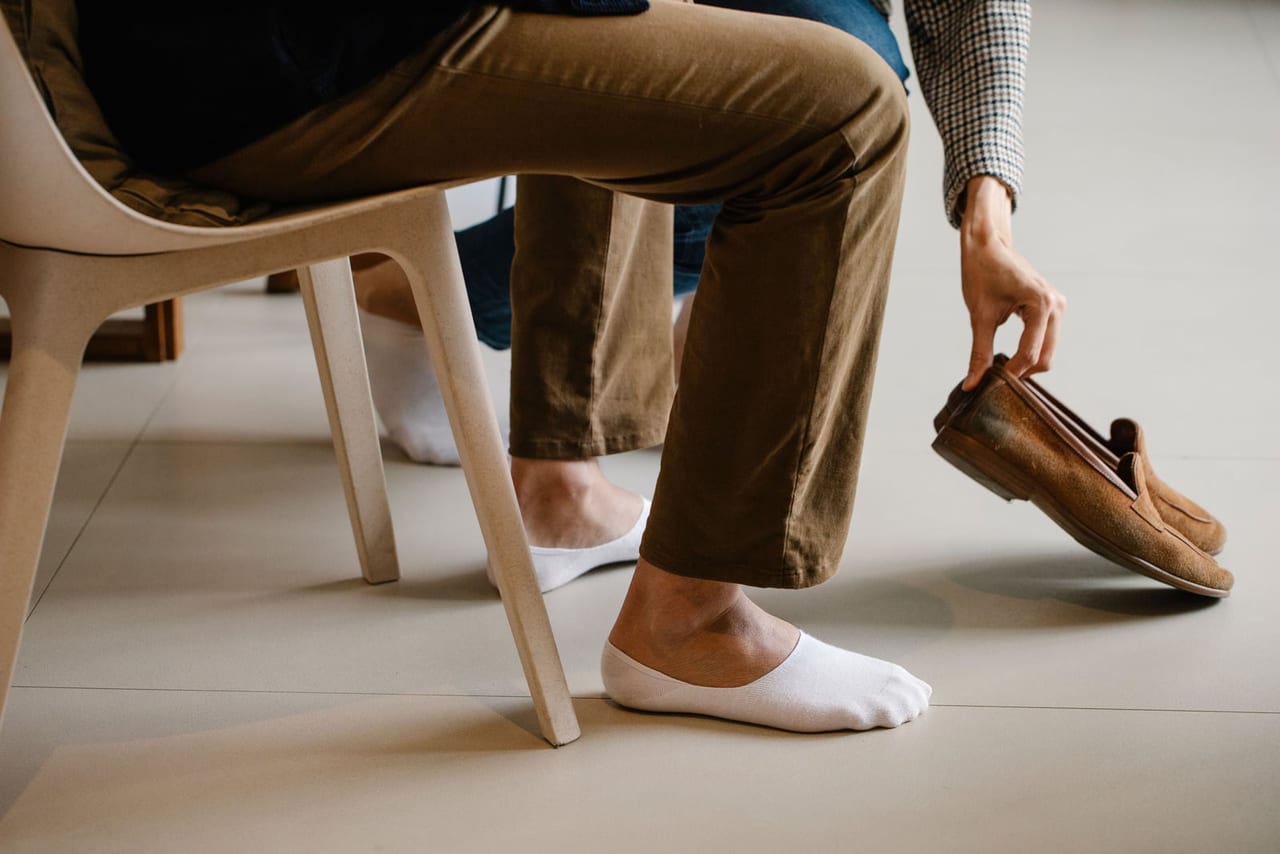
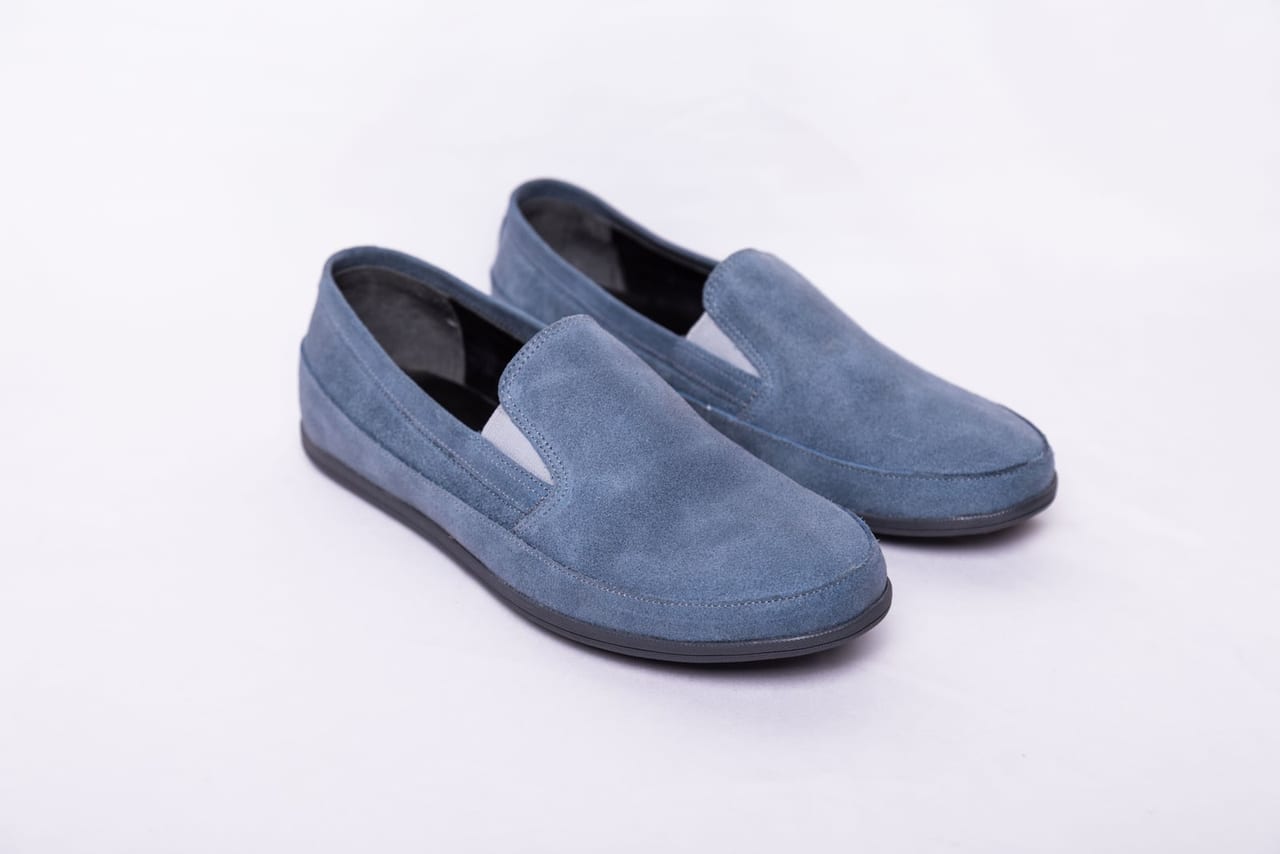
Later in pregnancy, the hardest part of a shoe can be getting it on. Slip-ons with a firm back, shoes with elastic laces or hook-and-loop straps, and a long-handled shoehorn spare you from folding over your belly to tie a bow. Sit down to put on shoes and socks rather than balancing on one foot, and choose socks with soft, loose tops that won't press a ring into your ankles.
Why your shoe size may not go back
Much of the change fades after birth, once the extra fluid is gone. The ligament change can be another matter. As the arch settles lower under the weight of pregnancy, the foot can lengthen and widen, and for some people it stays that way. The lasting change seems most likely with a first pregnancy, which may be why a favorite pair can still feel short long after the swelling has gone.
Measuring both feet in the second half of pregnancy, and again a few months after the birth, tells you what you're fitting now, and how to measure your feet at home walks through it with paper and a pen. Fit the larger foot, since the two may not have changed by the same amount, and pass on the pairs that no longer fit once things settle.
When swelling may mean something more
Ordinary pregnancy swelling builds slowly, usually affects both feet and ankles about equally, gets worse with heat and long hours on your feet, and looks smaller after rest with your feet up. Your shoes and rings may feel tighter and your ankles may look puffy, but you otherwise feel like yourself. That pattern is uncomfortable rather than alarming, and it's what the routine above is meant for.
Swelling that breaks that pattern is different: it arrives suddenly or quickly gets worse, shows up in your face or hands, or comes with a bad headache, blurred vision or pain just below your ribs. Those can be signs of a serious form of high blood pressure in pregnancy, so talk with your pregnancy care team rather than waiting for your next visit. Swelling, pain, warmth or redness in one leg can point to a blood clot and is worth raising with your care team too.
Questions people ask
Should you wear compression socks when you're pregnant?
They can help some people, but ask your care team first. A healthcare professional may suggest supportive stockings or tights for daytime swelling and can tell you which strength and fit make sense for you. They work alongside moving your ankles and putting your feet up, not instead of them.
Can you wear heels while you're pregnant?
A low, broad heel is usually the more comfortable choice for every day. Higher or narrow heels shrink your base just as your balance is shifting, and swollen feet tend to fill them uncomfortably by evening. If you want a pair for an occasion, keep them for short spells and bring roomier shoes to change into.
The bottom line
Pregnancy asks your feet to carry more weight on looser ligaments while holding more fluid, and they respond the way anything under a new load would: they spread, swell and tire sooner. Most of that isn't a sign that something is wrong, only a sign that your shoes, your breaks and your evenings need to change along with the rest of you. Fit your shoes to the feet you have now, not the size you remember.