How to Wash Socks So They Stay Soft and Last
Socks go through the wash more often than almost anything else you wear, and few things in your drawers are made of such a mix of fibers. A few small choices at the machine and the drying rack shape how soft, snug and fresh a pair stays.
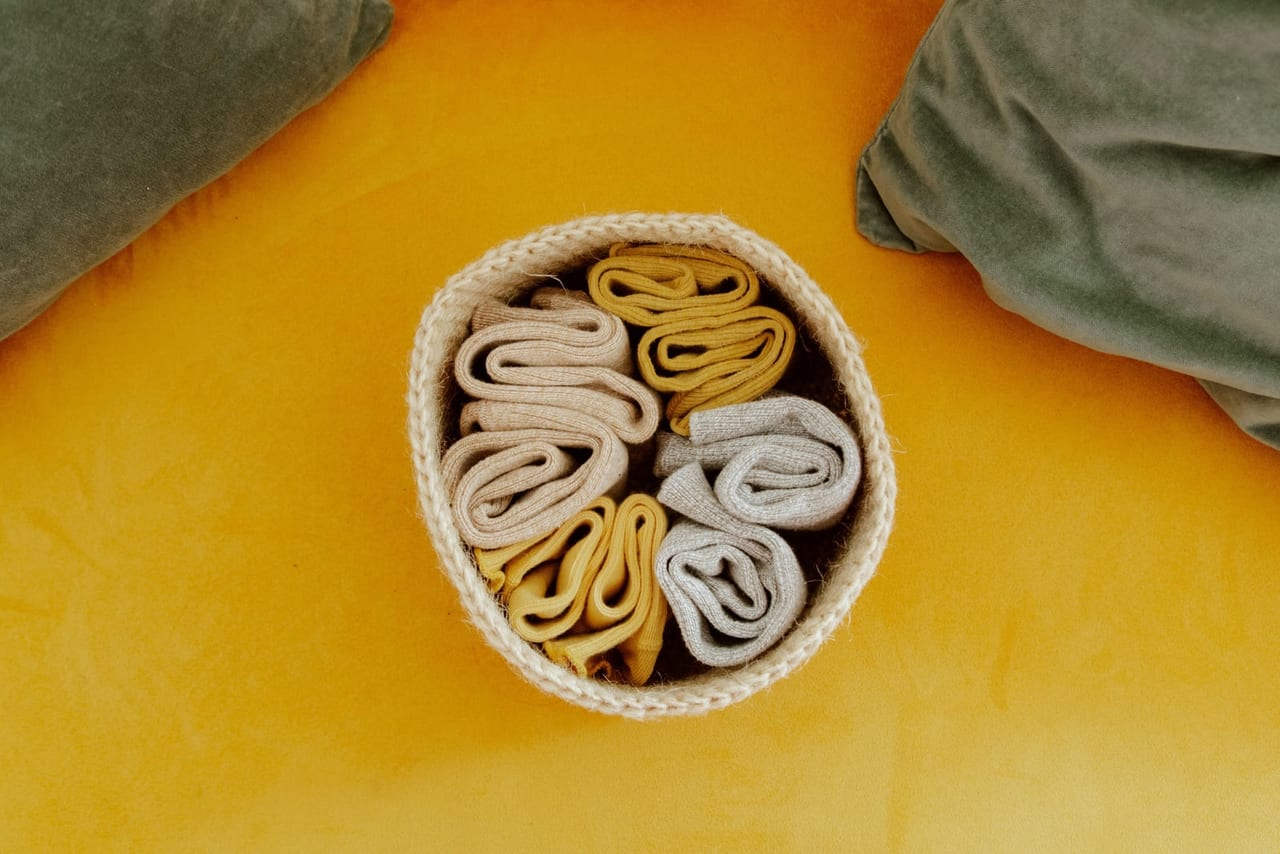
Socks come out of the hamper in a heap: a thick wool pair from the winter drawer and a few thin cotton ones that have been through the dryer too many times. They go in with the towels because they're small and it's easy, and they come out hot, a little tighter and usually one short. A few weeks later a cuff has stopped gripping, a heel has gone thin and a favorite pair feels stiff against the skin.
A sock is a knit tube of several fibers, often with a thread of elastic running through it, and each fiber reacts to heat, rubbing and soap in its own way. Habits that suit a cotton ankle sock can slowly wear down a wool or stretchy athletic one.
The short answer
Check the care label, turn socks inside out and wash them with a mild detergent on a gentle cycle in cool or cold water. Leave fabric softener out of loads with wool and moisture-wicking pairs, since it can coat the fibers, and let socks dry completely, in the open air or on low heat if the label allows. Avoid hot water, bleach and high dryer heat on wool, stretchy and technical socks, and don't put a pair away with damp heels or toes.
Replace socks once the heel thins, the elastic gives out or the fabric stays stiff. If a pair still smells after a careful wash, the cause may be your feet or your shoes rather than the laundry, and itching, peeling or strong odor even in fresh socks is worth raising with a healthcare professional.
What the wash asks of a sock
Most socks are blends. Cotton adds softness, wool adds warmth, nylon or polyester adds strength and quicker drying, and a little elastic keeps the cuff and arch snug. One setting can suit one fiber and strain another: warm water and a hard spin that a cotton sock may shrug off can shrink and stiffen wool, and the heat that dries a towel quickly can wear out the stretch in a cuff.
A wash also has to reach the inside. The inner side of a sock is the side that meets your skin, and the cushioned loops under the heel and ball of the foot can hold on to grit and lint. Turning socks inside out puts that side toward the water and detergent, and it can take some of the wear off the outer face of the sock as well.
How to wash socks, step by step
A load of socks takes about ten minutes of hands-on time, plus drying. You'll want a mesh laundry bag, a mild detergent and a drying rack or a clean towel to lay socks on. Take the steps as a default for everyday pairs, and let a pair's care label overrule them.
Sort and turn inside out
Read the care label on any pair you're unsure about, and group socks by color and fabric. Turn each sock inside out and put pairs in a mesh bag so they stay together.
Wash gently with mild detergent
Use a mild detergent and a gentle cycle. Cool or cold water suits wool, stretchy and synthetic pairs; plain cotton can often take warmer water if the label allows.
Skip softener on wicking socks
Leave fabric softener out of loads with wool, athletic or other moisture-wicking pairs, since it can coat the fibers. Leave bleach out too unless the label allows it.
Dry them all the way
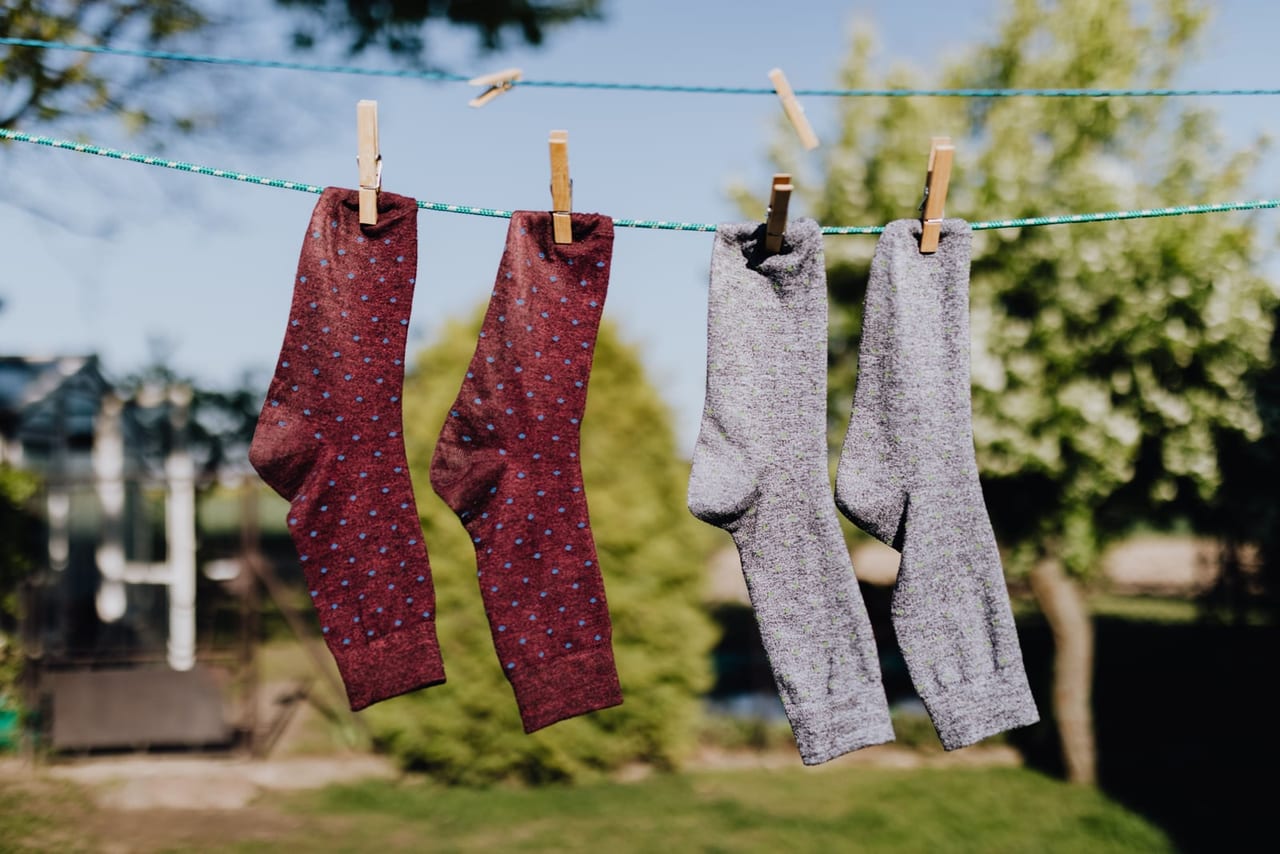
Air-dry socks on a rack or laid flat, or use low heat if the label allows the dryer. Press the heels, toes and cuffs to be sure no damp spots are left.
Retire worn pairs
Set aside socks with thin heels, holes, cuffs that no longer grip or fabric that stays stiff after washing. Replace them and keep each pair together.
Grimy soles are the usual exception to a gentle wash. If a pair has picked up dirt from bare floors or a muddy yard, rub a little mild detergent into the stain first. Let it sit for about half an hour before the wash, rather than reaching for hotter water.
Matching water and detergent to the fiber
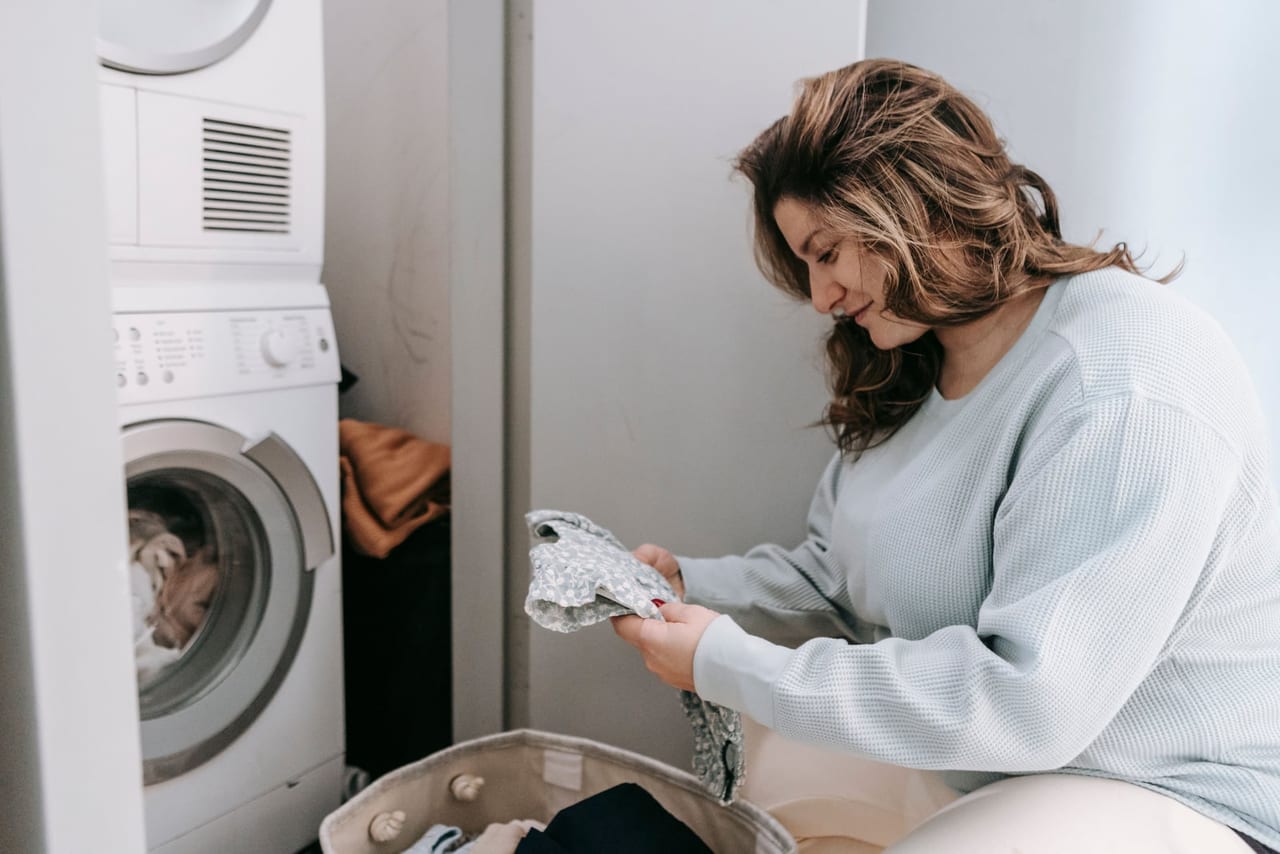
Start with the care label, which is the maker's advice for that blend. Where there's no label, cool or cold water and a gentle cycle are the usual safe choices for wool, stretchy and synthetic pairs, because heat can shrink wool and wear out elastic. Wool usually gets a wool or delicate setting with a slow spin, and by hand it's given cool to lukewarm water and pressed, not wrung. Plain cotton socks often handle warmer water if the label allows, and sorting by fabric keeps heavy towels and jeans, which can be rough on stretchy fibers, out of the drum.
Choose a mild detergent, using only as much as the load needs, and a wool wash for wool pairs. Leave bleach out unless the label allows it. Fabric softener is the product many people add out of habit, and it's the one makers of wool and moisture-wicking socks commonly advise against: it leaves a thin coating on fibers, and on a sock meant to move sweat away from your skin, that coating can get in the way.
Drying, pairing and retiring socks
Drying is where socks are most often hurried. Air-drying on a rack or laid flat is the gentlest choice for nearly every pair, and if the label allows the dryer, low heat is the usual advice, since high heat can shrink wool and wear out elastic over time. Press the thick spots before you call a pair dry, because they hold water longest, and a sock put away even slightly damp can pick up a musty smell.
A well-washed pair still wears out. Hold a sock up to the light. A thin patch at the heel or the ball of the foot, a hole, a cuff that no longer grips or fabric that stays stiff after washing are the usual signs that it has done its job. A worn sock can bunch, rub and hold moisture. When it's time for new ones, socks for long days on your feet covers what to look for in fibers, cushioning and fit.
When a washed sock still smells
Odor in socks starts with sweat. Fresh sweat has little smell, but microbes that live on your skin break it down, and a sock that sat damp in the hamper for days has had a long head start. So wash worn socks soon and let them dry out in the open, not in a closed bag. For pairs that still smell, people often soak them for about half an hour in cool or lukewarm water with a little detergent, then add an extra rinse so no detergent stays behind.
Baking soda and white vinegar are the two additions you'll hear about most. Both are popular home suggestions, but there's little firm evidence on what either adds to a careful wash and a full dry, so consider them optional. If you try one, use it on its own, never with bleach, and check the label first.
When the problem may not be the laundry
A pair that fades a little, pills where it rubs inside a shoe, or smells faintly after a long day and washes clean is behaving normally. Feet sweat and socks take it up, and a pair that thins out after months of daily wear has done what socks do.
Pay closer attention when the laundry stops being the variable. Odor that comes back within hours of a clean pair in clean, dry shoes points toward the feet or the shoes, as what causes foot odor explains. Itching, peeling or cracking skin between the toes can come from a rash such as athlete's foot, though a reaction to a soap, a laundry product or a shoe material can look much the same. A healthcare professional can tell which.
Questions people ask
Can you put socks in the dryer?
Often, if the care label says so. Cotton and sturdy blends usually tolerate low heat, while wool and stretchy pairs are safer air-dried. Either way, make sure thick heels and toes are completely dry before the pair goes in a drawer.
Do vinegar and baking soda help with smelly socks?
Plenty of people add one or the other, but there's little firm evidence on what they add to a thorough wash, so they're optional. Use one at a time, never with bleach, and follow the label. Washing worn socks soon and drying them completely suits every pair.
How do you stop socks from disappearing in the wash?
Many people keep a mesh bag by the hamper and drop each pair in as they take it off, so the pair is washed and dried together. A quick look inside pant legs, sleeves and the fold of a sheet can find a missing half.
The bottom line
Socks rarely fail all at once. They thin, stiffen and slacken by small degrees, one hot wash or hurried dry at a time, and the cause is long forgotten by the time the heel gives out. A pair that's handled gently and given time to dry tends to stay soft and snug for a good while.