Why Does My Foot Fall Asleep? Pins and Needles Explained
A foot that goes numb beneath you, then prickles back to life, is a familiar and usually harmless oddity. Knowing why it happens makes it easier to wake the foot safely, and to tell an ordinary episode from numbness that has another cause.

It tends to happen at the least convenient moment. The movie ends, you get up from the floor where you've been sitting with your legs folded to one side, and one foot has gone missing. It feels thick and far away, as if it belonged to someone else. Then the prickling arrives, a swarm of tiny needles that is somehow both funny and hard to bear, and a minute or two later the foot is back to normal.
The same thing can follow a long drive, an afternoon of kneeling in the garden or a meeting spent with one leg crossed over the other. It fades so quickly that it's easy to laugh off, but it leaves a fair question behind: what, exactly, has gone to sleep?
The short answer
A foot falls asleep when a position you've held for a while, such as sitting on your foot or crossing your legs at the knee, presses on a nerve and the small blood vessels that feed it. The nerve's signals stop getting through, so the foot goes numb, and when the pressure lifts, the waking nerve fires off signals in a jumble that feels like pins and needles.
Take the pressure off, move your ankle and toes and stand up slowly with something to hold; feeling usually returns within a few minutes. Numbness or tingling that comes without pressure, lingers, keeps returning, or comes with burning, weakness or trouble walking is a reason to talk with a healthcare professional.
What actually falls asleep
Nerves are the foot's wiring. Bundles of fibers run from the lower spine down the leg, carrying touch, temperature and the position of your foot up to the brain, and instructions for the muscles back down. In places they lie close to the surface, where a crossed knee or your own body weight can press on them. And like any living tissue, a nerve needs a steady supply of blood, carried by tiny vessels that run alongside it.
A held position squeezes the nerve and those vessels together, and with less blood reaching it, the nerve can't pass its messages along cleanly. That's the numb, heavy stage, when the foot feels like a block of wood and you may not sense the floor properly. Because the same nerves carry instructions to the muscles, the foot can also feel clumsy or slow to respond for a short while.
The pins and needles belong to the waking-up stage. When the pressure lifts, blood flows back and the nerve starts sending signals again, at first in a disorganized rush rather than a steady stream. The brain reads that rush as prickling, buzzing or fizzing, which can range from faintly ticklish to truly uncomfortable before it settles, usually within a few minutes. Odd as it feels, the tingling is generally a sign the nerve is coming back.
The positions that put a foot to sleep
The common thread is steady pressure in one spot, with no movement to break it up. Sitting on a foot tucked beneath you rests much of your weight on the foot and ankle. Long periods in one position do the same job more quietly, which is why a long drive, a flight or an absorbing hour at a desk can end with a foot that won't wake up. The position itself isn't the problem; the time without a change is.
Crossing your legs works a little differently. When one knee rests on the other, it presses on a nerve that wraps around the outside of the leg just below the knee, close to the skin and with little padding over it. That nerve carries feeling to the shin and the top of the foot and helps lift the front of the foot. So the foot can fall asleep when nothing is touching it, with tingling that often runs along the shin and over the top of the foot. Kneeling or squatting for a long stretch, while gardening or working on a floor, can press on the nerves around the knee in a similar way.

How to wake a foot that has fallen asleep
Waking a foot is mostly a matter of taking the pressure away and giving the nerve a few minutes, and the main risk is getting up too soon. You need nothing more than a sturdy chair, a counter or wall to steady yourself, and the patience to wait before you walk.
Take the pressure off
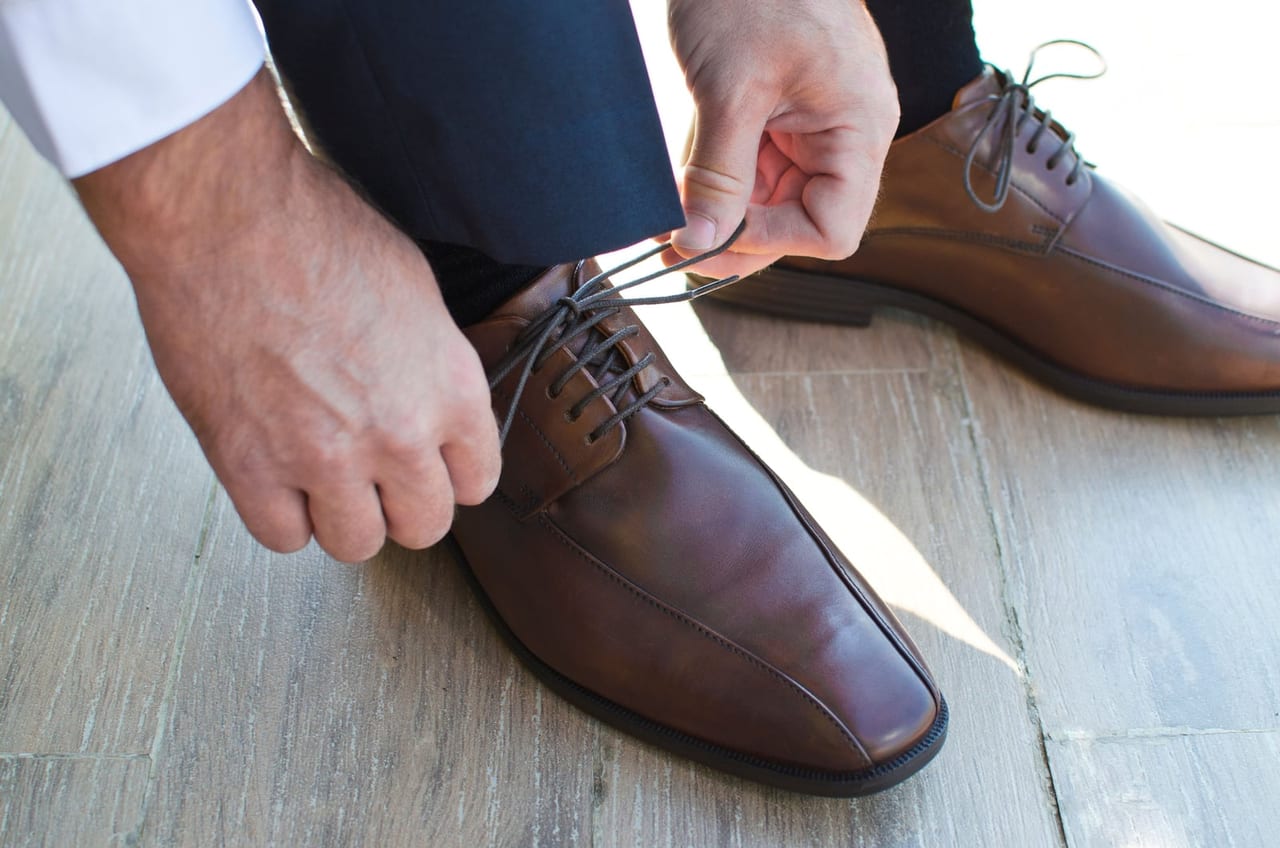
Uncross your legs, untuck your foot from under you, or shift from kneeling to sitting. If your laces feel tight over the top of your foot, loosen them.
Stay seated while feeling returns
Rest the foot flat on the floor or stretch the leg out. The tingling is often strongest now and fades over a few minutes.
Move your ankle and toes
Point and flex your foot, draw slow circles with your ankle and wiggle your toes. Gentle movement helps blood flow back and shows you whether the foot moves as it should.
Stand up slowly, holding on
Rise with one hand on a chair, a counter or a wall, and let the foot take your weight gradually. Wait until it feels like your own foot again before you let go.
Take a few easy steps
Walk slowly across a clear floor and skip the stairs for a minute. If numbness or weakness hasn't faded after you've moved for a while, sit down and get it checked.
The order is what keeps this safe. Moving the ankle and toes while you're still seated helps blood return and lets you test the foot before it carries any weight. A foot that can't report where it is may land on the edge of a rug or catch on a step, so if your toes drag on those early steps, sit back down and give it longer.
Habits that make it happen less often
Since pressure needs time to build, the simplest habit is to change position before it does. At a desk, keep both feet flat on the floor, uncross your legs now and then, and stand or walk when you get the chance; a few moves from foot exercises you can do at your desk fit between tasks. On long trips, shift your legs and flex your ankles whenever you safely can.
If crossing your legs is a habit, cross them at the ankles instead of the knees, which keeps weight off the nerve on the outside of the knee. On the floor, switch sides every so often or sit on a cushion with your legs loosely in front of you. For kneeling jobs, a foam pad makes the ground more forgiving, but breaks do more: stand up, straighten your legs and walk a few steps before you kneel again.
Shoes deserve a look too, especially if your feet tingle in one particular pair. Laces pulled tight across the top of the foot press on it all day, and that can leave a foot numb or tingly, often more so late in the day, when feet have swollen a little. Lace evenly so the heel is held without squeezing the top of the foot; how to lace shoes for long shifts shows how to ease the laces over a tight spot.
When pins and needles may mean something more
The everyday kind has a clear story. You can point to the position that caused it, and normal feeling returns within a few minutes of moving. It can happen to anyone, at any age, and a foot that falls asleep now and then after an obvious position isn't, on its own, a sign that anything is wrong.
Pay closer attention when the story doesn't fit. Numbness or tingling that comes without pressure to explain it, lingers after you've moved, keeps coming back, affects both feet or spreads deserves a closer look. So does tingling with burning, pain or weakness, since nerves can be affected by many things besides a crossed knee, diabetes among them. Weakness deserves particular notice: a foot that drags, toes that catch, or trouble walking that stays after the numbness fades. None of these is necessarily serious, but each is a reason to get checked.
Questions people ask
How long should pins and needles last?
When pressure is the cause, the tingling usually fades within a few minutes of changing position and moving your foot. Numbness that lasts well beyond that, or that keeps coming back without a position to explain it, is worth raising with a healthcare professional.
Is it bad if my foot falls asleep a lot?
An occasional episode after an obvious position is ordinary. If it happens often, notice when: a certain chair, a habit of tucking a foot under you or one pair of tight boots may be behind it. If it keeps happening once you've changed those, or happens without any pressure, talk with a healthcare professional.
The bottom line
A foot that falls asleep is a nerve reporting, a little dramatically, that one position has gone on too long. The numbness is the nerve going quiet under pressure and the prickling is it switching back on, so the useful habit is a simple one: keep shifting. Feet are built to move, and a prickling foot is only asking for a change of position.